By Chidi Amuta
Being text of a presentation at the Summit on Security and Economy in the South-East, at Owerri
PRELUDE: Nigerian history and politics has chased us home. I see this Summit as a forced response of desperate exile. There would have been no reason to organise this elaborate event if indeed all was well with the people of the South-East in the Nigerian homestead. This gathering is a further open admission that all is not well in the Nigerian national town square. As our people say, when there is a dangerous stampede in the town square, people of the same kindred converge in their own homestead to review their survival. That is my assessment of why we are here.
Recent Nigerian history has centralised the South-East in Nigeria’s social and political consciousness and discourse. We are not just on the agenda. We are the agenda. The emphasis has ranged from the question of the possibility of an Igbo president to matters of clear and urgent security and economic survival of the entire region.
Since the end of the civil war over half a century ago, never has the very survival of a vital geo-political section of the Nigerian federation come under such severe existential threat as the South- East now. The reasons are well known. A homegrown nostalgic micro insurgency has bred a sense of unease. Out of a desperate quest to cling on to something identifying, the youth of the region bought into the myth of Biafra as a symbol of an illustrious past.
Out of a national security panic, the Nigerian state has categorised the IPOB pro-Biafran secessionist pressure group as a terrorist organisation. In turn, the group has been driven to the extreme of tinkering with violent challenges to the Nigerian state. Sundry militia groups tied to the larger secessionist impulse have sprang up. Sporadic militancy and a scourge of violent criminality has been unleashed in the entire region.
A cocktail of criminal gangs and violent cartels ranging from the infamous ‘unknown gunmen’ to armed political thugs, suspected rogue agents of the state and free lance armed gangs and contract killers seem to be in open competition for supremacy.
Along the line, the Nigerian security establishment has responded predictably in kind, citing national security concerns as a basis for an intensification of the reign of terror. For some years, it used to be the Nigerian Army. In a rash of annual security showmanship exercises, the Army literally exhausted the names of animals in the national fauna to code-name its security operations in the region. “Operation Python Dance”, “Operation Crocodile Smile”, “Operation Eye,”etc.

Then the system graduated into a combined security task force comprising the Army, Navy, Air Force, Police and Department of State Security. It became a free for all as these official bodies were joined by gangs of free lance criminals. Since some of the security forces preferred to operate in mufti, it was hard to distinguish between brash criminals and those licensed by the state to impose law and order through state coercion. It has become hard to apportion responsibility for the industrial scale killings and mayhem haunting the region.
As a direct consequence, domestic and foreign investment has been frightened off the region by the spectre of violence and instability. The insurgency itself has virtually supplanted the elected governments of states in the region by handing out orders to the populace for the now famous weekly ‘sit at home’ misadventure. In the process, the economy of the very region has been in recess and decline for the better part of the last eight years.
Estimates of economic losses to date hover around a few trillion Naira and still counting. In all of this, fixation with national security in the abstract has tended to blind federal officialdom to the historical causes of the unrest in the South-East. A mechanical concern with security as the absence of violent disruptions has diverted attention from the real sources of unrest in the South-East. The realities are a combination of historic injustice, political and economic marginalisation and half a century of psychological exclusion of the people of the South-East from the Nigerian enterprise.
For the avoidance of doubt, let us rehash the realities. There was a civil war in this space. More than two million of these people were killed by the guns of war or deliberate weaponisation of starvation and disease. This small geographical space was devastated and rendered waste. Lives were either lost, badly devastated or put on compulsory hold or reset. An unscripted exclusionist policy kept the regional elite out of the strategic heights of the national political and technocratic power house. The anger of exclusion and alienation over this half a century has bred a sense of ‘otherness’ among this people. A fierce sense of separate identity within Nigeria has now replaced rhetorical Nigerianness here.
This is further effective backdrop to why we are here today. In suddenly turning into a national killing field, the South-East has become a virtual wasteland. It is a homeland of nostalgic ancestry but now deserted by its own sons and daughters. Those living away from the homeland either within Nigeria or in the international diaspora are afraid to embark on the ritual of periodic return home for fear of being kidnapped and traumatized or murdered for no reason in particular.
The foregoing is by way of providing a background for the rest of my presentation in the context of contemporary Nigerian history and politics. In the rest of this presentation, I will try to establish the complex link between national history, identity politics, insecurity and basic economic survival in the context of a multi-ethnic nation-state. While Nigeria remains the primary focus, references will be made sporadically to historical and political parallels from other places.
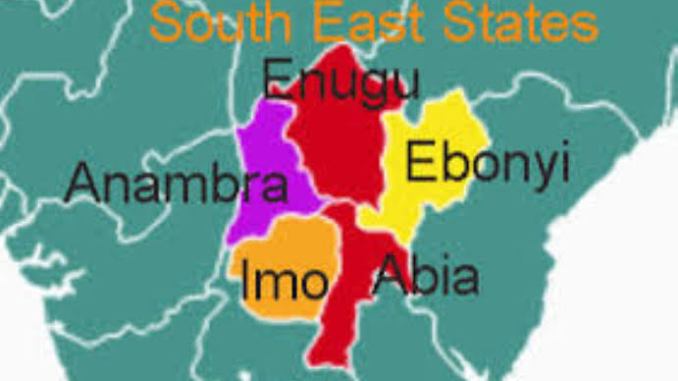
From geo-politics to identity: Let us make no mistake about it. The South-East is merely a geo-location on the national compass of Nigeria. Merely referring to the geographical South-East makes our focus rather mechanical and deprived of organic being. The South-East is more than a location on the Nigerian compass. It is first and foremost a socio-cultural and historical destination of grave importance. We are referring to the identity homeland of a people, specifically the Igbos of Nigeria.
Of course the Igbos spill over beyond the states of South Eastern Nigeria.
To be concluded
*Dr. Amuta is a journalist, intellectual and literary critic.
Disclaimer
Comments expressed here do not reflect the opinions of Vanguard newspapers or any employee thereof.