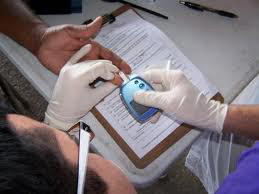
…testing is very important
BY CHIOMA OBINNA
Scientists have found that a long term exposure to high levels of glucose causes people to look older than they really are.
In a new study jointly carried out by Leiden University Medical Center and Unilever R&D, the researchers identified, for the first time, a relationship between people’s blood sugar levels and their perceived facial age.
The study, published in AGE, was run as part of the Netherlands Consortium for Healthy Ageing initiative which aims to understand how health can be preserved as individuals age.
The study found that people aged 50-70 with high non-fasted blood sugar levels consistently looked older than those with lower blood sugar levels. The results demonstrated that for every 1 mmol/litre increase in blood sugar levels, perceived age increased by five months.

...testing is very important
The study also found that the perceived facial age of diabetics – who have had long-term exposure to high blood sugar levels – looked older than non-diabetics. Crucially, these results remained after taking into account factors which are known to influence facial ageing such as smoking, sun exposure and Body Mass Index, BMI.
Reacting to the study, an Associate Professor at the Leiden University Medical Centre, Diana van Heemst, said: “The results from this study further underscore how important regulation of blood glucose levels is for well-being and health in advanced middle age.
The associated benefit of looking younger might provide an extra motivation to bring about healthy lifestyle changes in 50 to 70 year olds.”
Also, David Gunn, Senior Scientist at Unilever’s R&D laboratories based at Colworth Science Park said: “This is the first time that a relationship between high blood sugar levels and facial ageing has been identified. While there’s an extensive body of research which shows that consistently high levels of glucose in people’s blood stream is bad for their health, this study suggests that it’s also not going to help them keep a youthful appearance.
“Although there are known routes through which high glucose could be influencing facial ageing, further research is required for us to identify the true underlying cause.”
The study involved testing the non-fasted blood sugar levels of more than 600 men and women in the Netherlands, who were then photographed. Their actual age was then compared to their perceived facial age, as assessed by 60 independent assessors.
Disclaimer
Comments expressed here do not reflect the opinions of Vanguard newspapers or any employee thereof.