IN BRIEF
Chucks Iloegbunam examines the real essence of the man chukwuemeka and his contributions to true nationhood aftyer the war.
Death didn’t catch up with Chukwuemeka Odumegwu-Ojukwu like a thief in the night. People knew that, given his septuagenarian status and his long drawn-out battle with ill health, only one thing rang true – the inevitability of the fall of his final curtain.
Seventy-eight years of controversy has come full circle; a new vista of controversy is already launched into orbit like a satellite, to circle our lives in widening gyres, to define and confine the perimeters of our arguments, to shake with utter violence our very perception of things. Ojukwu lived in controversy. If he saw through to earth from the back of beyond, he would be mournful if his passing didn’t throw us all in unmitigated contention.
That is all that life is all about: a series of imponderables, a catalogue of inevitabilities. Yet, through time and in spite of the protestations of history, people have always tried to mediate the movement of transition. Life would lose its meaning if docility reigned on the understanding that destiny is writ large and fulminations are incapable of altering even an iota of the decided.

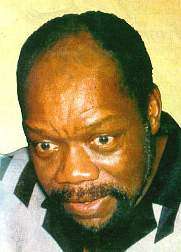
Chukwuemeka Odumegwo-Ojukwu
There were many of such “decided” realities that Ojukwu swarm against, like a powerful oarsman rowing his boat against high currents and gale-force winds. By the time he took a Masters degree in History from Oxford, primary education was not a fait accompli for most of his countrymen and women.
To then have the gradate son of a multimillionaire businessman turn his back on his spectacular pedigree in order to don the uniform of an Army recruit was an aberration beyond compare. He defeated his father’s vehement opposition to eventually become the first university graduate in the officer corps of the Nigerian Army then known as the Queens Own Nigerian Regiment.
Analysts have said that Ojukwu went military as a means of appropriating political power. But, if as the stories went, he had invited Majors David Ejoor and Yakubu Gowon to help in organizing a putsch, that would leave him somewhat in a nationalist mode. He would not be classed in the ranks of sectionalists who shot to power on blinkered, ethnic proclivities.
There are many like Ojukwu in the Igbo country – including Chinua Achebe, and Mbonu Ojike, who died in his prime. They are the true measure of the Igbo spirit which Ojukwu exemplified in 1966. Today, people will be hard put to find sterling characters like them. Today, the dangling of an oil block or the waving a fat dollar-denominated cheque or a ministerial appointment would send many a pretender to Igbo leadership into swearing that the anti-Igbo pogrom of 1966 had not taken place. It is eternally to Ojukwu’s credit that he never posted his conscience, nor was he ever enticed by filthy lucre; he continued to the very end with the insistence that no ethnic group deserved to be cannon fodder in the Nigerian polity; no Nigerian deserved to be a second-class citizen in his own country.
Chukwuemeka Odumegwo-Ojukwu believed that, to be a good Nigerian, one had to be a good representative of his ethnic group. A bad Hausa can hardly make a good Nigerian or a bad Yoruba an epitome of the exemplary Nigerian. No one represented his people properly, who sat twiddling his fingers in the face of a massacring spree against them. That was what led to Biafra – the inevitability of fighting against that which had been decided. On the Biafra experience, Ojukwu would now speak to Nigerians and the entire world from his grave, for there is no doubt at all that his memoirs on the civil war will follow as surely as dawn follows night. Had his resistance to pogrom ended in futility?
Ojukwu returned from exile in 1983, to rapturous reception by his kinsmen and women. In six months he went into partisan politics and would remain in it until he paid that price which all the living owe. Political partisanship has its attributes and tribulations. Ojukwu had entered a political party opposed by Nnamdi Azikiwe. A lot of hairsplitting ensued. A lot more followed, most of which showed so much fire but very little light. Yet only Azikiwe and Ojukwu are, in the truest sense, acclaimed Igbo leaders.
With the inception of the Fourth Republic, Ojukwu found himself in another political party not generally approved of by his people. When the All Progressive Grand Alliance (APGA) was registered as a political party, Ojukwu joined his natural hearth by decamping to it. He became the soul of the party. He catapulted its fortunes to the skies. Had the general elections of 2003 not been a cruel joke on the citizens of Nigeria, APGA’s victories would have superseded the one state whose gubernatorial election it won. But Ojukwu’s main point was not electoral victory per se. He articulated his raison d’etre for joining APGA at the Grand Hotel in Asaba during the 2003 campaigns. A certain Peter Obi was in the audience as were scores of others including Joe Achuzia, Emmanuel Nwobosi, Ned Nwoko who was the APGA governorship candidate for Delta State and Chekwas Okorie who was then the APGA chairman.
Said Ojukwu at that memorable occasion: “I belonged to another party. But the moment APGA became a reality, I left my former party and joined it. Every people deserve a voice of their own. After all, the man sent thieving by his father uses his foot to shatter the door.” It all ties up to the Ojukwu worldview, to wit that tiny bits constitute the whole; wholeness cannot bear upon the whole unless its constituent parts are in good health. This raises a fundamental question. What did Ojukwu think was the outcome of his yeoman efforts to ensure that his people owned a voice of their won in the Nigerian entity? The man never betrayed his ethnic group. Yet, he was garlanded with betrayal by those Ndigbo who surrounded him in order to polish their puny images.
In a larger context Ojukwu had fought against the Nigerian nation. But he had celebrated Nigeria’s Independence in 1960 dressed in Hausa robes. When the war ended, he recommitted himself to the idea of one united Nigeria based on justice, equity and fair play. And he pursued that course with unwavering tenacity. Can unwavering tenacity be attributed to the Lilliputians under whose watch the Voice of Ndigbo is currently floundering?
I mourn a man who told me in his Enugu home and in the presence of his first-born son, Emeka, and Emmanuel Nwobosi, that I required neither visa nor appointment to visit. I never for once confused him for a saint. But there was a lot to learn from him as we often engaged in verbal jousts on the state of the nation. Here, I must mention two issues that continued to keep him unhappy. One is any report of another round of Igbo massacres anywhere in Nigeria. Second is the conversion of the Igbo country into one huge cantonment of military and paramilitary checkpoints aimed at perpetually subjugating the people. Did Ojukwu die believing that those trumpeting their followership of his ideals are minded to address these stupefying anomalies?
“AN OLD STAR departs, leaves us here on the shore
Gazing heavenward for a new star approaching;
The new star appears, foreshadows its going
Before a going and coming that goes on forever…” So wrote the late, great poet, Christopher Okigbo in “Elergy for Alto”, the final movement in Path of Thunder, his poems prophesying the Nigerian civil war. Because arrival and departure are two sides of the same coin, Ndigbo see life as a market peopled by all mortals, each carrying their own shopping basket. The moment one registers a basketful of shopping, they depart. Chukwuemeka Odumegwu-Ojukwu has shopped his last. He has passed. To await all of us alive today, but whose passing will follow as a matter of course.
We have entered right now into the heart of the season with the contradictory qualities of verity and “let’s pretend”. Nnewi, Ojukwu’s hometown, will instantaneously metamorphose into a shrine. Devotees will troop in concurrent and interminable trains. Tributes will buckle under the deadweight of additional tributes. Eulogies will soar in eloquence to the highest heavens. Both the sprightly and the jaded will jostle for the photo-opportunity. All these will open up vistas of analysis and interpretations for some of us. As for others of us, there is much to chew about the meaning of Chukwuemeka Odumegwu-Ojukwu’s life, which is this ideal that is worth fighting for: All Nigerians have the inalienable right to live in comfort and safety in this country.
Iloegbunam is the author of Ironside, the biography of General Aguiyi-Ironsi, Nigeria’s first military Head of State.
Disclaimer
Comments expressed here do not reflect the opinions of Vanguard newspapers or any employee thereof.