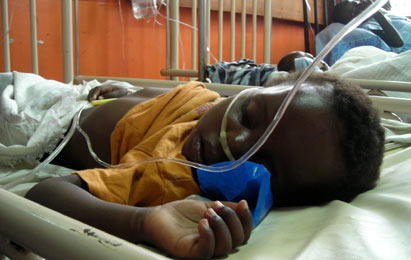
*Baby in hospital
By SOLA OGUNDIPE
AS Nigerian children aged five and below continue to die from pneumonia and other pneumococcal disorders, the Federal government has been charged to step up its commitment towards changing the face of pneumonia in Nigeria by urgently ensuring that the pneumococcal vaccine is available and accessible for immunisation of all Nigerian infants at risk.
The call which came weekend by the Paediatric Association of Nigeria, PAN, in the wake of this year’s World Pneumonia Day, urged Federal government to hearken to the voices of Nigerians and join hands to fight pneumonia and save Nigerian children from the menace of the disorder.

• A child suffering from pneumonia. According to the Paediatric Association of Nigeria, prevention through immunisation with the Hib and pneumcococcal vaccines is the most effective way to change the face of pneumonia in Nigeria and the rest of the world.
Making the call in Lagos, PAN’s National Secretary, Dr. Ekanem Ekure who spoke on behalf of the President, Dr. Dorothy Esangbedo, lamented that pneumonia kills more children in Nigeria than in any other country in Africa despite the fact that there are existing vaccines, medicines and treatments that could save the children’s lives.
“We know that our government is aware of pneumonia but we hope to draw their attention to the seriousness of the problem and emphasise that the children cannot wait for a long plan since they continue to die every day.
“We therefore ask government to do everything possible to ensure a roll out of these new vaccines to the Nigerian children while improving effort to ensure availability and regularity of the current vaccines in our immunisation programme. An earlier roll out of these programmes may have made achievement of MDG 4 feasible but the next best time to do it remains now,” Ekure argued.
Pneumonia is the world’s No.1 killer of children aged 5 years or less. With the theme – “I am the face of pneumonia”, the key message of this year is that preventing pneumonia before it occurs is key.
“Vaccines are a safe and effective tool for preventing pneumonia before it occurs. Vaccines against two of the main causes of life-threatening pneumonia – pneumococcus (streptococcus pneumoniae) and Hib (Haemophilus influenzae b) – are used throughout the developed world.”
Further, Ekure said: “Every year, pneumonia kills about 177,000 children under five years of age. Pneumonia is one of the top three reasons why so many Nigerian children do not get to see their fifth birthday. The disorder takes the life of one child every 20 seconds – more than AIDS, malaria and measles combined and is responsible for nearly 20 percent of deaths in young children. “If only Nigeria and the world in general could prevent pneumonia from happening in the first place, more lives would be saved.”
She estimated that 56 million episodes of lung infections occur among Nigerian children every year. According to 2008 estimates, about 177,000 children under the age of five died of pneumonia in Nigeria which means that within an hour, 20 children die from pneumonia. This number is the highest in Africa and second highest overall in the world.
According to Ekure, it is saddening that pneumonia causes needless suffering and stress on families through illness and hospitalisation. Pneumonia is an economic burden for families and communities. PAN also laments that financial costs of pneumonia include hospital stays and medications, transportation to health centres, and the caretakers’ inability to work or take care of other family members while they are caring for a sick child.
Already, PAN has produced a documentary highlighting the challenges of pneumonia on a Nigerian family.
The film shows how to recognise, treat and prevent pneumonia. It is to be aired to the public on television to create awareness and educate the populace about pneumonia.
Other ways children can be protected from pneumonia include exclusive breastfeeding of babies during the first six months of life, good nutrition for older children, hand-washing, and reducing indoor air pollution from cooking stoves and tobacco smoke. “Children can also be prevented from pneumonia with vaccines against Hib and pneumococcus. measles and pertussis.”
Disclaimer
Comments expressed here do not reflect the opinions of Vanguard newspapers or any employee thereof.