•High energy costs pushes down output
•Rue cost on businesses, suggest way forward
•New Electricity Act will be beneficial – MAN, NACCIMA
By Yinka Kolawole
The near collapse of public electricity supply system has increased the burden of doing business in Nigerian’s manufacturing sector with the cost of self-generated power in the sector soaring to N144.5 billion in 2022, up 87.13 percent from N77.22 billion in 2021.
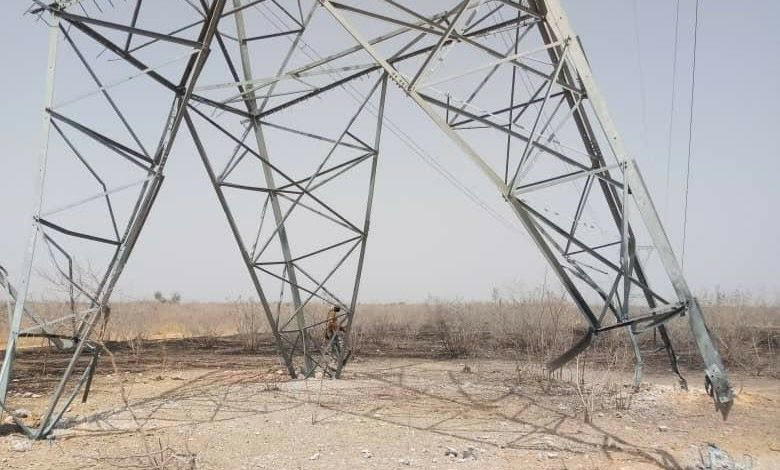
Findings by Financial Vanguard indicate that the situation may have worsened this year as Nigeria’s electricity generation, last weekend, dropped by 37 per cent to 2,649.9 megawatts, MW, from average 4,000 MW recorded last year.
Available data from the Manufacturers Association of Nigeria (MAN), the umbrella body of manufacturers in the country, shows that inadequate electricity supply remains a huge challenge to the manufacturing sector resulting in huge investment by the companies in self-energy generation.
Disaggregated analysis of the data obtained from MAN shows that the manufacturers spent N67.8 billion in generating their own power in the first half of 2022 (H1’22); and this increased to N76.7 billion in the second half (H2’22), totaling N144.5 billion for the full year.
Further analysis revealed a steady upward trend in the expenditure on alternative energy sources in the sector from N32.18 billion in H1’2021 to N45.04 billion in H2’21; N67.8 billion in H1’22; and N76.7 billion in H2’22.
The development has further increased the cost of production in the country’s manufacturing sector making their products even more uncompetitive against imported products.
Depressing output
A survey by MAN further noted that electricity supply to industries from the national grid declined to 11 hours per day in H2’22 from 12 hours recorded in the preceding half year.
Manufacturers said the high cost of energy, particularly diesel and gas, was partly responsible for the 9.7 percent decline in production output recorded in the sector in 2022.
During the year output was N6.67 trillion a decline from N7.39 trillion in 2021.
Costly implications on businesses
Giving more insight into the situation, Director General, MAN, Segun Ajayi-Kadir, said: “Over the years, access to affordable and dependable energy supply for operational activities of the manufacturing sector in Nigeria has been a big concern, forcing manufacturers to adopt alternative energy sources, including gasoline and diesel, with a costly implication on the sector’s operations.
“The implications on the manufacturing sector include: Increased costs of production – the high cost of obtaining alternative energy naturally results in a sizable increase in the percentage of production overheads, and when these prices grow, it puts pressure on profit margins requiring them to pass the cost on to customers through price rises that cause a decline in demand for their products.
“Reduced competitiveness – steel, cement, and chemical manufacture are all energy-intensive industries, therefore sourcing for alternative energy is costly and may negatively affect industrial competitiveness when compared to international counterparts.
“The soaring costs of energy could discourage foreign investors from investing in Nigeria’s manufacturing sector. If energy prices are too high, the economy itself becomes less appealing for international businesses to undertake investment. This results in a loss of foreign direct investment and the benefits that come with it.
“Manufacturers might be reluctant to expand their investments in other manufacturing opportunities if switching to alternative energy sources at a higher cost for industries that need to invest heavily in infrastructure, machinery, and technology. This could impede the growth and development of the manufacturing sector.
“Therefore, in order to encourage investment in the manufacturing sector, the government must assure the growth of strong energy and technology sectors, as well as a culture of good governance, which are essential for industrialization. Also, a multifaceted strategy is needed to address these issues, including strengthening energy efficiency measures, encouraging renewable energy sources, enhancing the overall energy infrastructure, and putting in place incentives and support for the manufacturing sector and manufacturing activity in order to spur economic growth.”
Also speaking on the cost implication, National President, Nigerian Association of Chambers of Commerce, Industry, Mines and Agriculture (NACCIMA), Otunba Dele Kelvin Oye, stated: “The implications of higher energy costs are obvious as reflected in rising costs of doing business, leading directly to cost-push inflation. No one sells below production costs. But manufacturers cannot just continue to increase prices limitlessly as we’re in a stagflation situation whereby we’re experiencing persistent rising inflation and rising unemployment, both at a period of static wages.
“In fact, we should even say we’re experiencing declining wages because, in dollar terms, wages are actually declining, not static. Thereby, for some businesses, there’s a real disincentive to continue doing business on profitable terms.”
Way forward
The manufacturers have made some recommendations to ensure improved electricity supply to the sector to reduce its burden in sourcing for alternative power in order to remain in business.
Among other recommendations, Ajayi-Kadir said government should, “Carry out further investment in the electricity value chain and commit to adding 10000MW to the current electricity distributed in the country; Embrace and support significant development of energy mix and renewable since the country has huge potentials for Solar and Wind; Commission the resuscitation of the existing national refineries to produce fuels locally; and incentivize more investment in gas aggregation to end gas flaring.”
New Electricity Act will be beneficial
On the possible effect of the Electricity Act 2023 recently signed by President Bola Tinubu, the MAN DG said: “It is expected that the new Act, to a considerable extent, will contribute to addressing the challenge as it is expected to encourage the development of alternative energy sources and improve the reliability and effectiveness of electricity supply for manufacturers.
“The implication of the passage of the bill is that anybody may build, own, or run an undertaking for producing energy with a maximum capacity of one megawatt at a location or an undertaking for distributing electricity with a maximum capacity of 100 kilowatts at a location.
“Also, this will allow industries to generate their own energy for their manufacturing activities, but however, we need to also take into cognizance that not all industries have the financial capacity to invest in such a project, and for those who will have the capacity to do such, this will impact on their cost of production in the short-run.
“For the Micro-Small and Medium Enterprises (MSMEs), access to a stable power supply would go a long way to motivate their operations, however, the question to ask is; how many of them would be able to afford the cost of power supply from private investors who are also out for profit maximization?”
The NACCIMA President, Oye, also agreed that the new Electricity Act would be beneficial in addressing the problem.
His words: “The new Act is hugely beneficial as it is opening this crucial energy sector up for reasonable competition. We all know that the processes that initially led to the DISCOs that we currently have were flawed relative to the processes that opened up the telecommunication sector.
“The only other measure that we need now is a focused and political will to implement the basic letters of the Act. Competition’s the only way to get quality service at best possible prices/rates.”
Disclaimer
Comments expressed here do not reflect the opinions of Vanguard newspapers or any employee thereof.