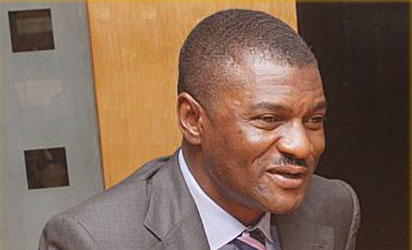
Frank Nweke Jr
In this interview with Babajide Komolafe and Amaka Abayomi, the Director General of the Nigerian Economic Summit Group, Mr. Frank Nweke Jr., talks about the 17th Economic Summit will hold from November 10th to 12th, which will bother on global partnership and how it would impact on Nigeria and Nigerians.
How are the preparations for up-coming summit, and what should Nigerians expect?
The 17th Economic Summit will hold from November 10th to 12th, and the theme is “Attracting Foreign Direct Investment Through Global Partnerships”. We have always been doing something different since the formation of the NESG, in terms of examining various issues in different tiers of government which have direct bearing on the social, economic and political well being of the Nigeria and Nigerians.
This year’s summit is different because it is a complete strategic shift. Though the theme of the summit is attracting Foreign Direct Investment through Global Partnerships, but it is a strategy that we have articulated to deal with, among others, the issues of unemployment and infrastructural deficit on our country.
We understand that it is common knowledge that the unemployment rate is as high as 21 per cent in Nigeria, and this is not good for the country. We have decided as a group not to just keep talking about policy recommendations, but will now begin to intervene directly in a way that we feel can bring about the changes that we want to see, and this is responsible for this year’s theme.

Frank Nweke Jr
We believe that the Nigerian private sector can go out and invite our foreign contemporaries to our country because of the promise that the Nigerian State holds, because of the infrastructural deficits and the business opportunities that it provides. If these people were to bring their money into our country, by way of investments, they would help us bridge the infrastructure and services gaps, and in the process, create jobs.
If jobs are created, there will be social and economic empowerment, and if there is social and economic empowerment, there will be a reduction in the level of violence and poverty while the quality of life will improve.
This is why over the past three weeks, myself, the chairman of the board and a couple of others have traversed the world, talking with our contemporaries and similar organizations world over, for them to come and invest in Nigeria. I must confess though a few complained about the rather short time, but the response has been fantastic.
Is there any incentive given to foreign investors, especially Nigerians in the Diaspora, to attract them, given that some the infrastructure are not within the control of the private sector?
Firstly, I must make a point that there is no country in the world that doesn’t have its business environment and public policy environment. But one thing that is clear anywhere in the world is the importance of policy consistency, adequate infrastructure, skilled workforce, easy access to capital, etc. All these are common features of investment friendly destinations.
So we have anchored our hope and drive in the reform efforts of President Goodluck Jonathan and his cabinet. The interaction with the Minister of Finance and the coordinating Minister of Economic Management team, Mrs. Ngozi Okonjo Iweala, the expertise and the very robust agricultural road map provided by Mr. Akin Adeshina that is the Minister of Agriculture, the dynamism of the Minister of Works, the work that is being done by the infrastructure concession and regulatory commission where my predecessor holds forth, have converged to really reinforced our confidence that this time around we can get it right, which is what we have been telling the global and local investing communities.
World over, people are much better impacted and encouraged when the citizens actually take interest in different sectors. Here, we are talking about local partnerships because we have realised that it is sometimes difficult for people to come into a country and do whatever they want to do. So, it is a lot better and smarter business check if you can find local partners who can help you navigate the terrain.
We are very confident that Nigeria is just about to take off, and we are confident that with the successful second civilian transition that the Nigerian promises will finally bear fruit. The global investing community has often been worried about political stability and the nature of our democracy, but it is clear to them that democracy has come to stay. We are not saying everything is perfect, but then every business comes with an element of reality. People didn’t believe, for instance, 10 years ago when we spoke about telecom sector but it makes up a significant profit for MTN, which has become the mainstay of their operations globally.
But the train has since left the station and we were left out completely in the boom that happened in that sector. Look at the power sector today, seemingly intractable to our people, but yet that is what provides the opportunity we are talking about. You look at the roads, airports, the story is the same, but today we are convinced that both government and the citizens realize that the way to go is public private partnerships and global partnerships, which is why we are pursuing it vigorously.
The up-coming summit appears to be targeted at investment, in trying to build investment through the summit, are you working in collaboration with the Ministry in charge with these responsibilities?
Absolutely. We are working very closely with the Federal Government of Nigeria. The NESG was founded as a platform for public private partnership and dialog and for the past 18 years, it has functioned as the foremost platform for public private dialog between the private and public sector. We have a key public sector partner that we have worked with over the years – Ministry of National Planning, they are neck deep with all our preparations but we are very close to the Ministry of Trade and Investment.
There will be presentations about investment opportunities in aviation, the oil sector, agricultural sector, and in the transport sector. Various ministers have been invited and we expect that they will be available to host investors who want to know what they have done and the opportunities in their various ministries.
Global partnership is the new approach of the NESG to champion transformation. Have you identified serious minded business people in Nigeria with whom global partnerships will be achieved to drive the development you desire?
You seem to under-estimate the capacity of the Nigerian economy, and I need you to look at these things in the contest of what has happened in the last, say ten years, due to our return to democracy in the financial services sector, look at what happened in banking and the significant capital inflow that we got into the banking sector during the banking consolidations, look at the kind of mergers and acquisitions that have taken place today.
The important thing is to have structures in place, have the players that have the intellect, the acumen and the money, but perhaps need to expand their operations.
These are the people that will provide the kind of partnership opportunities that we look forward to. Have you ever thought about the size of Nigeria’s informal sector and the amount of money that circulates in, say, Alaba market? Some of them look so haggard but I assure you that they are among the wealthiest people we have in this country. You may not even know their name, they don’t want you to know their name, but they are just happy to achieve and be rich.
Do you have an idea of the size of the economy of Nnewi as a small business settlement in Anambra State. Have you ever thought of Aba as a hub, do you have an idea of the amount of money that circulates in Kano among traders and manufacturers. So these things are there, but we don’t want these sets of people to continue to operate in the informal sector, so we are looking for ways to merge them with global players so that we can have global company. We are very optimistic as a people and as a group because the Nigerian economy is a very robust one.
From your opening statement, is the NESG seeking to consider all its policy recommen-dations and ensure that many of them have not been taken and the objectives are not fully achieved, in this summit that you are going into, let me say one year from now looking back what are those indicators that will make you to feel inspired that oh! This is a different summit compared to the past.
Quite contrary, I want to say with all modesty that the NESG’s policy recommendations have been largely accepted by the Federal Government through the years. We recognize that the wills of government come very slowly and that govern-ment all over the world have their own ideas, we recognize that the roles of groups such as ours are advisory, we also recognise that some-times because of the nature of government you might need to say one thing over and over again before it comes to fruition.
But for the records, let me say that at the beginning of the summit group in 1992, 1993, one of the things that was seriously conversed was the need to promote medium and small scale enterprises, the need to promote entrepreneurial studies and the practice of entrepreneurship and that was when the theme for the Lagos Business School was sold.
I tell you that the theme for the Lagos Business School was actually sold at the very first Nigeria Economic Summit. Since then, we have gone ahead to make significant input into the investment promotion decree or act but largely crafted by the NESG. The pension reform act was as a consequence of recommendation from one of the National Economic Summit.
The issue of electoral reform is something we have canvassed for a very long time and our green books will show proof of this. The issue of police report is something that we have canvassed for a very long time, the matter of the National Health Insurance Scheme from the perspective of its capacity to provide long term funds and the potential to actually ensure welfare and the wellbeing of Nigerians on a sustainable bases was canvassed on the platform of the NESG.
The whole concept of visioning, failure for you to have a plan as a nation was canvassed on the platform NESG, that was what gave birth to vision 2010.
The NESG played a significant role as a private sector platform in actually articulating the vision 2010. Rik Morusin, the whole concept of vision 2010 was first canvasses on the platform of the NESG. At a time the current Minister of trade and Investment who was then working with Goldman-sach drew our attention to the study that was done at one of the summit that we held and of cause President Obasanjo said 2025, let us shoot for 2020. I can go on and on about the achievements on the NESG. Like I said, government may not take it in the first year but government will always come around for it. The issue of deregulation and the issue of privatization, all of these things were canvassed on the platform of the NESG and the whole concept of adopting public private partnership as a model for funding of, managing public infrastructure was canvassed on the platform of the NESG. Look, this group is a very diverse group is made of people from manufacturing, from Insurance, Banking and Finance, from Telecom, from the professions, lawyers are here, publishers are here, is a very diverse group, small and medium enterprises they are here, so we have the opportunity to harness a whole range of perspective, a whole range of ideas from across the economic spectrum in making of our economic input to the Federal Government of Nigeria.
Looking back, what are the indications?
We expect significant foreign direct inflows, financial inflows into the Nigerian Economy because of the efforts that we are putting in and because of the reforms that are going on in the public sector, we expect for instance that there will be significant improvement in the quality of our infrastructure which will in turn impact economic activities in a positive way. We expect that as consequence there will be significant drop in the unemployment rate because in the process of providing these infrastructures that jobs will be created, we expect of cause that significant interest will arouse among young people, among the unemployed to begin to explore entrepreneurial opportunity where it is possible. We expect for instance that there will be significant interest and investment in the agricultural sector which will improve food security, which will improve the practice of agriculture, which would help us to better harness the opportunity that exist in the entire agricultural value chain, which is proper storage, proper processing, proper packaging and export where necessary and then the consequent earning of foreign exchange. These are some of the things we expect. Let me warn you, we are not under any illusion that anything would happen in one year or in two months, some of these things needs gestation which is they need to feel each other, they need to feel yes they are comfortable with each other, they need to be sure that they understand the policy environment. They need to be sure that they want to relate and these things do take time. We are very clear in our mind as to why we needed these strategic shift, we are very clear in our mind about the potential of this approach to really bring about the change that we want to see I want you to also note that is not as if we are longer interested in policy advocacy but we have now chosen to approach it in a totally different way, to begin to see how we can make those things happen we believe for instance that there is nothing about development in any sphere of the economic space that we do not have one policy or the other that should circulate in dealing with those sections, we are very clear in our mind, there is nothing today that has to do with national development for which there is already not one policy or the other. The issue is, can we just get on with it, can we actually move to begin to implement them? And that is why we said we are going to put our money where our mouth is, by actually changing in the way we have change and then going out there at our expense, on our own to begin to bring in people in to this country.
In a kind of summit like this, this pertinent issues in economy will always come up, I want to know if the NESG has plan for it, number one the issue of this deregulation in the petroleum sector, number two is the exchange rate of the naira which some people believe in the economy that it might be adjusted upward if development occur, if this issues occur, definitely foreign investors may want to know the out look of this development before coming in.
Absolutely, the issue of deregulation, if you go through…. I want to give you one booklet when we finish, if you go through this, you are going to find that for over a decade, the Nigeria Economic Summit Group has canvassed a full deregulation of the petroleum industry, is a position that we have known and which I want to reinforce at this instance, the reason is very simple, you have a situation where the Nigerian economy is being bled, unnecessarily avoiding them to the advantage of less than half a dozen company fetched for the individual
The Nigerian economy is being bled, is been bleeding to the advantage of just less than half a dozen people. You say to me that you have subsidy in place and this subsidy is for the benefit of less privilege member of the society, and I tell you that outside hub, Abuja and Lagos and may be somewhere like Kanu, Kaduna, within the city centre, in Enugu where I have another home, I know how much it cost me per litre Diesel to run my generator I know how much I have to buy fuel in Enugu, unless I decide to spend long hours at the NNPC Mega stations. I look at it and I say, it is not worth my time, I know how much I have to buy fuel over the last ten years and so the subsidy that is supposedly meant for me and the people of Nigeria, has not been getting to anybody I spent the
greater part of my life in Northern Nigeria, in Maiduguri in particular, lets place a call through to any body in Maiduguri today, ask them to go to any filling station that is not an NNPC filling station, and let us see how much money they will pay for a litre of fuel. This is common knowledge but at the end of each month, the Federal Government of Nigeria has paid billions, now we are talking of trillion of Naira to a handful of people in the name of having provided subsidy to the Nigerian people we are saying that it is wrong, it is inappropriate, it is unfair, it is mark of dishonesty because all of these people, by bringing in an essential commodity which they do not sell at the right price are benefiting wrongly to the disadvantage of the entire country and the entire people and we believe that if these subsidy where to be removed and applied in a disciplined way that we have an opportunity right there to improve infrastructure in this country, to improve empowerment in this country and for the benefit of the larger majority of the Nigeria people, but in saying this I must also warn that we are not in any way saying that government should not provide social safety net for the people at the lower runs of the society, that is not what we are saying, we are saying that with disciplined management of the subsidy when it is removed or the accrual from subsidy when it is removed, that this people can be better taken care of.
I tell you today, you go to some hospitals you still see the PTF bed sheet equipments that were there and for me the way the PTF was set up, structured and managed showed clearly what can happen when people manage their resources properly. That was probably the best effort we’ve had, a government saying we need to remove this subsidy, please support us to remove it we are going to show proof of what we doing, this happened very well under this PTF section, all of us are living witness to what happened, the number of roads that were built, the number of hospitals that were built, the schools that were built, the equipment that were supplied, some of these equipment are still in use in various hospitals, schools, Universities, classrooms, all over the country today and so who are the beneficiaries of this things, was it just Frank Nweke Jnr is privileged therefore he is the only one that went on the roads, no, the roads were built, and were opened to everybody and they were going on simultaneously all over the country because they have zonal offices of PTF, you have State Offices of PTF, you have Local Government offices of PTF, so the thing permeated the nook and crannies of the entire country. So in summary, the NESG supports deregulation, but NESG will call for a very disciplined, very transparent use and management of the resources that will accrue there from.
I have attended this programme from inception, the recurring decimal has been the activity of civil servant and we have also observed that government representative that comes, don’t stay to the end of the programme, this time around is there any plan to get Federal Government representative, State representative, Local Government because they are close to the people, to be there from beginning to the end. What are you doing to this direction.
One thing that I can say to you is that, yes, you make a very important points, but I will say to you that government will always be government, the concept of the bureaucracy is a universal thing and I believe that most government work continuously to improve the capacity and the productivity of their public services.
Nigeria is not an exception, now one thing that has happened with the NESG is this, we have succeeded over the last 15 years in actually opening the eyes of the people to the point where they realise that, you no know what, that as Government they can not work on their own or like private sector they can not work on their own, there is need for collaboration, that is the greatest achievement of the Nigerian Economic Summit group, public private dialog, public private partnership, that is greatest achievement that we have made as a group.
Where am now going with that statement is this, you notice that it has become passion-able for lack of a better way to put it, in the last lets say 10 years for there to be zonal economic summit, South West Economic Summit, South South Economic Summit, the Northern Economic Summit, we are happy because it means that the people are thinking, the people are now beginning to understand that you know what, in order for you to succeed, you must be able to crystallise, you must be able to articulate your thoughts carefully, that in the global economy today, indeed in the national economic today, I will come to Lagos, because I believe that Lagos will provide a better policy environment in which to operate my business or I can go to Jigawa, because Jigawa provides me a better climate environment in order to operate. I can decide to go to Oyo because Oyo provides me, a better, may be hack environment within which to operate. We are happy that people are meeting, we are happy that people are talking, we are happy that people are thinking in a competitive way, in visionary way, I know shortly after our summit in November, there is going to another summit in Rivers State.
We are happy, so people are copying what you are doing, people are happy to do it, so the question you raised ultimately, I think we’ve succeeded in catalysing that consciousness, that critical consciousness for people to begin to learn to do the right thing to plan and to act in their best interest.
We will remain at the centre and continue to galvanise economic and submission in our own way through policy advocacy and through the kind of intervention that the 17th summit provides.
Disclaimer
Comments expressed here do not reflect the opinions of Vanguard newspapers or any employee thereof.