By Louis Odion
HIS bonhomie was unusually absent that night in 2009. He spoke little, his luminous eyes mostly staring at us intensely with an expression difficult to fathom. The “Governor of Example” (BRF) and this writer ended up being the last to leave the putative den of the “Lion of Bourdillon” in Lagos at past midnight. Not until we were outside at the car park of our host’s Ikoyi home (sufficiently beyond his earshot), did the then Governor Babatunde Fashola (the one who had been Jagaban’s Chief of Staff for five years) share his observation: “Louis, I can tell Asiwaju is very, very depressed tonight.”
Drawing on an intimacy earned from working very closely with Asiwaju, BRF’s diagnosis could hardly be faulted. Lately, the Action Congress of Nigeria, ACN, had suffered a series of reversals in courtrooms in Osun, Ekiti and Edo in pursuit of mandates “stolen” in the 2007 governorship polls in what had become multiple convoluted legal tussles.
Having immersed himself as the chief inspiration and sole financier of the legal kerfuffle unfolding simultaneously at multiple fronts, Asiwaju was thus the one who often bore the burden more. So absorbed, so invested was he in those difficult moments that one could, in fact, be pardoned to imagine that even in his sleep, Jagaban probably still found himself mixing it up with the adversaries he earlier contended with all his waking moment.
In the same vein heavyweight boxing champion Joe “Smoking Joe” Frazier once admitted he sometimes found himself in dreams engaged in ferocious fistic combat with eternal rival Mohammed Ali, only to wake in the middle of the night covered in hot sweat. Such was the exacting climate under which “stolen mandates” were recovered in Ondo, Edo, Ekiti and Osun after epic battles championed by Tinubu, the man young Nigerians (the millennials and Gen Z) do not seem to know or have been misled to hate and deny credits as arguably the biggest champion of multi-party democracy in the Fourth Republic.
The instinctive warrior never shy to insert himself in a battle for others, but often with eyes on the greater prize not easily perceived by the shortsighted. The one who curbed Obasanjo’s imperial aspirations and excesses particularly in Yorubaland and who, from 2003, began to stitch, one thread after another fragile thread, what would blossom into the historic coalition that sensationally unhorsed a ruling party at the centre in 2015. To be sure, the man from Lagos is no saint.
True saints would only be found in heaven. However, there is something extraordinary about Jagaban. His agglomeration of laser focus, daring, Trojan stamina, improvisation, organisational acumen and mental acuity is surely never seen in any other politician in all of Nigeria’s recent history. It speaks to a forbearing virtue or what the Yoruba call “aforiti” central to “iwa” (good character) which partly defines the Omoluabi ethos often invoked to describe the Yoruba identity and epistemology. An integral part of “iwa” is, of course, loyalty to friends or values subscribed by the community.
Jagaban is a study in loyalty. He expects no less from those for whom he is prepared to take a bullet. (Ask President Buhari or Baba Akande.) In exile, he taxed himself to fund Radio Kudirat set up in the UK to battle military dictatorship in Nigeria. As well as provide for fellow exiles pushing for June 12 while its symbol, MKO, was languishing in Abacha’s gulag in Abuja. “Revolutionary” Tony Nyiam (of the April 1990 coup fame) once told this writer how regular stipends from Tinubu helped alleviate the adversities of exile for him and a number of other June 12 activists.
Of course, he gave from the proceeds realised from either properties he sold discreetly back at home or returns from his chain of gas stations in the US being managed by his wife, Senator Remi. Ever so inventive, he mooted the idea of using the name of the Nobel laureate, Professor Wole Soyinka, as collateral in Thailand for shipments of rice on credit to be sold clandestinely in west Africa to fund NADECO struggle.
Greater is even the loyalty shown by assisting the dependants when their breadwinner was no more or in a position to repay. In death, no one has stood by MKO’s family more than Tinubu. As Lagos governor, he instituted a special monthly welfare package for some members of his family, a scheme still sustained by the state government to date. When told about the precarious financial position of Concord Press (owned by MKO) in 1999, he made a generous offer to buy the company’s idle giant power generator on behalf of Lagos State Water Board.
The money offered would have been sufficient to offset the long arrears of salaries owed Concord workers and re-finance its operations. But just before the deal could be consummated came a caveat emptor in a national newspaper placed by one of MKO’s children. It did not take long before Concord Press, the asset most dear to Bashorun, finally went under. The virtue of “aforiti”, it bears restating, is not a province for those given to instant gratification.
Nor for those who switch political loyalties for electoral convenience or casually break oaths for any accommodation, however transient. Rather, it is a mantra for the committed marathoner, for the patient sower who plants in faith, hoping for boom with the same zeal they are prepared for bust. The pot truly seeking the honey in pepper must endure the ravages of fire.
Such resourcefulness was very much in evidence in the way and manner Osun was recovered in 2010. In 2007, the electoral bandits stole too much for the owner not to notice. But it would require exceptionally ingenious application of forensic testing of the ballots by Englishman Adrian Forty to establish what everyone had suspected: ballot stuffing on a mindless scale.
All thanks to Tinubu. The same wizardry came in handy in unearthing illicit exchange of text messages between the presiding judge and the defence counsel to confirm offer and receipt of dirty cash, thus extending the frontiers of Nigeria’s jurisprudence in general and criminal investigation in particular. Finally sensing his fall from power, the story is told that the embattled infantry General, who had exercised a stolen mandate for almost three years, now pleaded: “Bola, fimi sile o! Awon lawyers ti gba gbogbo owo mi tan!”(Bola, leave me alone! Lawyers have emptied my pockets!) shortly afterwards when he and Jagaban met at an Owambe.
Elsewhere in Ondo, forensic examination of ballots revealed even more comical details. Among those listed to have voted PDP’s Olusegun Agagu was one-time “baddest man on the planet”, Mike Tyson, widely known to be domiciled in faraway US. So pervasive, so audacious were the forgeries that famous poet/journalist Sam Omatseye, otherwise registered and permanently based hundreds of miles away in Lagos, was also implicated to be among those who voted Agagu in Akure!
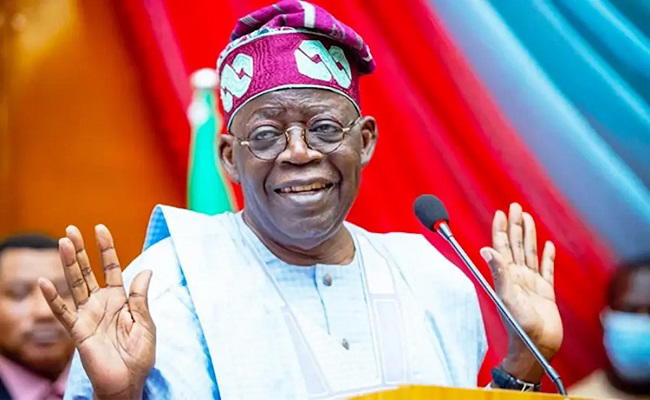
Indeed, few days away, Tinubu will be crowned the 16th leader of the most populous Black nation on earth. How fitting that he is ascending the golden throne his mentor, MKO, was denied. Suddenly, his trademark cap with distinctive embroidered broken shackle, perhaps the worst contraband to be caught with in Abuja between 2015 and 2022, has turned the hottest fashion item craved by new fortune-seekers.
Odion, NGE, a journalist, wrote from Abuja
Disclaimer
Comments expressed here do not reflect the opinions of Vanguard newspapers or any employee thereof.