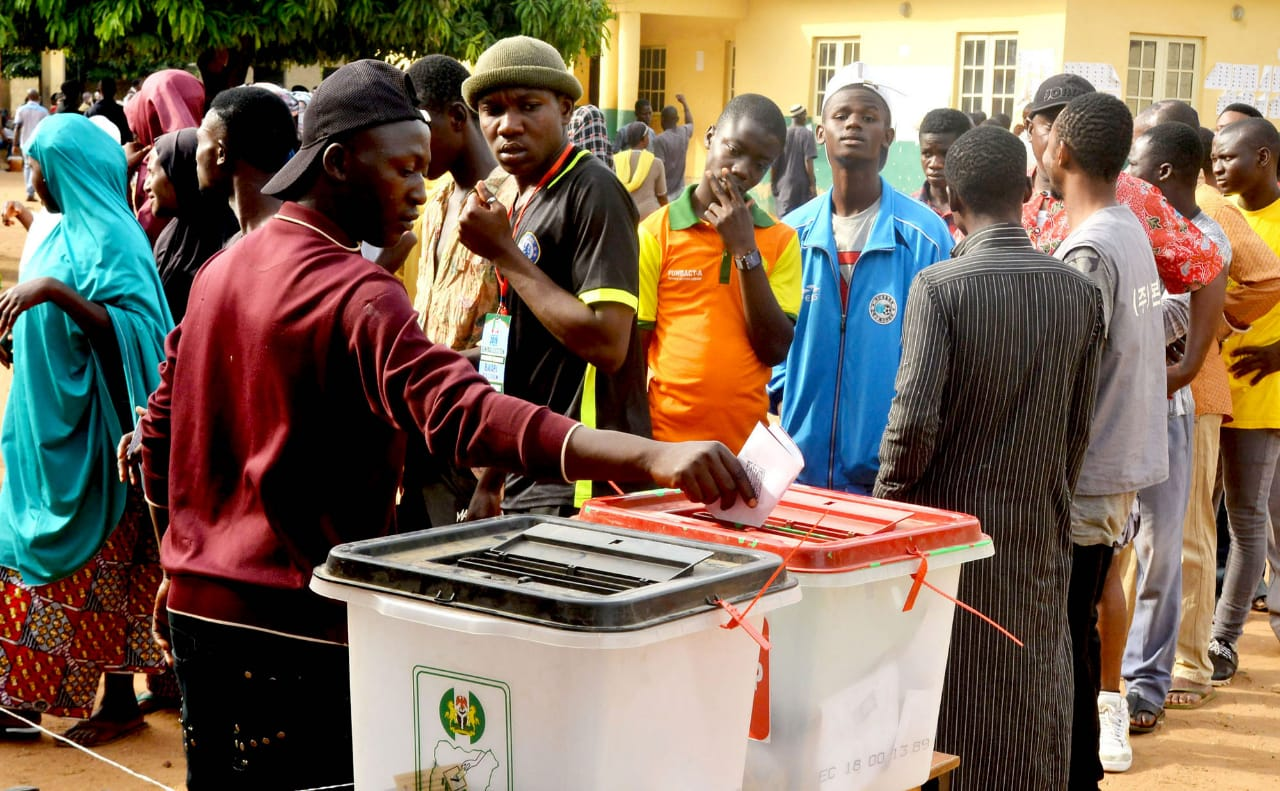
In the aftermath of the negative reviews which inundated the global media space concerning the conduct and outcome of Nigeria’s 2023 general election, the Federal Government has been called upon to take as pressing the task of rebuilding the confidence and trust of the younger voting population in the nation’s electoral process.
This charge was given by a team of panelists at the last edition of the Toyin Falola Interview Series held on Sunday, April 16, 2023, and transmitted on various social media platforms. The panel was chaired by Professor Toyin Falola.
An African intellectual legend on both the continent and in the world, Falola is the Jacob and Frances Sanger Mossiker Chair in the Humanities and University Distinguished Teaching Professor at the University of Texas at Austin.
While the panel—consisting of Cynthia Mbamalu, co-founder of Yiaga Africa, leader of #WatchingTheVote project; Professor Jibrin Ibrahim, Senior Fellow with the Centre for Development, outstanding scholar-activist, and professor of political science; Ayisha Osori, Vice President of the Open Society and Dr. Chido Onumah, currently the coordinator of the African Centre for Media & Information Literacy (AFRICMIL), Abuja, Nigeria who was the panel—touched on various issues such as electoral violence, the skewed process of the 2023 general election, insecurity, and the failure of technology in the electoral process, Mbamalu harped on the need to rebuild youth participation and their trust in the future elections, noting that their hopes were dashed when the use of technology in the past election failed.
According to her, “When it comes to elections, there would always be winning and losing sides. A lot of young people followed the election because they believed in the use of technology. They felt that with technology, the process would be more credible. They wanted it to work. There will be a lot of work to rebuild their trust in the system. Many of them thought, they would vote, go back home and download the results on IREV. But they could not do that. This thoroughly affected the way they trusted the system. We must also begin to have a conversation around democracy.
“Elections do not equate to democracy. Someone defined Nigeria as an electoral autocracy. We are having periodic elections but it doesn’t mean that democracy is in the shape it ought to be. We must start engaging young people beyond voting, to demand accountability and getting involved. For this election, youth participation was beyond voting. We had young candidates; we had young people who aspired to run. The whole process is important but there are many challenges. If there are no party inclusions, adherence to the tenets of democracies, then it would appear that we are wasting our time. Only 28 per cent of the candidates were young people, and this is a country where young people constitute 60 per cent of the nation’s population.”
Earlier in his assessment of the process, particularly the Adamawa and Rivers elections, Professor Jibrin told the audience that “The events in Adamawa State are very illustrative of the types of issues that color our election. There was the irregularity of someone who is not the returning officer announce results. In making those announcements, what were scored by candidates were not the figures but mere declaration that somebody had won. This is without giving us numbers. This created a huge crisis.
Of course, INEC at the national level had wade in to suspend the announcement and call the operative as it were to Abuja to explain the irregularity. Such stories of irregularities tend to mask a lot of realities of the conduct of our elections. When one looks at the general election, a lot of the conduct went on conduct but the results were terrible. There were narratives of mass disenfranchisement, change of outcomes.”
For Ayisha, the quality of the electoral officers remained crucial to the outcome of any electoral process. “The reason we had the Adamawa issue in the first place was because we had supplementary elections in 24 states. Only two of them were issues around the gubernatorial seats: Adamawa and Kebbi. In both cases, there were more cancelled votes than the difference between two leading participants. Because cancelled votes have played such a prominent role in the Osun election, we need to start asking what is it about cancelled votes. Why do we have so many cancelled votes? There were some who felt there was no need for us to have supplementary elections for the gubernatorial in Adamawa and Kebbi states. In Kebbi for example, out of 21 local governments, you had 20 local governments with cancelled votes. There were up to 90,000 cancelled votes! What is this about?
Why do we have so many cancelled votes especially when you have the discretion of electoral officers who can cancel the votes in a polling unit if there is over-voting by just one single ballot paper? That is a very heavy discretion that they have.
“I cannot dissociate Adamawa from the general way we have been conducting elections. The quality of the people who end up as electoral officers should be of major concern to us. Who are they? There must be thorough processes in their appointments. These issues matter. There were a lot of stories to the run-up to the presidential and gubernatorial elections.
The REC played a prominent role in the charade that is going on in Adamawa. How did he come to occupy this position? There were stories of his suspension; how come did he arrive with the commissioner of police and head of the DSS in the state? These are all authority figures. Will there be consequences? Will we see any? This is not the first time we are seeing this,” she stated.
Disclaimer
Comments expressed here do not reflect the opinions of Vanguard newspapers or any employee thereof.