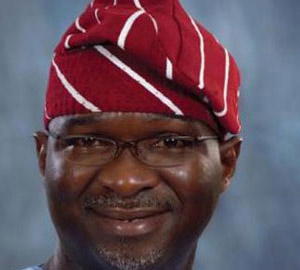
Governor Fashola of Lagos
BY SOLA OGUNDIPE
CHRISTIANA was born with a hole in the heart – one of the commoner congenital heart disorders health care providers are currently coping with. She was sickly and miserable since birth, and her anxious parents had a running battle keeping her alive.
For years the little girl barely survived, her state of health was so very poor. She was completely inactive. The seven-year-old had stopped schooling the previous year and was a shadow of her old self.
Her parents ran from pillar to post, word got around, and till they got information that the Lagos State government had an initiative in place at Lagos State University Teaching Hospital (LASUTH), through which heart disorders like the one Christiana had were being corrected.
They were fortunate to get the ears of the office of the Lagos State Governor. Pronto, Christiana was admitted into the hospital’s Critical Care Unit (CCU). Tests were carried out and in a matter of days, she had the life-saving corrective heart surgery. It was a resounding success.

Governor Fashola of Lagos
Today, Christiana is fully recovered and has resumed school.Abdulateef’s case is similar. He was first diagnosed at five months when his mother, began to suspect there was something wrong with him. Whenever she backed him, she observed he wasn’t breathing properly, so she took him hither and thither to no avail until somebody advised her to take the ailing infant to LASUTH.
A quick scan showed the little infant had an abnormal condition. There was a hole in his heart. His poverty-stricken and confused parents became hopeful. But when they learned the corrective surgery would cost up to N500,000, their last shred of hope began to wane again.
Once again, through providence, the Critical Care Unit (CCU) came to the rescue. Governor Fashola’s initiative paid off, yet again. Abdulateef had a successful corrective heart surgery and was rescued from the jaws of death without paying a dime. He has also fully recovered and is back home.
Christiana and Abdulateef are two of a kind. They are just two of the dozens of Nigerians children and adults who are stricken with heart problems, and have sought succour from the Critical Care Unit (CCU) at LASUTH. Many of the disorders which are congenital in nature can be corrected, but lack of financial enablement and empowerment is the greatest stumbling block.
In the view of Dr. Bode Falase, an experienced cardiothoracic surgeon at the CCU, over the last three years, no less than 24 corrective heart surgeries have been carried out at the unit. “The CCU is essentially an effective life support facility incorporating a theatre for advanced surgery, an intensive care unit and an amenity ward facility.
It includes facility for admission of critically ill patients while managing post operative patients with different types of complications from other units from both within and outside the hospital, in Lagos and other States. “Christiana suffered from Atrial Septal Defect (ASD) which is more commonly called a hole-in-the-heart.
He observed that the defect occurs quite commonly in this environment. In a chat with VF, he said “Christiana had a hole in the top two chambers of her heart. Blood from the left side of the heart under high pressure was being shunted to the right side of the heart.
The end result of this is that there was more blood on the right side which was going through her lungs a condition which, overtime, could lead to right-sided heart failure, hypertension in the pulmonary arteries and eventually death if nothing is done.
He said even though the hole in Christiana’s heart was small, if it had not been closed, her condition would have got worse over time. “When we first saw her, she was in good state of health and had been well managed medically, and she was assessed as someone who would benefit from corrective heart surgery.
It was a relatively small hole, we put a patch over it and she recovered uneventfully. The surgery itself took less than an hour, but all the preparations stretched the whole process to about three hours.Speaking on Abdulateef’s case, Dr. Michael Sanusi, also a consultant paediatrician and cardiothoracic surgeon in the unit, confirmed the boy was recommended by the Medical Board.
“He was evaluated to have a Ventricular Septal Defect (VSD), which is essentially a hole between the lower pumping chambers of the heart. He needed to have open heart surgery immediately. The State Ministry of Health paid fully for the procedure, and the visiting medical team did an excellent job.
Essentially, ASD and VSD are among the commoner conditions in children with congenital heart disorders. They are among the easier defects to correct and have generally good outcomes. According to Falase, the surgery a low risk.
“There are many children out there with this problem and with the current set up here the output is very good. The disorders which are seen in around 15 percent of patients in the critical care unit can be adequately managed, with the right facilities and funding in place.Falase remarked that Abdulateef had a hole in the lower part of the heart.
 “If surgery hadn’t been done his heart would have also failed. The condition is congenital, and there is no known way of predicting its occurrence. It is like this, if there are 1,000 births, 1-5 may have it. Some defects are caused by drugs or pregnancy, and most times there is no clear cause, they just occur during the formation of the baby.
If the defects are major, the baby may not be born at all.”Falase, who heads the cardiac surgical team at the CCU, confirmed that there is on offer a comprehensive list of healthcare specialists and other personnel, backed by a well equipped laboratory with facilities for blood analysis and other investigations. Challenge is funding.
“We see many patients coming forward with these complaints, but we do not have the funds to assist. Even for this girl, the family didn’t have the money; the state government had to step in. This surgery would have cost N1.2 million.”Usually when we see the patients they plead inability to raise money.
Since we do not want to run the risk of rejecting patients because they are unable to pay, we ask them what they can afford. What we are trying to do is to encourage patients to come early for treatment early so that we can assess them. The risk of surgery is low.
The chances of death for closing up a hole in the heart are about 1-2 percent. Falase, an experienced cardiothoracic surgeon, said at the moment, the cost for the kind of operation Christiana and Abdulaeef had is N1.2 million each.
For most patients in Nigeria, the challenge has not been that of availability of treatment, but that of raising funds for the surgery.Lamenting challenges of the CCU, he noted that it was set up to be self sustaining in offering critical care health services, and not primarily for profit.
“The Lagos State government invested a lot in resources, equipment, manpower, training, and we are now at a point where the straightforward simple procedure that could benefit people requires funding. Most patients cannot afford the funds.
The biggest challenge now is that there are patients that we can help but without funds we are handicapped there are no funds to do so. The way out is to look for avenues to get funds.”
In his recommendation, Falase argued for a pool of fund which must be regularly replenished so all that is left to worry about is assessment of the patient, ensuring there is no high risk, and tapping into the pool to get the surgery done. “Insurance could come in, It could be more of a combination of solutions, but for the poor patients, what they need is access to the funds.”
Stressing the fact that the cardiac programme is at the cross road, he remarked: “Government gave us money last year and so far we have successfully done 24 cases. The money was N35 million, each surgery cost N1.2 million. We have been able to stretch the money further than it could have gone even then we have spent N27 million, but the number of cases we can continue to do is limited.
We are currently only trying to see how many more we can do before the money runs out. Without proper replenishment, we are at risk of not being able to carry on with this programme.”Giving a run down of the situation, Falase observed: “Right from getting ready for the surgery, blood, tests, and others are estimated at about N250, 000.
Consumables are imported at high cost for one operation alone is N350,000-N5,00,000; drugs N100,000; oxygen, compressed air, anaesthetic drugs, ventilation, etc N300,000-N500,000; During surgery, the hospital incurs costs running generators and inverters.
Everything is costed, “When we started, each procedure was N1.5 million (about $6,000), and we are still trying to bring the cost further down. It is still actually cheaper than what it would cost in the US and in the UK, where the average heart operation costs about 12,000 pounds sterling; in the US it is about $18,000; in India, these surgeries cost $7,000 – $8,000, and with the added cost of having to travel.
Currently, there are no less than 50 patients in the wards now who require surgery but cannot be attended to because of lack of funds.”Further, Falase said there are many units trying to set up surgery for cardiac surgery.“Where do the funds come from,” he asked.
“We either say people do not need the surgery, and if they do, we fund it. It is either they don’t deserve it, or they do. The point is we either want to say we can provide cardiac surgery and we can fund it or we note that only the lucky few who have the funds can be brought for surgery.”
Disclaimer
Comments expressed here do not reflect the opinions of Vanguard newspapers or any employee thereof.