By Biodun Busari
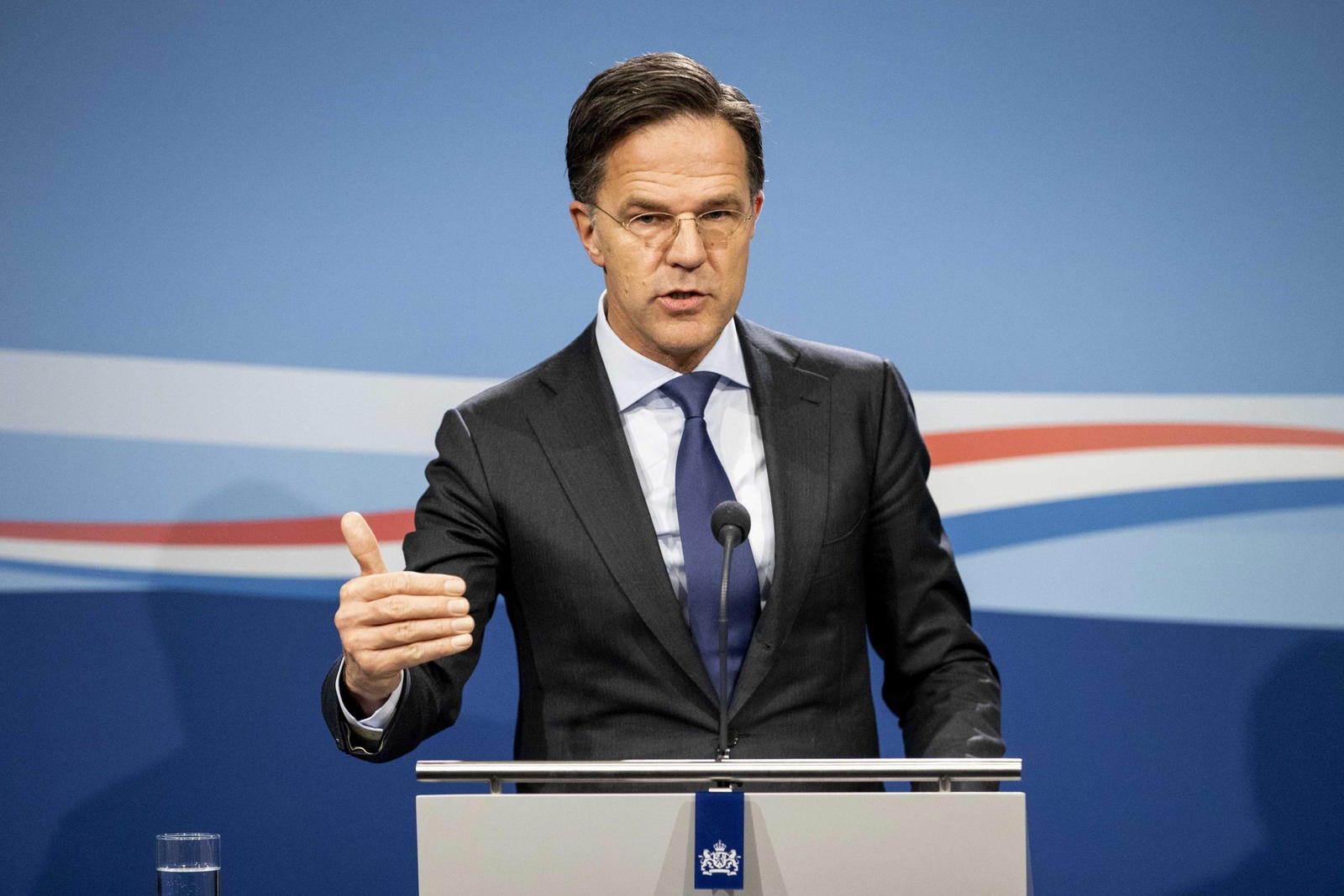
Dutch Prime Minister Mark Rutte has apologised on behalf of the Netherlands for the negative effects of its participation in the “slavery past” of its former colonies.
Rutte made the apology on Monday during a speech at the country’s National Archives in The Hague.
“For centuries under Dutch state authority, human dignity was violated in the most horrific way possible,” Rutte said.
“And successive Dutch governments after 1863 failed to adequately see and acknowledge that our slavery past continued to have negative effects and still does. For that I offer the apologies of the Dutch government.”
“Today, I apologise. For centuries, the Dutch state and its representatives facilitated, stimulated, preserved, and profited from slavery. For centuries, in the name of the Dutch State, human beings were made into commodities, exploited, and abused,” Rutte said.
He, then, said slavery must be condemned because it is a “crime against humanity.”
He also said he has a “change in thinking” describing the Netherlands’ role in slavery as “a thing of the past.”
“It is true that no one alive now is personally to blame for slavery. But it is also true that the Dutch State, in all its manifestations through history, bears responsibility for the terrible suffering inflicted on enslaved people and their descendants,” he said.
The Dutch government said on Sunday that it will apologise for the Netherlands’ role in exploiting more than 600,000 people of the former colonies in 250 years of slavery.
Read also:
Netherlands commends PharmAccess’ success, collaboration with NHIA, Delta Govt
Drake loses staggering $1m bet despite Argentina World Cup win
2023: Tinubu not capable of ruling Nigeria, Atiku better choice, Shekarau insists
Johan Roozer, chairman of the Surinamese National Commemoration of Slavery Remembrance Committee told reporters last week that Rutte probably wanted to stick to this date because of the “changing political situation” in the Netherlands, with far-right Dutch political parties against the apology.
According to local media reports, the government also plans to announce a 200 million-euro ($212.8m) fund to promote more awareness about the Netherlands’ role in slavery and another 27 million euros ($28.7m) to open a slavery museum.
“All of this definitely gives a form of acknowledgement that finally the country, which is still a democratic monarchy, is ready to talk about the past.
“Basically, everything that the Netherlands stole from the former colonies, especially Suriname, they carried out through slavery,” said Colin de Bie with Dutch and Surinamese background.
“While this acknowledgement is also a form of investigation to understand what exactly happened in the past, it is also important to question what the next step looking into the future will be,” he said.
“Will the government invest in the countries they stole money from? What are their plans to support all the descendants of former slaves who are still struggling?” de Bie, who is based in Amsterdam and works part-time at the Anne Frank House, asked.
The Netherlands’ involvement in slavery began in the 17th century when the transatlantic slave trade was already being carried out by other former European colonial powers like Spain and Portugal.
Through the Dutch West India Company (WIC), the Dutch Empire began colonising large parts of land in South America and the Caribbean and bought slaves from Africa to work on the sugar, cotton and coffee plantations of these lands.
According to a study by Leiden University, “between 1612 and 1872, the Dutch operated from some 10 fortresses along the Gold Coast (now Ghana), from which slaves were shipped across the Atlantic”.
The study also highlighted that the Dutch role in the transatlantic slave trade involved exploiting about 550,000-600,000 Africans.
Disclaimer
Comments expressed here do not reflect the opinions of Vanguard newspapers or any employee thereof.