.
By Kennedy Mbele
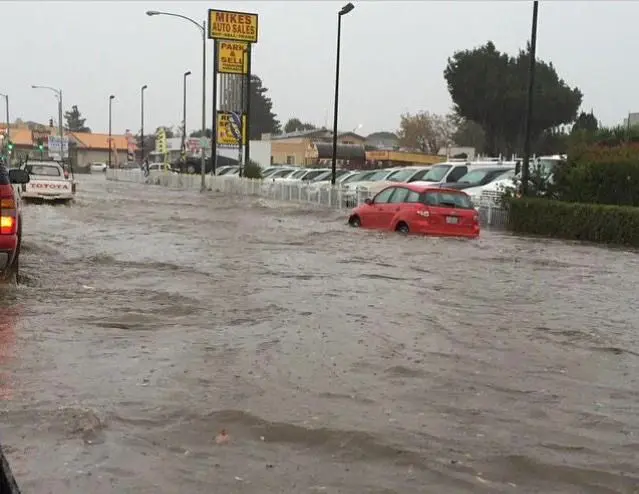
From Delta to Bayelsa, Kogi, Jigawa, Benue, Imo, and Anambra among other states, the scenes are scary: Homes submerged by floods, properties floating, roads cut off and desperate residents paddling canoes to escape what at best is an Armageddon.
In some states, floating corpses were said to have been sighted after floods exhumed them from mortuaries. But the waters didn’t just come. They were a product of heavy rains and the release of water from Lagdo Dam in far away Cameroon and the waters, on their way to Atlantic Ocean, are passing Nigeria and, in the process, wreaking havoc. As at the last count, 600 are dead, according to official figures of the catastrophe.
It is now on record that the floods are the worst in decades. But the disaster didn’t just happen. There were warnings from the Federal Government through two of its agencies, the Nigerian Hydrological Services Agency, NIHSA, and Nigerian Meteorological Services Agency, NIMET, which went unheeded by states. In this interview, the Director General of HIHSA, Clement Nze, speaks on issues relating to the floods. Excerpts:
A statement by the Nigerian Hydrological Services Agency, NIHSA, and Nigerian Meteorological Services Agency, NIMET, on the ravaging floods says the worst is yet to come even though over 600 lives have reportedly been lost. Talk to us about that.
The Nigerian Meteorological Services Agency, NIMET, sympathizes with families that have lost their loved ones in the course of this flooding.
By the statement we issued jointly, what we are saying is the water is receding. For instance in Lokoja, which is the epicenter of flooding and where you have the convergence of the two major rivers (Rivers Niger and Benue), the flood level is drastically going down, below what we saw on October 4, which was higher than what occurred on September 29, 2012. By saying that we mean Kogi State is yet to get out of it. The flood level will be going down, gradually.
Still, there are local government areas within the state, like Ibaji, that will still remain under water. Then, what we saw in Lokoja since October 4 is that they control the water from Lagdo Dam in Cameroun, the water will travel down, then, attenuate…go down to Niger Delta states before going into Atlantic Ocean. So, we are not yet out of it.
We are not yet out of it but if you look at the fact that 232 LGAs in 32 states and the FCT have been affected by the floods and your warning came as early as February. What would you say happened between February and when this disaster occurred in September? How could this happen when it could have been avoided?
That is what we have been speaking about, that the early warnings given by the agencies at the federal level, NIMET and NIHSA were not heeded by sub-nationals. For instance, I saw in Delta State an amphibious equipment that can work on water and on land being used to excavate at this particular time of the year. You look for the black sheep in the afternoon, not in the night. So, when those advice and warnings are given, it is expected that the states will go to work, look out for the areas that have been pin-pointed in your own state.
For instance, the Hon. Minister of Water Resources, Engineer Suleiman Adamu, each time this forecast is released to the public, personally endorses letters to each state governor, with a package; the one-page letter will contain the names of the LGAs that would be affected, the booklet that gives you the general overview of the whole country will also be enclosed and described, appropriately, to the Government House.
So, it is expected that the states will run with it. In developed countries where people take things seriously, everyday, people look out for weather advice to know if they can go out or not, but when these are given here, people go sleep.
They don’t remember it; whereas, at the state level, you have various agencies under state government that can handle its own NEMA activities or supposedly because I know that, in some cases, only two or three people would just be there, and in some other offices, they may not even have a vehicle to move around with.
When the warnings were released, there were categories of the impacts of the flooding that we gave. States like Adamawa, Benue, Kogi, Kwara, Anambra, Imo, Delta and Bayelsa were put under red alert. Other states did not see as much devastation compared to the states that were not under that category.
But what did those states do differently, so others can learn to mitigate the impact, as the rain is still coming back? The major factor responsible for flooding is rainfall. This particular year, as predicted by NIMET, many cities or states experienced above normal rainfall. For instance, Jigawa had above normal rainfall.
In some locations, maybe the annual rainfall is about 800mm, but about half of it occurred in a few hours, heavy amount of rainfall, rainfall of high intensity and over a short period led to flooding, coupled with human activities such as blocking of drainage. It was a prediction, subject to vagaries of weather, climate change but it is a working tool that people should have worked with. And you don’t lose anything when you err on the side of caution.
You have been told, “be careful about these locations”; better heed the warning, if at the end of the day, it doesn’t come as predicted, you didn’t lose anything.
Nigeria produces less than 1% of global green house gas emissions but actually suffers from climate change. She is also categorized as one to the top ten most vulnerable to climate change in the world. Lives and property are lost on a large scale. Beyond the warnings, how can flood disasters be prevented?
At the global level, there is a shift in terms of rainfall. We expect that once you get these advisories…someone asked us what we did as an agency. We can’t travel to Bayelsa or Delta and begin to do physical works in their environment after giving them the advisory. We expect that instead of using excavators to begin to clear under the rain in September, by last December, you should have done an audit of your environment. You will see the signature of the flood. It will tell you the area it has reached. Then, take appropriate measures:
1. Remove structures that are impeding the flow of runoff.
2. Widen your drainage systems
3. Clear blocked drainage
4. Don’t allow people to build without designs that make provision for the drainage system
5. Heed the warnings. Where you need to evacuate the people, please, once you get early advisories, make preparations. The Federal Government has been doing a lot.
Like what the Minister of Humanitarian Affairs said, I am aware that under the Presidential Committee on Flood and Rehabilitation, headed by Alhaji Aliko Dangote and Mr Olisa Agbakoba, IDP flood camps have been built and provided with facilities. It is like students’ dormitory. During this part of the year, states should move their citizens to such places.
It is a full-fledged hostel. States should team up with the Federal Government. Ask any of the states, what did they do since February when they got the warnings to prepare themselves, except now that we are inside flood, you can see activities all over the place?
* Interview first aired on Arise News
Disclaimer
Comments expressed here do not reflect the opinions of Vanguard newspapers or any employee thereof.