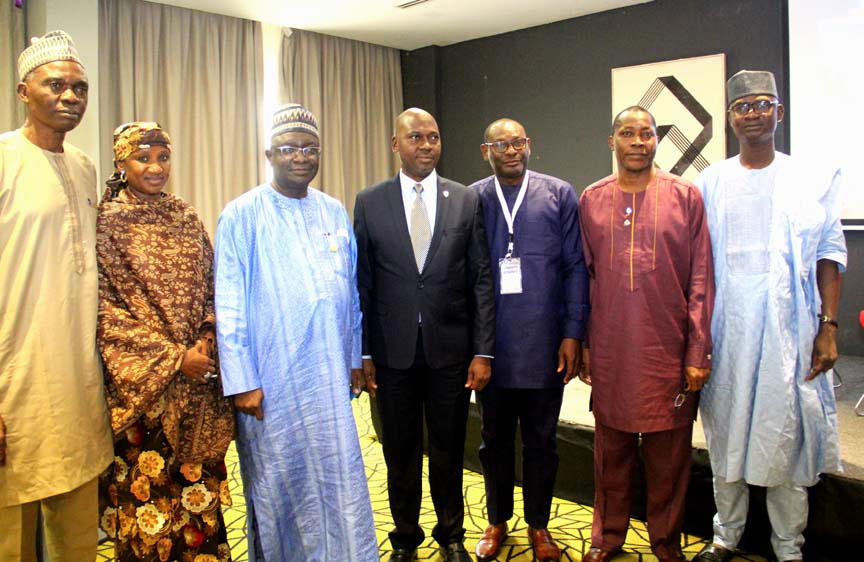
By Moses Nosike
The American Society of Civil Engineers (ASCE) Nigeria Section in its recent conference reiterated its commitment towards national development with highest level of ethical practice obtainable anywhere in the world. So, in its passion for preparing the civil engineering profession for tomorrow’s world, has drawn a roadmap, “Vision 2025 Conference” in its effort to redefine what it will mean to be a civil engineer in the world of the future.
In his opening remarks and in line with the conference’s theme: Civil Engineering And The Future of The Built Environment: Opportunities and Challenges, ASCE President-Elect, Nigeria Section, Engr. Austin Odibi said that the message of the theme of the conference is bringing to the fore in Nigeria an aspirational global vision that was developed by ASCE that sees civil engineers entrusted by society to creating a sustainable world and enhance quality of life through competence, collaboration with various stakeholders, and ethically attending to the built environment as master builders, environmental stewards, innovators and integrators, managers of risks and uncertainties, and being involved as leaders in shaping public policies.
In his chart with newsmen during the conference on the role of ASCE and contribution to national development, Engr. Odibi said, “ASCE provides professional guides, ethics and technical innovations to civil engineers in planning, designing, constructing and operating the built environment, which is society’s economic and social engine in order to protect and restore the natural environment”.
Continuing, he said that emphases are also more on young engineers who are being entrusted with leadership and safety of the public now and in the future; this goes a long way in improving the standard of life through safe living and economic growth.
On why ASCE was established in Nigeria, Engr. Odibi enthused that ASCE Nigeria Section was established to collaborate and expose our teaming civil engineers, especially younger engineers, to the technical resources, innovations and opportunities available globally. “Also as a member, you don’t just have the privilege to develop your career to meet the world’s standards, you also have the opportunity to showcase and contribute your innovations to the global civil engineering family and ultimately improve life”.
Speaking on the challenges confronting civil engineering practice in Nigeria, Engr. Odibi said,”the foremost is quackery, which has continued to claim many innocent lives, caused hardships to the public and also impacted negatively on the image of the profession and the country”.
However, he said that part of our discussions is sensitising various stakeholders in the built environment on the need to enforce firm regulations to end quackery. “Another is for young and inexperienced engineers to crave for mentorship, receive adequate trainings, collaborate among the profession and recognise risks and how to mitigate them.
These are what ASCE stands are for and are also available for experienced engineers to continue to develop their skills in order to catch up with continually unfolding innovations. Other challenges include poor design skills, inexperience, poor supervisions, use of substandard building materials, cutting corners during construction and poor attitude to maintenance of the built environment”.
In addition, the President, Engr. Rasheed A. Hassan said, “As one of the Sections of the ASCE, Nigeria has had her fair share of transition from what civil engineering practice used to be and what it is today. With the understanding of what is obtainable in the space of civil engineering globally, Engr. Hassan encourages his colleagues not to relent in seeking those attributes required to perform excellently in the field of engineering sector”.
According to him, civil engineers should engage in consistent learning, problem solving, critical, global, integrative/system, creative thinking, teamwork, communication, self-assessment. He further advised members to imbibe attitudes conducive to effective professional practice which include commitment, curiosity, honesty, integrity, objectivity, optimism, sensitivity, thoroughness and tolerance.
In the same vein, Governor, ASCE Region 10, Engr. Saliu Lawal speaking on the impact of civil engineering on our environment said, “we impact on the environment on a daily basis because the built environment is everything that has to do with you and I, the road we ply, the water we drink, the houses we live in, how electricity gets to you at your location. How do we as civil engineers impact on the environment? We are responsible for the construction of roads, responsible of maintaining the roads, constructing buildings, bridges, practically everything that has to do with you and I living a good life. All this has to do with civil engineering.”
Following all this, Engr. Lawal further said that it is important that we practice the profession with all sincerity of purpose and integrity, even as he mentions quackery as one of the major challenges of civil engineering profession.
Organisers of the conference presented panel discussion with Engr. Peter Akpelu, Engr. Nimot Muili, Engr. Peter Sarki, Engr. Adeniyi Adeyemo and Engr. Aileme Unuigbe as moderator. The discussants did justice to topics as they concern the theme of the conference.
Disclaimer
Comments expressed here do not reflect the opinions of Vanguard newspapers or any employee thereof.