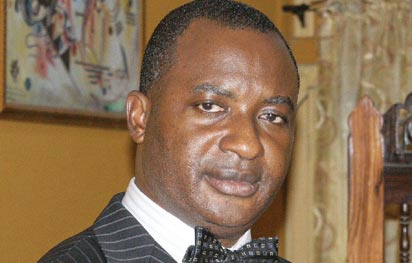
*Abiola
By Johnbosco Agbakwuru
THE three man Election Petitions Tribunal in Cross River State led by Justice G. Mohammed Nabarun , seems to have been on a fast track since it started sitting. The tribunal is expected to work for 180 days. However, there have been claims of rigidity by the Chairman of the tribunal. In this interview, one of the lawyers representing the Independent National Electoral Commission, Mr. Sanni Abiola explained the reason while the commission did not file its reply on time and the consequence of the tribunal not allowing the commission to file its reply to the petitions.
Excerpts:
There are claims that INEC was not allowed to file its reply to the petitions at the Election Petitions Tribunal in Cross River State?
It will be incorrect to say that INEC was not allowed to file its reply to the petitions. You need to understand that upon the receipt of the petitions, INEC had to brief its external solicitors to handle the cases on its behalf. What happened was that, due to administrative procedure inclusive of collating of cases, getting approval from the INEC Head Office in Abuja and briefing the external solicitors, INEC was unable to file its reply within the time prescribed by the rules.
When the external solicitors eventually filed applications for extension of time to file their memorandum of appearance, reply and other processes, the Petitioner objected on the basis that the applications were statute_barred, having not been filed within the prescribed 21 days.
In a few cases which the Tribunal had considered, I understand that the reasons given by the external solicitors were said to be unconvincing, so their applications were disallowed. Unfortunately, people seem to be going away with the impression that the Tribunal is rigid in its approach to late filing of processes in all circumstances. The Tribunal has inherent power to grant extension of time.
Furthermore, paragraph 45 of the First Schedule expressly provides for extension of time. . I pointed this out to the Tribunal when moving our own application and the Tribunal Chairman made it clear that each application will be considered on merit.
Against this background, I will say that it is the Petitioner fighting tooth and nail to exclude INEC. I wonder why they bothered to sue INEC in the first instance If they do not want INEC, it is straightforward to bring an application to strike out INEC if they think that INEC is not necessary for a just determination of the case.

*Abiola
What will be the consequence of this to the ongoing petitions especially as it concerns the issue of fair hearing?
In my view, the Tribunal has a responsibility to promote substantive justice and not technical justice. It will be unfortunate if INEC is excluded in all the trials. INEC is a necessary party.
Some have expressed the view that the implication may simply be that INEC will not be able to file its reply, but that it will not be precluded from participating in subsequent proceedings. I doubt if this is correct. My take is that INEC cannot rightly participate in so far as its memorandum of appearance remains unregularised. The memorandum of appearance is the first document a respondent is obligated to file in order to have a standing and a voice in a trial. INEC cannot build something on nothing.
In any case, if INEC is excluded it will not be able to fully prove its case and explain how the election was conducted. Although, INEC officers may be called as witnesses by other parties, it is not the same as INEC putting its case forward as it considers best.
INEC was accused of colluding with the First and Second Respondents, and the Security agencies to rob the petitioners of their victory at the polls and deliberately delayed filing its reply to frustrate the Petitioners, how true is the allegation?
As I have earlier explained, I sincerely do not think that the delay by INEC was deliberate. We had exhibited before the Tribunal the internal communications between the State Resident Electoral Commissioner (REC) and the Head Office to show that the former acted timeously. While I believe INEC will learn from this development as well, it will be unfair to say or even suggest that the delay was deliberate.
About collusion, I cannot speak generally for INEC and other counsel. But I can say as of fact that the REC in his briefing was emphatic on the need for INEC’s external solicitors to remain fair, impartial and focused. He has promised to make available all necessary documents to all parties in a transparent manner that is unprecedented in this country.
What is more, experience has shown that collusion between INEC and parties may not be sufficient to destroy good cases, because other parties will not just fold their arms and watch helplessly. The Press also has the responsibility to report and expose cases of collusion.
Disclaimer
Comments expressed here do not reflect the opinions of Vanguard newspapers or any employee thereof.