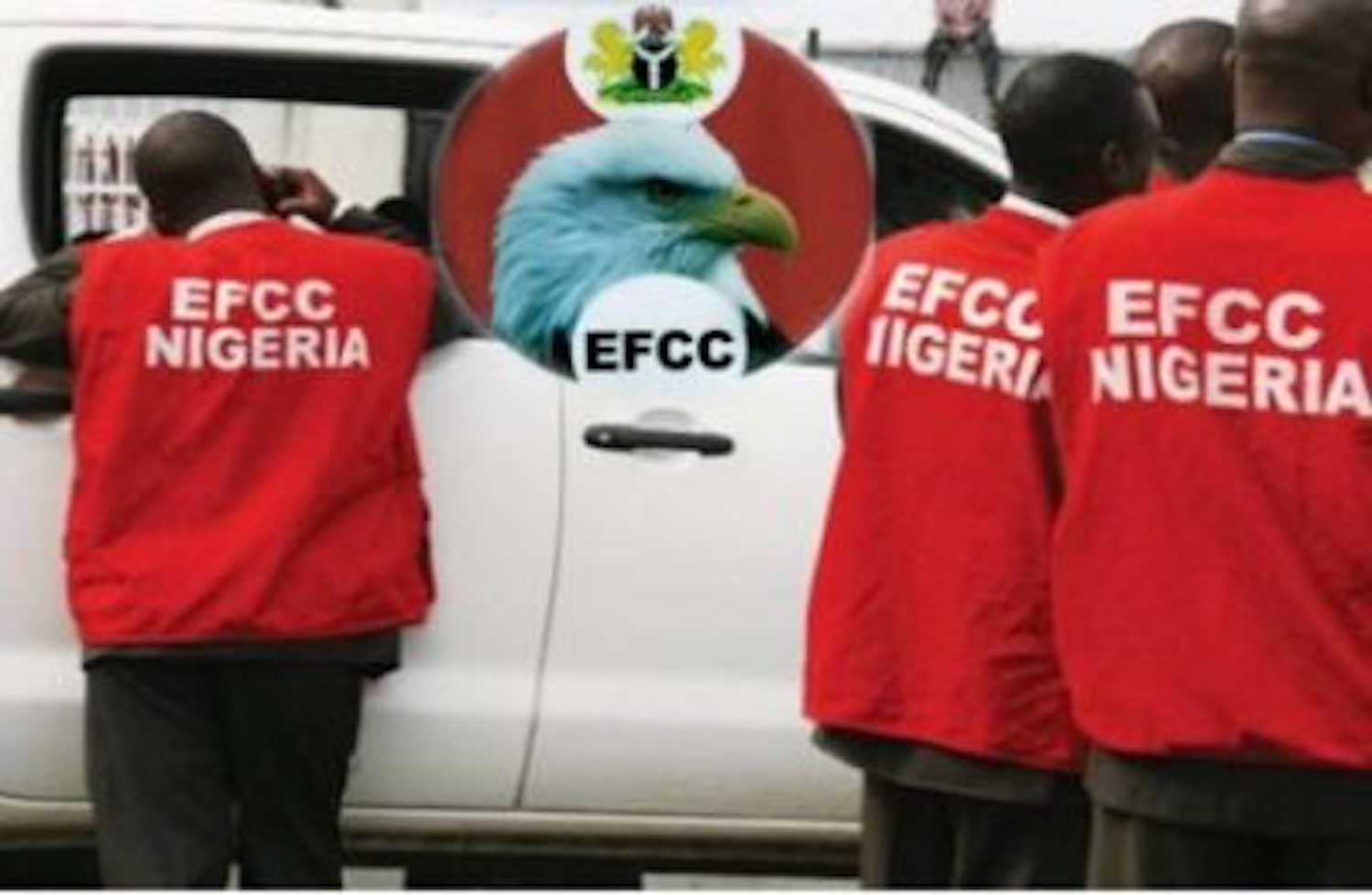
Stock photo
…Urges partnership with Nigerians
When the Economic and Financial Crimes Commission (EFCC) was established in 2003 during the administration of President Olusegun Obasanjo, it was done in an attempt to extend the frontiers of law enforcement in Nigeria and, more importantly, to save face in the international community, especially after Nigeria had been labelled by the Financial Action Task Force on Money Laundering (FATF) as one of 23 countries that were not cooperating in the global fight against money laundering.
It must be said that eighteen years after its establishment, the EFCC’s fight against advance fee fraud (419), money laundering and financial misappropriation by government officials has recorded many casualties, with the sustained degradation of the organization’s reputation and professionalism being amongst the many.
Generally, law enforcement agencies around the world tend to experience incidents and outcomes that negatively affect their reputation, albeit for a while, usually from how poorly they have handled an arrest or prosecution, or how badly compromised they have been judged to be in their pursuit of justice. But to have your reputation constantly precede you, and entangle your operations in one controversy after another, and to be regarded as an undisciplined agency filled with unprofessional officers that disregard the rule of law is a difficult position to be in – at least, for a law enforcement agency like the EFCC.
In a recent End-of-Year Perception Poll, The Avalon Daily posed this question to its online audience: What is your current perception of the EFCC? Respondents were required to choose one of four options namely Professional, Political, Abusive and Corrupt. Judging from news reports on the shabby and unprofessional manner the supposedly elite agency conducted itself throughout 2021, the unflattering responses were unsurprising.
Results
A total of 5100 persons were sampled for this perception poll and the results were staggering but unsurprising. 45% of the respondents perceived the EFCC as corrupt, 34% perceived them as abusive, 17% as being politically influenced and only 4% perceived them as professional.
The poll was administered digitally via our mailing list and on social media, specifically Twitter, Instagram and Facebook, where the average age is between 18 and 34. At least 85% of the respondents live in Lagos and Abuja.
Focus Groups
To better understand why the EFCC is perceived to be corrupt and abusive, we held a focus group discussion with 10 young entrepreneurs between the ages of 18 and 30 in three different batches across three cities: Lagos, Abuja and Ibadan. We ensured that the young people selected had encountered officers from the EFCC directly or indirectly in order to validate their individual lived experience and shared realities.
Of the 30 people selected, 7 have had a direct encounter with the EFCC, while the remaining 23 had encountered them during hostel, club and hotel raids. Of the 30 persons interviewed in this discussion, only 2 thought the EFCC handled the matter professionally. The other 28 narrated experiences that were far from professional in conduct and could very much be described as abuse of power and authority.
Insights
From the discussions held, it would seem that in many operations (raids), the EFCC do not act on actionable intelligence but on impulse. Hence, valid warrants are hardly obtained before raids are conducted in business premises (especially hotels and clubs) where everyone is treated like a criminal. More so, many of the participants expressed disappointment with how their rights were grossly violated ostensibly in the EFCC’s line of duty. They expressed greater concern that an elite institution with highly trained personnel struggled with basic respect for human decency and respect for the rule of law.
The focus group concurred that a common tactic employed by the EFCC – one that is clearly designed to exploit Nigeria’s weak justice system – is to frustrate those that have been illegally arrested and detained into taking plea deals or outright settlements even when they have not committed any obvious crime.
There is also the prevalence of a patronage system and rent-seeking component to their operations. For instance, a club owner who knows that EFCC raids could lead to diminished patronage would rather befriend EFCC officers, rather than attempt to sue them for harassing his customers. Also, suing the EFCC could mean sudden raids every other week under the guise of carrying out searched to find people committing cyber fraud.
While acknowledging the importance of EFCC’s fight against cybercrimes, many of the respondents believed that their operations should be intelligence driven rather than reactionary where young people are profiled and harassed just because they fit into a certain stereotype. They shared belief in the fact that the agency will record better success, especially in prosecution, if their operations are guided by the rule of law.
Conclusion
If there is any hope left for the EFCC to salvage what is left of its almost-ruined reputation, it has to see the Nigerian public as a partner in progress, not as a group of people to oppress and harass at will. While the EFCC derives its legitimacy from the powers of the federal government, it must also understand that it is a public-facing organization whose long-term acceptability and recognition is built on transparency, due process, and public accountability.
Organizational transformation experts believe and affirm that feedback is a good thing. The result of the perception poll should be taken as constructive criticism and valuable feedback by the EFCC. It presents new insights that are beneficial to the agency and its operations.
The EFCC must accept that Nigerians now have a say in how its role and activities are perceived. The end of 2021 is a good time to extensively modify its operations, retrain its staff ahead of 2022, and take a long, hard look into why majority of Nigerians regard it as a corrupt agency – the very embodiment and antithesis of what it was set up to tackle.
Disclaimer
Comments expressed here do not reflect the opinions of Vanguard newspapers or any employee thereof.