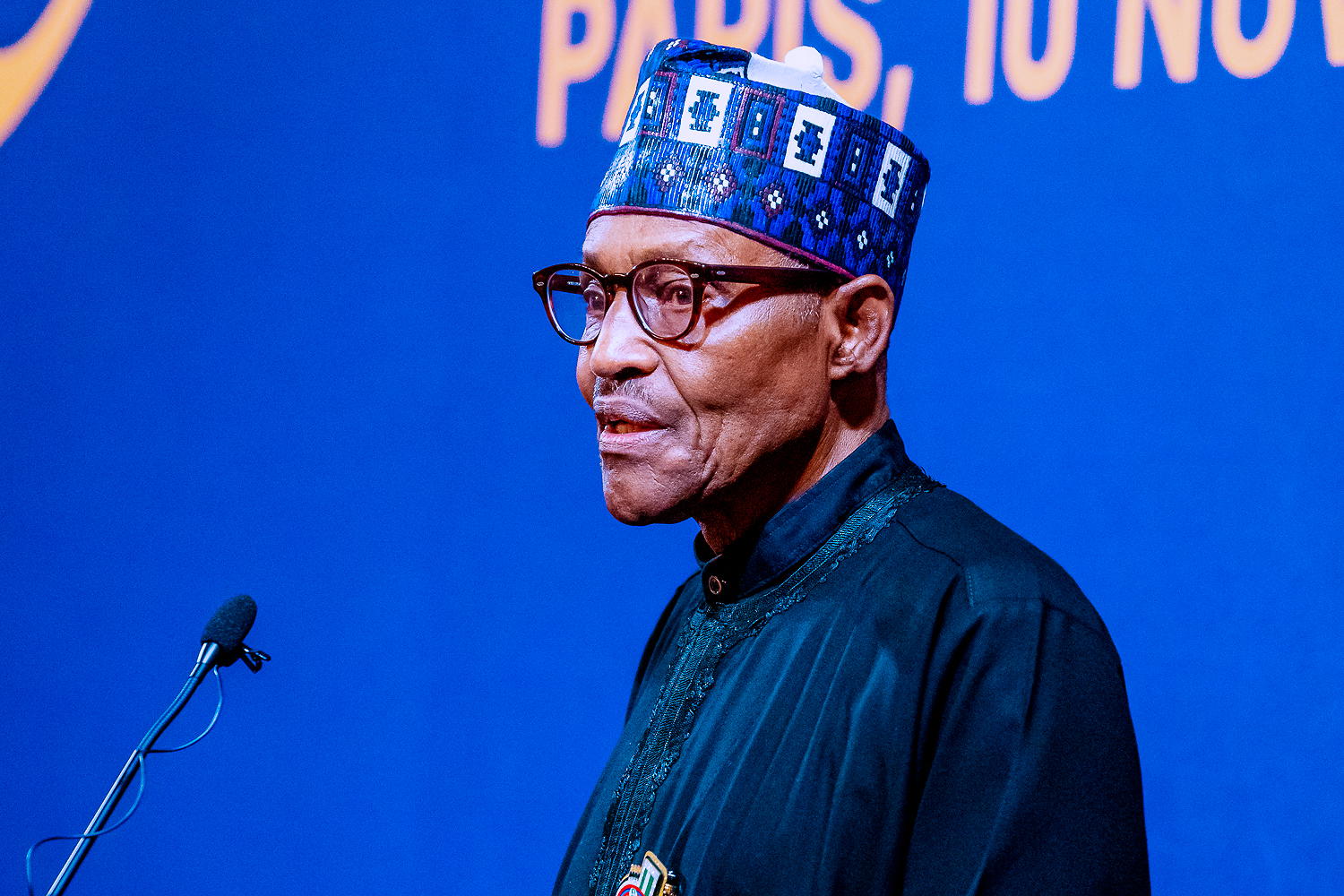
Muhammadu Buhari
By Gabriel Ewepu
Civil Society Organisations, Civil Society Legislative Advocacy Centre. CISLAC, and Transparency International, TI, Thursday, blasted President Muhammadu Buhari, over alleged failure and throwing Nigeria into deep and widespread insecurity, unemployment, poverty and inequality, and others.
This was contained in a statement signed by the Executive Director, CISLAC, Auwal Ibrahim Rafsanjani, as Nigeria joins rest of the world to mark 2021 International Anti-Corruption Day with theme ‘Your Right, Your Role, Say No to Corruption’.
The statement highlighted some pertinent issues that it alleged the Buhari-led administration allegedly is not tackling as expected based on what it promised to do when it gets into power.
The statement reads in part, “In Nigeria, the story is not different. President Muhammadu Buhari’s failure to quickly tackle the legacies of misgovernance inherited after coming to office in 2015 and missteps by the administration has sunk the country deeper into widespread insecurity, unemployment, poverty and inequality, voter apathy, corruption and impunity, extra-judicial killings and high-handedness among law enforcement and security agencies, and a widening distrust for government among citizens.
“The world still remembers the unprovoked mauling of young Nigerians during the #EndSARS protest, in Lagos.”
The statement further reads thus, “We therefore call on the Nigerian government not to see the 2022 Summit for Democracy as another photo-op, and instead roll up the sleeves to use the opportunity to mobilize partnerships and resources necessary to tackle corruption and impunity which currently poses the greatest existential threat to Nigeria.
“We call on the Nigerian government to commit to the listed issues: Address dirty money in Nigerian politics and public sector; The Nigerian government must immediately commit to the independence of anticorruption agencies and prioritize the fight to combat dirty money in politics. The lack of independence for the anticorruption agencies affects funding, appointment, tenure of office of heads of the agencies, and their operational independence.
“This affects the ability of the agencies to take bold actions against dirty money, despite actionable intelligence and financial data leaks like the recent Pandora papers report.
“These agencies find it hard to act on the illicit financial outflows. It is estimated that Nigeria loses about $18 billion annually. Therefore, we call on the Nigeria government to: A) Establish public, central beneficial ownership registers of legal entities and arrangements; B) Mandate and resource public authorities to establish mechanisms to independently verify the accuracy of beneficial ownership information provided by legal entities and arrangements.
C) Require foreign companies investing in Nigeria to abide by the same beneficial ownership transparency requirements as domestic actors; D) Apply proportionate and dissuasive sanctions to companies and individuals in cases of noncompliance; E) Record and publish beneficial ownership information of companies awarded public contracts or concessions; F) Investigate the Panama, Paradise and Pandora leaks and publicly publish the reports.
“Regulate enablers of corruption: President Buhari to commit to addressing major corruption enablers but mandating the Central Bank of Nigeria (CBN), the Nigerian Financial Intelligence Unit (NFIU) and relevant anti-graft and law enforcement agencies to prioritize and ensure financial institutions and professionals as well as designated non-financial businesses adhere to existing Know Your Customer (KYC), Customer Due Diligence (CDD) as well as Enhanced Due Diligence (EDD) requirements to prevent the cross border flow of Nigeria’s resources through illicit means by politically exposed persons, business persons, religious bodies, private individuals and their collaborators.
“The Ministries of Justice and Foreign Affairs should work in cooperation with their international counterparts to ensure that global enablers/intermediaries like lawyers, notaries, accountants who help facilitate money laundering and tax evasion are sanctioned appropriately while stolen assets belonging to Nigeria are repatriated.”
It also added that, “Specifically, the government should commit to: A) Extend anti-money laundering rules to all professionals and entities providing services bearing risks of money laundering; B) Require gatekeepers to identify the beneficial owners of their clients, including both domestic and foreign politically exposed persons (PEPs), conduct enhanced due diligence on high-risk customers and report suspicious transactions to competent authorities
C) Ensure adequate powers as well as technical, human, and financial resources for supervisory authorities, law enforcement and Nigeria financial intelligence unit to fulfill their responsibilities; D) Subject gatekeepers to dissuasive and proportionate sanctions, ranging from license withdrawal to monetary fines for noncompliance with anti-money laundering obligations. Sanctions should cover both legal persons and senior management.
“Support anti-corruption activists and whistleblowers; The Nigerian government must ensure that actions by state actors and non-state actors leading to the shrinking civic space as observed by the CIVICUS and Freedom House stop. The government must commit to defend whistleblowers, journalists, anti-corruption activists and human rights defenders.
“Specifically, the government should commit to: A) Support engagement with investigative journalists and civil society organizations for systemic change; B) Establish specific funds to support anticorruption practitioners such as whistleblowers; C) Develop a framework for public interest organizations to bring collective compensation claims on behalf of victims of corruption.
D) Provide credible and well-functioning corruption reporting mechanisms that allow citizens and civil society organizations to report corruption safely and confidentially; E) Ensure that legislation regulating non-profit organizations does not restrict the capacity of civil society Human Rights Defenders (HRDs) to operate; F) Prioritize the passage and implementation of comprehensive whistleblower protection laws, in line with international standards and best practice, and ensure that whistleblower protection legislation is effectively implemented and enforced.”
Disclaimer
Comments expressed here do not reflect the opinions of Vanguard newspapers or any employee thereof.