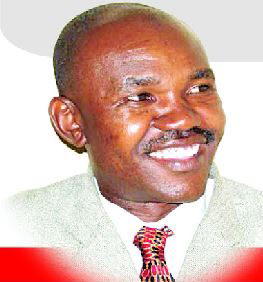
By Tony Eluemunor
Pray, why should a small country of less than three million people out-sprint the entire Nigeria in the Commonwealth Games and the Olympics? Ah, I’m talking about Jamaica.
Nigeria may not toe the line of the US, Britain, Japan, China, Germany or Russia where sports is the continuation of the competition for global political and economic domination. But Brazil is not England and yet it is a world-beater in football. See ordinary Indonesia: It not only won a gold medal in the 2021 Tokyo Olympics, it has always done so since Badminton became a competitive Olympics sport.
The Economist of London magazine wrote, first week of August: “In England, where the modern version of the sport originated, badminton is a lawn game, played by people drunk on Pimm’s and sunshine. In Asia, it is a serious business. At the Badminton World Championships in 2019, Asian countries won 19 of 20 medals. In recent decades China has emerged as a heavy-weight.
But Indonesia is the sport’s juggernaut. It has won more titles at the Thomas Cup, the most prestigious tournament, than any other country. Badminton is the only sport in which it has ever won gold at the Olympics—and it has done so at all but one since the sport was introduced in 1992. Indonesia is the “home of badminton.” As the Indonesian Olympics Committee President explained, “within a second you can find people playing badminton. It is simple to get a game going.
Racquets and shuttlecocks can easily be bought or made just stick some feathers into a cork), and once a clothes line and an opponent have been located, the match is on.” So, the game is played everywhere; even auto mechanics play it while awaiting customers, making Indonesia one vast badminton arena.
Here in Nigeria, it is the sport of choice for military and paramilitary officers—to lessen their pot-bellies. Former President Olusegun Obasanjo was very good at it.
Yet, any sport, no matter how popular, must be well-managed for progress to come. The Economist wrote: “Scouts scour the country’s 3.500 badminton clubs for fresh talent. Parents encourage their children to take it up. The rewards for skill and hard work are handsome—not always a given in a country where corruption and nepotism are rife.
Broto Happy, the Indonesian Badminton Association’s spokesman, estimates that new recruits to the national squad earn about 30m rupiah ($2,087) a month, ten times the average income. Those in the top tier can earn billions of rupiah through sponsorship deals.”
Did you note the key phrase: “Scouts the country’s 3.500 badminton clubs for fresh talent?” But in Nigeria, scouts scour nowhere looking for talents. Even when one Anthony Joshua paid his way from London and arrived at the national boxing camp in Lagos ready to fight for a space to represent Nigeria at an Olympics, he was disdained.
Today, he wears British colours but we claim him because his parents were/are Nigerians. In soccer, over-aged players are called to camp from soccer academies and soccer academies only – giving room for corruption and denying secondary school students a place in our age grade teams.
Yet, there is lowly Jamaica. An internet outlet wrote: “But if the early motivation for Jamaicans to become a sprinter came from wanting to run themselves out of poverty (literally!), the platform to succeed at the world stage lies in a high-school competition called the Inter-Secondary Schools Boys and Girls Championships, more popularly known as ‘The Champs.’
“The Champs was where it all started. The tournament where you became a man from a boy. It’s one of the biggest high school championships in the world. If you went there you would see runners of the calibre of Bolt, Fraser-Pryce, Veronica Campbell, Elaine Thompson taking part. All these runners emerged from the Champs,” Blake told Firstpost.
The Champs, a competition that has been around since 1910, is an annual affair held over four days at Kingston’s National Stadium. Despite it being a high-school event, it attracts crowds of over 30,000 on all days (all of whom buy tickets to watch the event), not to mention television crews and live broadcast on Jamaican national television—all factors which prepare young runners for the harsh glare of the spotlight and the pressures of expectation.”
There is a lesson here for Nigeria:every tall person is made to pursue Basketball because of the whiff of dollars. But in Jamaica, an Usain Bolt, 6’4″ tall at age 15, became a sprinter. Why? The time he returned at the Champs competition at age 15 showed he had incredible potentials. According to Insider magazine, “every (Jamaican) kid who has potentially world-class speed will eventually be found by a scout or coach. No one falls through the cracks. Moreover, those kids will be steered toward a career in sprinting rather than another sport.”
Jamaicans won over 20 medals awarded in the 100-meter and 200-meter sprints at the last three Olympics, including almost 10 golds. Three of the four fastest men ever are Jamaican and so is the new women’s 100-meter champion from the 2021 Tokyo Olympics.
So how does a country with less than 3 million people dominate one of the most prestigious events in world sports? Tom Hamilton answers: “The annual “Champs,” the nationwide team competition for high schools, is a hotbed of young talent and must-see sporting event in Jamaica. The five-day competition draws crowds of 35,000 and dominates the country’s newspapers and TV coverage.
Bolt’s 200m record from 2003 still stands, while Great Britain’s Zharnel Hughes—who went to Kingston College and now trains at Racers Track Club under veteran coach Glenn Mills—broke Yohan Blake’s 100m record in 2014. Every spring, the athletics world trains its eye on the competition to find the next sprint hope.”
So it is not by magic or wishful thinking. Bring back school sports competition to Nigeria and choose our athletes from there, not the corrupt and corrupting sports academies.
Disclaimer
Comments expressed here do not reflect the opinions of Vanguard newspapers or any employee thereof.