By Prince Osuagwu, Hi-Tech Editor
Nigeria spends about N576 billion ($1.2 billion) yearly, on medical tourism, according to statistics from the National Association of Resident Doctors, NARD.
This is because healthcare delivery in Nigeria is poor. From access to infrastructure and care, Nigeria has deep problems.
Bad road networks, uneven and rough terrains amid worst traffic congestion add to why patients die in Nigeria before getting good medical care. Sometimes, routine ground transport is unable to cover all areas of a state because the routes may be difficult to go by on trucks. In addition, some facilities in remote areas have low demand for drugs and other medical equipment, making cost of transporting to these places high.
As a result, quality drugs, life- saving vacines hardly get far flung areas.
Given the effects of these factors, today’s health industry must operate safer, more efficiently and effectively, and in a more environmentally responsible manner than ever before.
The COVID-19 pandemic, for instance, has forced many sectors to develop aggressive measures to meet targets and the health sector is not an exception. Getting vaccines to where they are critically needed, particularly those areas that may be cut off by geographical conditions, is a reason why the digital transformation introduced by drone technology company, Zipline will be a welcome development in Nigeria.
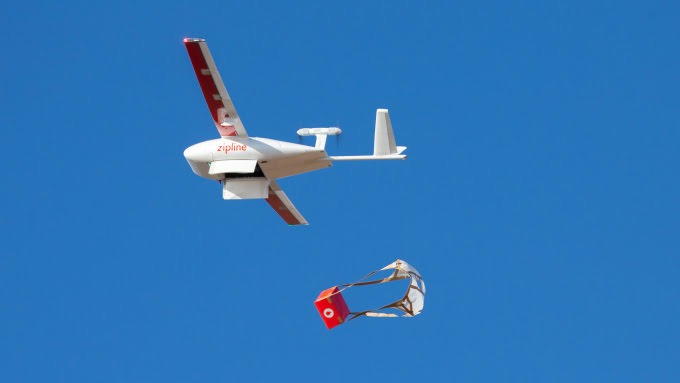
Zipline is an American medical product delivery company that is headquartered in South San Francisco, California, and designs, manufactures, and operates delivery drones. The company operates distribution centers in the US, Rwanda and Ghana.
The drone tech operator which transformed the Rwandan healthcare system from the time it established there in 2016, moved to Ghana in 2019 and several accounts show that Ghanaian healthcare delivery has been enhanced as a result.
From its four launch centres in Ghana, Zipline uses drones to distribute vaccines, blood samples and other drugs to those who critically need them within minutes, where it would have taken days or weeks for other means of transportation.
Impact stories of Zipline on Ghana’s healthcare delivery are particularly thrilling. Zipline Senior Vice President for Africa, Daniel Marfo recounted a story where a woman who critically needed blood that was not available within the facility she was admitted, was saved because zipline delivered the blood in less than five minutes. He said: On June 26, 2021, a pregnant, hemorrhaging patient arrives at Asamankese Hospital in rural Ghana. The patient requires 4 units of O+ blood, which is not stocked at the facility. Fortunately, there’s a third, life-saving option; Zipline delivered the blood in less than five minutes”.
Also at Apedwa Health Center, an excited Doctor Frank Klomlawunu, Deputy Chief Physician Assistant was eager to tell foreign journalist who came to withness how drones drop drugs at the facility, that the health centres saves about 400 Ghana Cedis which used to be the imprest exhausted in logistics of running to the town monthly to purchase drugs, because Zipline drones deliver within five to ten minutes of order.
For him, “It’s a miracle we want everybody to behold. Before Zipline, we used to purchase our drugs from the federal medical stores. It used to take us up to one hour to get there and back. But now, once we order for our medicines, in 10 minutes or less, the drone drops them here at the exact spot, we pick up our box and go in there to save lives,” he added.
Interestingly, that miracle in Ghana is on its way to Nigeria, as Zipline has drawn agreements from two Nigerian states, Kaduna and Cross River states to that effect.
The initiative will see to the establishment of four Zipline drone centres in Kaduna and two in cross River, which will allow rural dwellers in those environments to enjoy fast, efficient and reliable Healthcare deliveries just like their counterparts in Ghana and Rwanda.
According to Marfo, “We will soon start delivering COVID-19 vaccines, medicine supplies, pharmaceuticals, blood plasma, just about all kinds of medicines to these two states and many others across Africa’s most populous nation, in the weeks and months ahead.
“What this will do is that in minutes, we can launch a drone laden with a box of medicines from Calabar for instance, which will arrive in Obubra, Obudu or Bekwarra in minutes.
“This cuts out delays in delivering drugs to under-served, far flung communities due to bad roads, traffic or other such impediments you encounter through road travel. Our mission is to provide every human on earth with instant access to vital medical supplies.
“We want to make sure that lives are not lost through logistical impediments. We want to deliver drugs, blood to people during emergencies like snake bites for instance” he added.
Enumerating the benefits of coming to Nigeria, Marfo said: “In some primary health facilities with limited cold chain capacity, Zipline’s service will allow these facilities to order on-demand eliminating the need to invest in cold chain infrastructure.
“Due to health care infrastructure and human resource constraints, higher level laboratory analysis is referred and therefore requires efficient sample transportation to centralized referral laboratories. Depending on the facilities available transport, these samples could take hours, if not days to be sent to labs. Zipline can support primary and secondary health facilities to transport these samples to higher laboratories depending on the strategic placements of our distribution centers.
“Sometimes, routine ground transport is unable to cover all areas of a state because these routes may be difficult to go by on trucks. Also some facilities in remote areas may have low demand making cost of transporting to these places high. Aside from supporting primary health facilities with routine and emergency stock out responses, Zipline can be the main logistics service provider for hard-to-reach and inefficient routes where our aerial services will be more efficient”.
Disclaimer
Comments expressed here do not reflect the opinions of Vanguard newspapers or any employee thereof.