*Experts raise concern over rising air pollution in Nigeria
By Willie Samson
THE introduction of ECO Bus transport system, powered by flare gas recovered compressed natural gas, CNG, to Nigeria could be a big relief and blessing as it will not only solve the problem of gas flaring but also provide a better economic alternative to the meager flaring fines as well as address the air pollution headache.
The ECO Bus technology which is making in-roads into Nigeria will not only address the issue of air pollution but also be a source of huge revenue earnings for the Federal and State government when it addresses the problem of gas flaring in the Niger Delta.
This must have also informed the decision of the Federal Government to encourage the conversion of petrol engine vehicles to gas engine automobiles.
It recently unveiled plans to deliver one million vehicles converted from petrol to gas-powered by the end of the year.
READ ALSO: Air pollution linked to irreversible sight loss: study
Director-general, National Automotive Design and Development Council, NADDC Jelani Aliyu, said the Federal Government is excited about the gas-powered vehicles and will do everything possible to ensure the success of the project.
Aliyu, who spoke at the recent opening ceremony of the 15th edition of the annual Lagos Motor Fair organised by the BKG Exhibitions, also said the NADDC was working with major players in the auto industry in Nigeria to fast-track the transition.
He said: “We are excited about the gas-powered vehicles and I’m particularly delighted to see some of them on display at this auto fair.
“We encourage other players to look at the auto gas project as the government is determined to make it work with plan to deliver one million vehicles converted from petrol to gas-powered by the end of the year.”
The ECO Bus project is said to aim at developing the world’s cleanest mass transportation systems, tailored towards the respective environment of each city with a focus on flare gas based CNG operation.
It plans to reduce carbon footprints and other GHG per passenger by 80 per cent, overall costs of public transport per passenger by 30 per cent, and accident rate by 80 per cent.
It is considered to have high operational excellence, safety and comfort as well as transparency, creating a reliable business model.
Experts have raised concerns over rising level of air pollution in Nigeria as a new survey by some researchers has established a link between poor academics in childhood and air pollution exposure.
Indeed, the latest research result of the Columbia Centre for Children’s Environmental Health published in the journal, Science Daily, indicated that children exposed to elevated levels of air pollution are more likely to have poor inhibitory control during late childhood and poor academic skills in early adolescence, including spelling, reading comprehension and math skills.
The researchers note that road transport is a major contributor to greenhouse gases and air pollution in developing countries, just as flaring of gas, emanating from oil production, is rife with its huge economic losses and incalculable health hazards.
The carbon dioxide, methane and soot released as a result of gas flaring are said to cause health issues such as cancer and lung damage, deformities in children, asthma, bronchitis, pneumonia, neurological and reproductive problems as well as environmental challenges which stall agricultural productivity and aquatic and wildlife lives.
Experts including John Walke, director of the Clean Air Project, say air pollution not only contributes to climate change but is also exacerbated by it.
“Most air pollution comes from energy use and production…Burning fossil fuels releases gases and chemicals into the air,” says Walke.
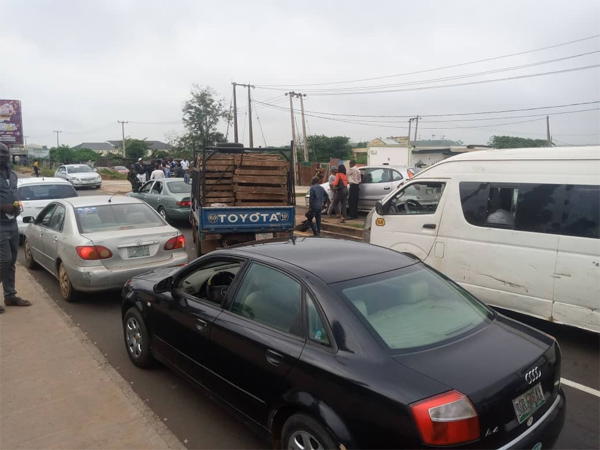
This report is raising panic in Nigeria, which is said to have some of the worst air pollution in the world, with clouds of choking soot hanging over gridlocked cities, leading to a rise in serious health conditions and damaged vehicles.
Global Alliance on Heath and Pollution in a report ranks Nigeria third in the world for pollution-related deaths and sixth in premature deaths caused by air pollution.
An international resource watchdog group, Stakeholder Democracy Network, in a report, estimates that 114,000 people die prematurely from air pollution each year in Nigeria.
Many people in Lagos, Nigeria’s commercial capital, are said to be breathing polluted air leading to avoidable deaths.
Indeed, a recent World Bank report estimated that air pollution caused over 11,200 premature deaths in Lagos, with children accounting for about 60 per cent.
The health cost of air pollution was put at $2.1 billion, which was about 1.3 per cent of Lagos State’s gross domestic product GDP.
This is not surprising considering about 13 million of mostly old cars imported from Europe and Japan on the nation’s roads, and hundreds of thousands of inefficient generators used by households and businesses for electricity emitting thick smokes.
Researchers have found fuel imported and pumped into filling stations in Nigeria as extremely toxic. They found that such fuel extremely exceeded the EU pollution limits.
“Our research suggests that Nigeria is having dirty fuel dumped on it that cannot be sold to other countries with higher and better-implemented standards.
The situation is so bad that the average diesels sampled are of even lower quality than that produced by artisanal refining camps in the creeks of the Niger delta,” said Florence Kayemba, SDN programme manager.
The SDN report reinforces allegations made in a 2016 Public Eye investigation and a Dutch government report in 2018, that European refineries and commodity brokers were blending crude oil with benzene and other carcinogenic chemicals to create fuels hundreds of times over European pollution limits for the weakly-regulated African market.
This was said to be causing significant particulate pollution, damage to vehicles, and adverse health effect s for the residents.
The WHO in 2016 adjudged Onitsha as the world’s most polluted city, recording a concentration of PM10s – soot particles – at 594 micrograms per cubic metre; compared with the WHO safe limit of 66.
For instance, the air quality in Port Harcourt, Aba, Onitsha and Kaduna has reached crisis levels of pollution in recent years, with rising cases of asthma, lung, heart and respiratory diseases.
The SDN report says the levels of particulate matter in Port Harcourt and Lagos are 20 per cent worse than Delhi in India, the most polluted capital city in the world, where emergency levels of photochemical smogs are common.
“High levels of pollution and pre-existing respiratory and other health conditions may increase the risk that COVID-19 poses to the health of the population,” said Matthew Halstead of Noctis, which conducted the laboratory research.
Disclaimer
Comments expressed here do not reflect the opinions of Vanguard newspapers or any employee thereof.