*says UK govt was misinformed
By Evelyn Usman
Reactions have begun to trail the inclusion of Nigeria on the list of restricted countries on adoption of children to the United Kingdom, UK as recently published by the UK Department for Education .
By virtue of the order, adoptions from Nigeria to the UK were suspended with effect from March 12, 2021. Consequently, the Department for Education will not issue a certificate of eligibility, which enables visas to be issued for children to come to the UK, as English adoption agencies will not conduct home study reports to a successful international adoption.
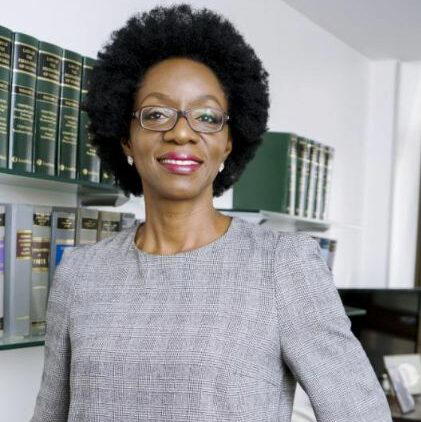
Describing the law as a gross abuse of adoption law, the President, Literacy Integration and Formal Education, (LIFE) a non-governmental organization, dedicated to promoting literacy and social integration for every child with particular focus on orphaned and vulnerable children, Elvira Salleras, noted that the restriction would hinder abandoned children chances of a better living condition.
She also noted that the decision was taken without detailed information on the laws guiding adoptions in some states in Nigeria, adding that the UK government was misinformed.
Citing Lagos state as an instance, she described its adoption procedures as a reflection of international best practices, noting that every adoption case in the state was thoroughly investigated and supported by extensive and reliable documentation, particularly those confirming the background and adoptability of the child, in addition to a series of checks and balances aimed at avoiding corruption and advancing the best interest of every child subjected to the adoption process.
Salleras in a statement jointly signed by the Programme Officer, Literacy Integration and Formal Education Foundation, Ibrahim Saka, pointed out that adoption in Nigeria was a matter of state and not federal law, explaining that every state had its own adoption law, procedure and practice which might differ significantly from those applicable in other states.
She stated that as an adoption agency with expertise and extensive experience in inter-country adoptions from Nigeria since 2006, working in partnership with Lagos and Anambra States, “ we feel constrained to address the issues raised in the said circular, using Lagos state as a reference point, to provide clarity and set the records straight.
“Adoption in Lagos state is a subject of the Child’s Right’s law 2007 as amended in 2015. By this law, Lagos state could be said to have domesticated the provisions of the United Nations Convention on the Rights of the Child even though Nigeria is not a party to the Hague convention. Indeed, it is an aberration to make reference to “the Nigerian adoption system” as this does not exist. Since adoption is a matter of state law, the adoption system in each state, stands and falls on its own merits”.
Responding to some concerns raised by the UK Government on the difficulty in confirming the background and adoptability of the children and unreliable documentation , she said, “ the background of each child proposed for adoption is firmly established by a robust, formal method requiring various administrative documents and involving a transparent investigation process. This results in the establishment of the child’s adoptability by the Ministry of Youth and Social Development, MYSD.
She further stated that the adoption process was facilitated by categorized procedures for both local and inter-country adoptions which included: The Adoption Procedure for Nigerians living abroad, Adoption Documentation and Life s Adoptions Process Flow.
She said, “Adoption procedure for Nigerians living abroad as published by MYSD includes submission of application letter to the Permanent Secretary, Ministry of Youth and Social Development, Alausa, Lagos; submission of all required documents by prospective adopters or through Foundation (including Home Study Report and Approval Letter from Country of Domicile by appropriate Authorities; administrative processing by the Adoption Unit; Payment of N130,000 Administrative fees; processing of all documents submitted for Honourable Commissioner’s Approval ; collection of approval letter by the Prospective Adopters/Foundation; notification of arrival of prospective adopters after a successful matching of child/children at a registered orphanage; invitation of prospective adopters with their updated documents through the foundation for the release of child/children for Bonding; conducting bonding assessment; interview with the Director, Social Welfare and legalization of the Adoption at the Family Court”.
She also gave a comprehensive list of documents pertaining to the prospective adoptee, used for processing international adoptions in Lagos state. They included : Social report, laboratory test result,. medical report, Police report , clearance letter, approval letter for adopters and release letter, adding that the entire adoption process from commencement to completion lasts a minimum of one year from the date of application. In practice, this one year period may be abridged by the Family Court judge in exceptional circumstances if the court considers that it is in the best interest of the child.
Other documents in this category also include :approval for legalization, court order, birth certificate, authority to travel abroad, Ministry’s statement of consent and a letter to Passport Office pertaining to application for subject’s passport, according to the statement.
Also responding to concerns raised about corruption in the Nigerian adoption system, the statement said, “ the adoption process involves the four separate authorities. Each authority conducts its own independent investigations before issuing any related report or document. They are: The Nigeria Police, The Adoption Unit, Ministry of Youth and Social Development, The Family Court and The Nigeria Immigration Service.
“By virtue of executive directive, every Nigerian child who has been adopted must apply for a Nigerian passport exclusively through the Nigeria Immigration Service headquarters, Abuja for proper monitoring and control”
On the evidence of organized child trafficking within Nigeria, she said, “ no doubt, organized child trafficking has been found to occur in some states within Nigeria. But the above points demonstrate that such occurrence is outside the scope of formal adoptions. Trafficking is illegal while adoption is legal. Hence a trafficked child cannot fall within the purview of the adoption process”.
Continuing, the statement said, “ It is just too easy to stay behind your desk and pass judgment without thinking of the consequences. Every orphanage is supervised by a social worker from the family’s social service within the jurisdiction. Every orphanage must render an account of all the children on a monthly basis to the ministry. Every child found abandoned must be reported to the police.
“ It is unfortunate that people make decisions concerning children without considering the aftermath effect on them. You lock doors that could have been open to kids that have special needs. They are undesirable for Nigerians living here because they don’t have the means or specialization required to assist that child. Someone in the UK will easily take that child because there is help around the corner or expertise and facilities. You close that door on the wrong basis. I insist that a child that was trafficked cannot end up in the adoption system and all these are subject to verification”.
Lamenting further, she said, “The UK government had been misinformed, that is why you hear about child trafficking in Taraba state and you conclude that the entire Nigeria is involved in child trafficking. Why would anyone bring up child trafficking as a reason for not doing adoption? They are like night and day and having this type of attitude towards Nigeria makes nonsense of all the handiwork of social workers who are committed and doing an excellent job in some states that I work with. The social worker’s job is a tough one because most times it is thankless a job”.
Disclaimer
Comments expressed here do not reflect the opinions of Vanguard newspapers or any employee thereof.