By Gabriel Ewepu
A report, weekend, showed that women empowerment is achievable through increased access to electricity and land resources towards boosting food security and economic growth.
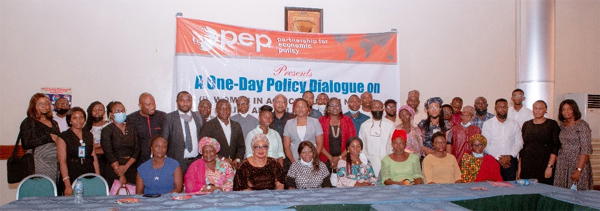
The report came out from two recent researches disseminated during a ‘One Day Policy Dialogue on Women in Agriculture, and Rural Electrification & Women Empowerment’, organised by the Partnership for Economic Policy (PEP) in Abuja. The research was funded by the IDRC and William-Flora Hewlett Foundation.
The dialogue was attended by government officials from the Federal Ministries of Agriculture and Rural Development, Women Affairs and Social Development, Rural Electrification Agency, Central Bank of Nigeria, Civil Society Organisations, academia, and the private sector.
One of the presentations with the theme, ‘Increasing Women’s Access to Farm Land to Improve Food Security, Productivity and Welfare in Nigeria’ by Dr Emily Ikhide, pointed out that one of the major problems of women farmers in Nigeria is they do not have access to land and other resources, and this is one reason their productivity is lower compared to men.
According to Ikhide, women account for 60-79 per cent of rural labour force but are five times less likely to own land. She noted that the gender productivity gap is a threat to agricultural productivity, food security and economic growth.
Ikhide said, “Women don’t have access to land and other inputs, and what we did is if women are given some of these inputs, what will happen to economic growth, welfare and income including poverty reduction.
“So at the end, we found out that access to land will help female farmers increase their productivity and also improve their welfare.
“If all these are achieved it will actually help to grow the economy, and ensure food security in Nigeria, which is a major issue now.”
As part of her recommendations, she said, “What we are saying is the need for a law to ensure women have access to land. So the National Assembly and State Assemblies should work together to amend the Land Use Act to guarantee land access to women farmers, but the feasibility and acceptability of this policy option may be a challenge due to social and cultural norms.”
READ ALSO: Firm, Women Affairs Ministry to drive child health with Rigakafi program
The second presentation with the theme, ‘Rural Electrification, and Women Empowerment’ was presented by a researcher from the Center for Petroleum, Energy Economics and Law, University of Ibadan, Dr Timilade Sesan, indicated that a lot of good policies are formulated but they are not specific to women and do not recognise or acknowledge women’s limitations.
Sesan also explained that the essence of her research was to actually diversify the portfolio of technology to include ones that would be beneficial to women and affordable to them.
On recommendations, she said, “We are really working across ministries and agencies, for example, the Rural Electrification Fund, REF, Ministry of Agriculture and Rural Development, Ministry of Women Affairs and Social Development, and Ministry of Science and Technology to identify target women groups, how they work, and how they organise themselves so that the policies that are meant for them can actually reach them.
She added that, “So these are small interventions that can add value to the lives of women. Obviously, it is good for everyone, the reason why we emphasize women is because they are coming from a disadvantaged position – lower education, assets, capital, access to land, and others.”
Meanwhile, the Central Bank of Nigeria, CBN, has assured women that it is always passionate to support them to become productive, competitive, and achieve their dream as it has policies in that direction to add value to their lives.
Speaking at the dialogue, Dr Nurudeen Abubakar from the Development Finance Department of the CBN, said the Apex Bank is concerned with women’s access to finance, and the issue of collateral has been simplified.
But Abubakar advised them to be organised to access these interventions as CBN is supporting women, especially under the COVID-19 pandemic.
However, the Welfare Officer, Nigeria Women Agro-Allied Farmers Association, Nwokata Beneditta, said women are not given the desired attention, especially those in agriculture, hence government should fulfill promises made to women farmers to boost their morale for greater productivity.
Also, the National Vice President, All Farmers Association of Nigeria, AFAN, Nana Aisha Bashir said, CBN should help farmers purchase land.
Disclaimer
Comments expressed here do not reflect the opinions of Vanguard newspapers or any employee thereof.