
Buhari
By CHARLES KUMOLU,
Deputy Editor
With identity politics, reign of kidnappers, murderous herdsmen, rampaging bandits, extreme partisanship, and growing division along ethnic lines, defining the state of the nation, not questioning the role of the media would amount to remiss.
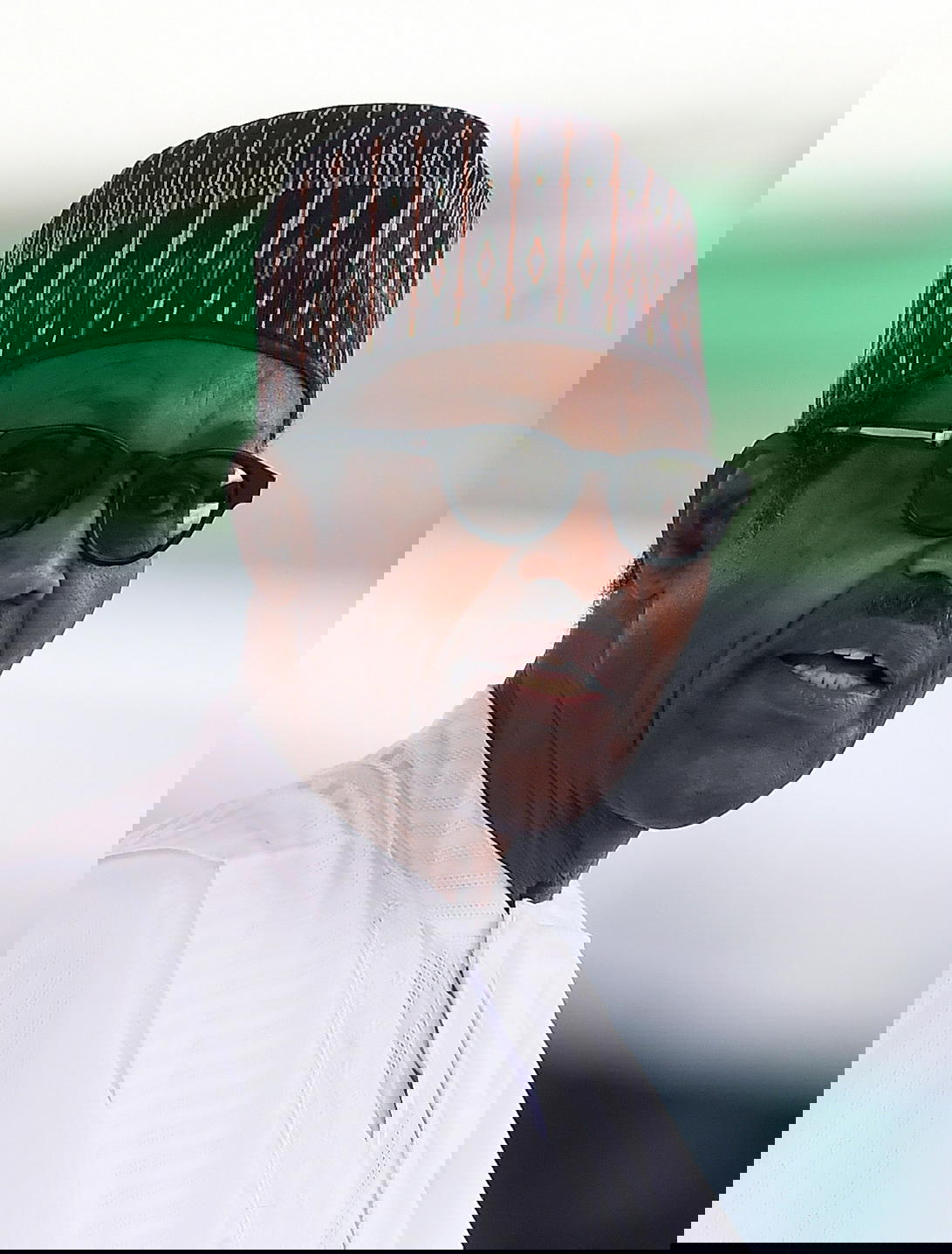
Buhari
Probing the quality of role the media plays at this critical juncture is even more unavoidable, considering how instrumental it has been to Nigeria’s survival.
The scrutiny, is, however, not misplaced since the Nigerian media is reputed to have made the country’s independence possible, opposed the military, and enthroned democracy.
However, today’s challenges, which have gone beyond issues of statecraft, leave the press with the combination of moral burden and perhaps, fearful atmosphere.
Sunday Vanguard notes that while the media remains in the vanguard of redefining current destructive narratives, the complexities of the crises subject its roles to more questioning.
Destructive narratives
A situation for that kind interrogation presented itself last Friday in Enugu as like minds converged, to examine current media interventions from historical perspectives.
At the forum which was a colloquium by the Enugu State Council of Nigerian Union of Journalists, the meeting points between the media and national integration were identified with a view to making the media stand firm to its responsibilities.
The Chairman of Dome Entertainment and former senatorial candidate in Anambra State, Dr Obiorah Okonkwo, who was the Guest Speaker, in his paper, titled: Media and National Integration did not only find areas the media could double its efforts, he outlined how best set to public agenda in a polarised polity.
To be able to do that, he reminded the media that: “National integration is the recognition and awareness of a common identity among citizens of a country, along with deliberate and sustained effort to nurture such an identity in pursuit of national unity.
However, it starts with the recognition of entrenched differences in society and how such differences can be coalesced towards a common identity and interest to help foster a united, strong and prosperous nation.
“Most nation-states like Nigeria are composed of multiple languages, ethnicities, races, religions, cultures, among others and national integration strives to find ways to reconcile all diversities to forge strong national solidarity. In practical terms, how for instance, do we get Igbos, Yoruba, Hausa and other groups to prioritise their identity as Nigerians over their ethnic and regional peculiarities? Attempting to square this circle is the challenge of national integration efforts the world over.”
Thus, in the light of Nigeria’s enormous challenge with national integration, what then is the role of the mass media, particularly traditional print and broadcast media?
Put differently, how can the media help foster understanding and cooperation among the diverse peoples of Nigeria?
Okonkwo provided responses thus: “Any such effort starts with the recognition that despite our many and sometimes seemingly intractable differences, we have no other country we can call ours and must, therefore, do everything we can to live together. It, therefore, behoves on the media to strive to promote those things that unite us while constructively addressing the more divisive issues.
Bold and courageous leadership
“Mass media generally plays three key roles in every society- information, education and entertainment.
“In performing these roles, the media at all times must live up to its watchdog role of holding the government’s feet to the fire. The moment the media fails in that core responsibility, it loses its relevance especially with the citizens and then becomes a lapdog. You may not be aware of this, but most Nigerians in their despondency still look up to the media as the only group that can help save them from Nigeria’s political leadership. This is a trust you must never take for granted. Today, we have very powerful online radio personalities whose intervention with powerful government officials have become the last hope of the common man. They have lost hope in our legal system and look up to the likes of Ahmed of Human Rights Radio Abuja for help
“Mass Media should help encourage bold and courageous leadership, especially as it relates to actions and appointments that foster ethnic divisions.”
Supporting his views with relevant examples, he added: “We have all seen how federal institutions like universities have been turned into ethnic enclaves with the appointment of Vice Chancellors. Between, the 1960s up to early 1980s, Vice Chancellors of federal universities were appointed solely on merit regardless of their ethnic origin. Before the civil war, Kenneth Dike was the V.C. of the University of Ibadan and the Eni Njoku University of Lagos. Prof. Umaru Shehu was at the University of Nigeria. Nsukka in between 1977-9 and Prof. Cyril Onwumechili was at Ife in the late ’70s to early 80s. Today, it is unthinkable to have an Igbo man as the V.C. of the University of Maiduguri or a Hausa man as the V.C. of the University of Nigeria.”
Like most Nigerians, Obiorah asked:
“What message about national integration are we sending by these appointments?”
Regime interest and national interest
Also providing the response, he explained that: “In playing this watchdog role, the media must make a distinction between regime interest and national interest and between regime interest and national security. The tendency is for people in government to conflate both. But what is in the regimes’ interest may not necessarily be in the national interest. Same applies to regime security. It is never the case that those in government have a monopoly of patriotism.
“While media owners, as part of the ruling political and economic elites, would sometimes want to use their media to further their personal interests, it is incumbent on the journalists not to be willing tools to subvert the unity of the country. The patriot in every journalist should eschew divisive and hateful rhetoric that could foster animosity among segments of the country, especially with respect to ethnic and religious matters which are two of the most problematic identities in Nigeria.
“From Nigeria’s experience with religious extremism, this will amount to throwing gasoline on a smouldering fire. Journalists and the mass media wield enormous power and influence and with that, must come responsibilities and deep introspection. Media must at all-time promote national citizenship over other more parochial and divisive identities.
“As a large country with complex diversity challenges, many of which remain unresolved breeding frustration among citizens, media must be in the vanguard of efforts to create a new imaginary; by showcasing the immense possibilities of this country which if well harnessed, can lead to a restoration of hope. It starts with striking a somewhat optimistic tone in reporting of what is, and what can be. This can help Nigerians rise beyond their differences. But it starts with staying true to your calling by holding the leadership accountable and not trying to hob-nob with them as is sometimes the case. They can still be your friends nevertheless
A major project of Ninth National Assembly
“The mass media must promote and defend what we sometimes in Nigeria refer to as ‘true federalism’ not as a magical solution to all our problems but as a platform, if well-managed, to engage with each other with a view to discussing and hopefully agreeing on the specific governance arrangements suitable to our needs. This should be the major project of the Ninth National Assembly and the second term of the Buhari Presidency. Such an effort must be based on democratic consensus and not by some form of fiat as the military framers of the 1999 constitution did in invoking the indivisibility of Nigeria. After all, power, in democracy belongs to the people.
“What is clear from this paper is that federalism which is supposed to help us manage our diversity has so far failed not partly because of the skewed and half-hearted type of federalism we have practised, especially since the military took over power in 1966. Most diverse countries have successfully used federalism to manage their diversity.”
Continuing, he regretted that: “Today, Nigeria is troubled. We are faced with uncertainties. We are tackled from all fronts by security challenges including food security, social security, housing security, territorial security etc. Nigeria is pummeled from every side by habits that seemed alien to our environment. Sometimes, Nigerians wake up wondering if they will still have a country by evening. The challenges are enormous but the labourers are fewer. This is where the media is needed more than ever before.”
Efforts at national cohesion
“Even with 20 years of uninterrupted democracy, many believe our country has never been more ethnically divided, a sordid state of affairs they attribute to poor political leadership, pervasive corruption, nepotism and the politics of exclusion that sometimes plays out so publicly at the highest level of government; generating intense feelings of disenchantment and undermining efforts at national cohesion. In addition, frightening levels of insecurity, particularly in about the past decade, violent religious extremists, bandits, kidnappers, killer herdsman, some of which may have ethnoreligious colouration have left many wondering about the viability of the Nigerian project.
All these begs the question: how has Nigeria tried to tame this seemingly intractable monster called diversity?
Long before Nigerian attained self-rule in 1960, the Lyttleton Constitution of 1954 enshrined federalism as a mechanism for integration and stability in a deeply fractured society. Interestingly, upon its establishment in 1956, the Nigerian Broadcasting Corporation (NBC) was tasked with the mandate of ensuring that the services which it provides, when considered as a whole, reflect the unity of Nigeria as a federation and at the same time give adequate expression to the culture, characteristics, affairs and opinions of the people of each region of the federation.’’
Consequently, Okonkwo encouraged the media in the task of “promoting national integration,” adding that: “it took the genius and labour of people to build so many of the world’s greatest countries, many of which remain work in progress as Americans often speak of still working towards a more perfect union.
“We cannot abandon the task of building ours even in the face of daunting challenges. That is the task for the mass media and all of us. It was a group of brave young journalists who defied all odds and used their pen to defeat the British colonial empire. Today’s journalists can again lead the charge for a strong, united and prosperous Nigeria. It may sound impossible, but as the master of political miracles, the great Nelson Mandela once said, ‘it always seems impossible until it is done.”
Disclaimer
Comments expressed here do not reflect the opinions of Vanguard newspapers or any employee thereof.