File image
By Chioma Onuegbu
SECRETARY, Council of Chiefs, Ikot Uso Akpan community, Itu Clan, Itu Local Government Area, Akwa Ibom State, Elder Michael Uko, has revealed that it is a taboo in the entire clan for anybody to slaughter and eat any variety of monkey.

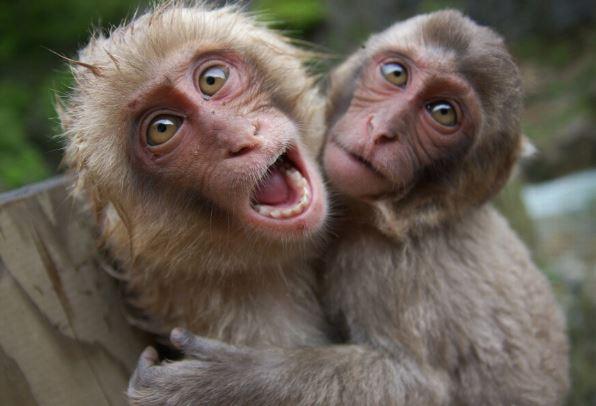
Monkeys
Uko, who stated this at a one-day promotional seminar in Uyo on the critically endangered Sclater’s monkey species, locally called “Adiaha Awa-Itam”, meaning the first daughter of Itam.
Sclater’s guenon, also known as Sclater’s monkey and the Nigerian monkey, is an old world monkey first described by Reginald Innes Pocock in 1904 and named after Philip Sclater. An arboreal and diurnal primate that lives in the forests of southern Nigeria
The community leader said, “Ikot Uso Akpan Itam village is blessed with a waterfall that empties into a stream (Idim Afia). In this stream, you could still find trees that provide shed to the water bodies and serve as habitat for the monkeys (guenon) Whereas Itam clan generally forbids the eating or killing of monkeys of any kind, it is only in Ikot Uso Akpan Itam village that you could find the greatest number of Sclater’s monkey in the clan.
“This could be attributed to the presence of our customers and tradition of maintaining the age-long belief system of not cutting trees or killing monkeys in sacred Ikwat forest, which provides habitat for the monkeys. Ikwat rain forest habitat still remains the biggest sacred forest preserved in Akwa Ibom state for the Sclater’s monkey,” he asserted.
ALSO READ: Six men arrested for killing, eating monkey
He noted that the presence of the monkey primate species in the village was one of the tourist attractions in the area, adding that residents welcome partnership from both local and international organizations to develop ecotourism in their community.
Sweet and bitter tale of Scalter’s monkey
Uko, however, admitted that the people were always in constant conflict with the monkeys over invasion and destruction of their farmlands, but they still take pleasure in the monkeys.
“The monkeys invade our farmlands and become pests, destroying farm crops and fruits that are meant for human consumption, leaving the indigenes with hunger, starvation and poverty. Notwithstanding, we love and cherish the monkeys.
“1t is always a pleasant and wonderful spectacle to see a monkey sit on the branch of a tree, pluck leaves and place it on its thigh and weave it in the manner that women in the village weave rope in response to definite instruction.
“In the village spring and farmlands, one could talk to monkeys and they respond to your directive. You could carry cassava, palm fruits, maize and other edible crops on your head and a monkey from a nearby tree jumps and takes some of it from your head,” he further disclosed.
Disclaimer
Comments expressed here do not reflect the opinions of Vanguard newspapers or any employee thereof.