By Sunday Nwafor
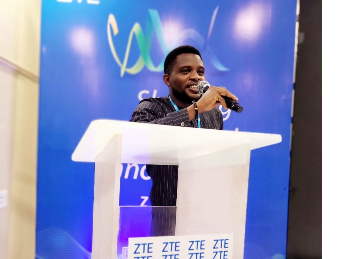
Samuel Okoro, a telecommunications specialist and Bearer Network Product Solution Manager at ZTE Nigeria, has underscored the importance of resilient telecommunications infrastructure in supporting digital transformation and Nigeria’s expanding digital economy.
Okoro, whose career spans network engineering, transmission infrastructure and telecommunications solutions, said reliable connectivity had become essential to businesses, government institutions and individuals who depend on digital networks for everyday activities.
He noted that telecommunications networks support critical services, including financial transactions, business operations and cloud computing, making resilience a priority for operators and other stakeholders.
“Connectivity has become fundamental to how modern society operates,” Okoro said.
“A resilient network is not simply one that provides connectivity; it must also be capable of responding to disruptions, maintaining performance, and adapting to increasing demand.”
With professional experience at ZTE, 9Mobile and Huawei, Okoro has worked across network deployment, technical solution design, product strategy and optical transport infrastructure.
During his time as a transmission engineer with 9Mobile and Huawei, he was involved in network monitoring, troubleshooting Dense Wavelength Division Multiplexing (DWDM) and Optical Service Network (OSN) systems, coordinating field engineers and restoring transmission services.
He said the growing adoption of cloud computing, big data analytics, artificial intelligence and other digital technologies had increased the need for telecommunications infrastructure capable of handling higher data volumes and more complex applications.
“Digital transformation cannot be separated from the infrastructure that makes digital services possible. As applications become more sophisticated, the networks supporting them must become more scalable, intelligent, and dependable,” he said.
Okoro has also participated in telecommunications projects involving major operators and large-scale infrastructure deployments.
His experience includes supporting projects for Airtel and MTN, contributing to an Airtel DWDM backbone project and participating in the implementation of the 2,000-kilometre Route 6 and 9 Phase 7 project for Etisalat Nigeria.
He also worked on information and communications technology infrastructure for Galaxy Backbone to support the requirements of Nigerian government institutions.
At ZTE Nigeria, Okoro’s responsibilities include translating technical requirements into practical telecommunications solutions. His work involves preparing technical presentations, developing solution designs and Bills of Quantities, supporting customer workshops and demonstrations, and collaborating with sales, marketing and project teams.
The combination of technical engineering and stakeholder engagement, he said, helps bridge the gap between network infrastructure requirements and business objectives.
Looking ahead, Okoro identified sustained investment in network capacity, resilience and technical expertise as important to the future of connectivity.
He said telecommunications professionals would continue to play a significant role as operators respond to changing customer expectations, rising data consumption and emerging technologies.
“The future of connectivity will require continuous innovation,” he said.
“Our responsibility as telecommunications professionals is to ensure that the infrastructure is ready not only for today’s requirements, but also for the technologies and services that will define tomorrow.”
With more than a decade of experience in optical transport, transmission engineering, network deployment, troubleshooting and telecommunications solutions, Okoro’s career reflects the growing importance of reliable network infrastructure in enabling digital services and supporting economic development.
Disclaimer
Comments expressed here do not reflect the opinions of Vanguard newspapers or any employee thereof.