By Omeiza Ajayi
ABUJA: The African Centre for Leadership, Strategy and Development (Centre LSD) has said men must take more active and accountable roles in challenging patriarchy, because advocacy against gender-based violence (GBV) driven largely by women has not sufficiently engaged those who perpetrate the violence.
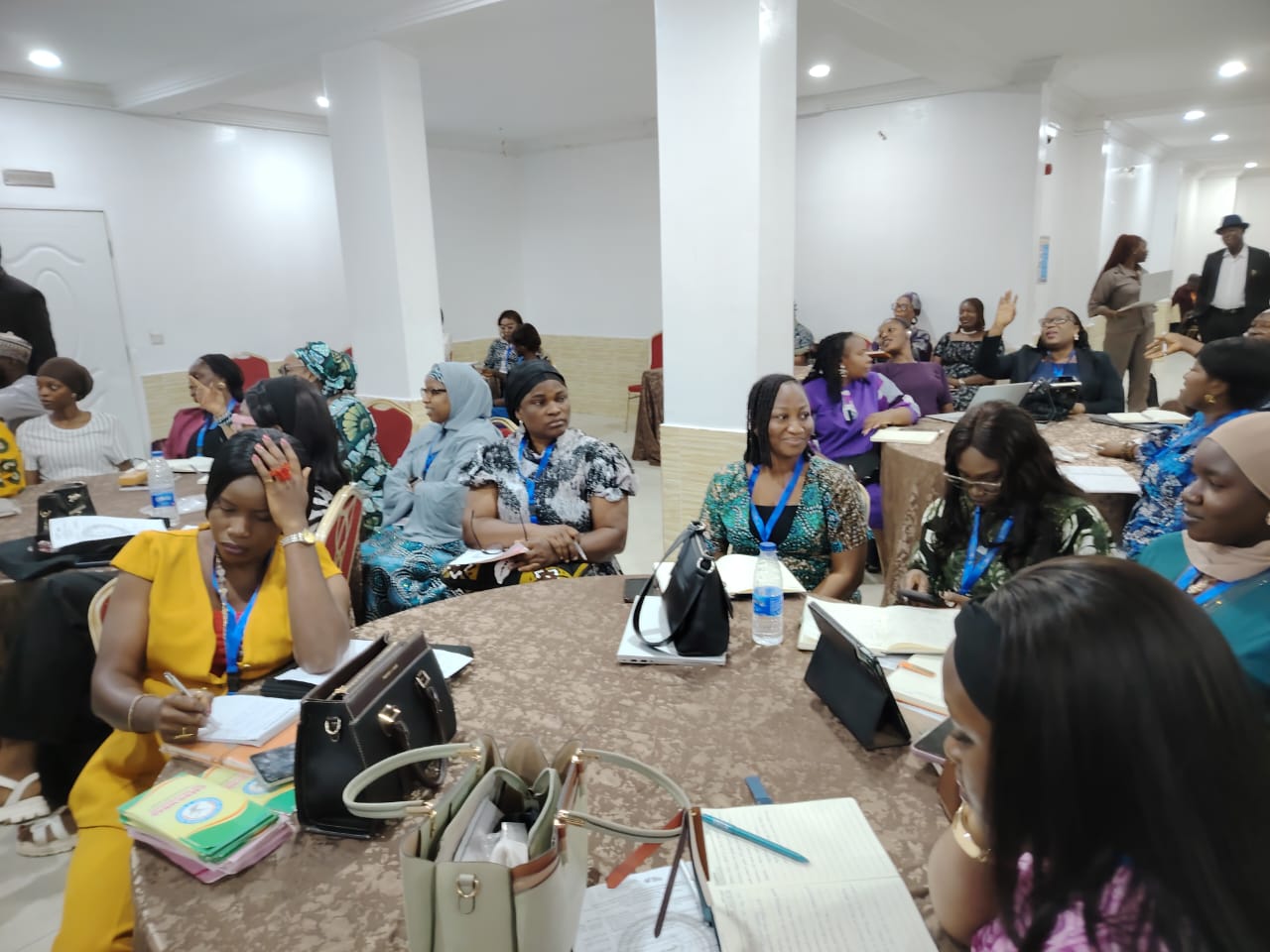
The Project Director of the Male Feminists Network (MFN) and founding Executive Director of Centre LSD, Dr Otive Igbuzor, made the call on Thursday in Abuja at a two-day capacity-strengthening programme for Women’s Rights Organisations (WROs).
The programme, themed “From Principles to Practice: Institutionalising Accountable Male Allyship in Women’s Rights Programming”, used the Amandla Institute Strengthening Women’s Movement in Nigeria Manual. It brought together prominent WROs from across the country.
Igbuzor warned that male participation must strengthen, rather than overshadow, women’s leadership, voice and agency.
“Men should become more visible in challenging patriarchy, but they should not become more powerful within the women’s rights movement,” he said.
He cautioned against “performative allyship”, in which men join gender-equality platforms for visibility, status or access to resources without confronting patriarchal practices in their own lives and institutions.
According to him, accountable male allyship requires men to use their voice, influence, resources and social position to challenge patriarchy while remaining accountable to women, girls, feminist principles and women-led organisations.
He said male allies must listen before leading, support rather than substitute women’s leadership, challenge other men, interrogate their privileges and accept correction. “Accountability cannot be self-defined by the ally,” he stressed.
Igbuzor said lasting change also required institutions to embed gender-equitable values in their policies, budgets, leadership structures and accountability systems.
He cited traditional and religious institutions, saying occasional statements against GBV were not enough without reforms capable of changing harmful practices.
He explained that a traditional ruler’s participation in a gender workshop was useful, but that adopting a community charter against harmful practices would show deeper institutional commitment.
Religious leaders, he said, should go beyond preaching against GBV by integrating gender justice into sermons, premarital counselling, safeguarding systems and institutional responses to violence.
He also warned WROs against creating a parallel men’s movement that competes with women-led organisations for voice, legitimacy or resources.
He said WROs should determine who qualifies as an ally, the values male allies must uphold, their roles and the consequences for violating agreed feminist principles.
Igbuzor disclosed that the MFN had trained more than 12,000 male feminists across the country, but said the number was not evidence of transformation.
He said success should instead be measured through behavioural changes, institutional reforms, gender-responsive workplace policies, redistribution of unpaid care responsibilities and feedback from women and WROs on the conduct of male participants. Post-training action plans, mentoring and feedback mechanisms are being used to monitor such changes, he added.
He listed seven principles of accountable male allyship: keeping women’s leadership central; addressing power, not just attitudes; accepting accountability; combining personal and institutional transformation; challenging other men; measuring outcomes; and ensuring male engagement does no harm to feminist movements.
The programme, he said, would equip participants with practical strategies for selecting and engaging male allies, preventing abuse of power and measuring whether male participation strengthened or undermined feminist objectives.
“The ultimate test of accountable male allyship will not be how many men call themselves feminists. It will be whether women and girls experience greater voice, greater agency, greater safety, greater equality and greater power over the decisions that shape their lives,” he said.
Project Lead of the Male Feminist Project, Mrs Victoria Oseyande Udoh, said Centre LSD deliberately brought men into the campaign against GBV because advocacy driven largely by women had not sufficiently engaged those who perpetrate violence.
Udoh, who is also the organisation’s Director of Monitoring, Evaluation and Learning, said the project was set up to mobilise men to join women in preventing GBV before it occurs.
“We don’t want it to start. We don’t want to start talking about survival. We want it not to start at all,” she said.
She added that male allies could make it easier to challenge harmful behaviour in male-dominated spaces because “men speak against gender-based violence, it makes it easy for men to resonate with them better.”
She named traditional rulers as important partners because of their influence as custodians of customs and traditions, saying Centre LSD was working with them to identify and address harmful practices in their communities.
She also called for stronger government support, stressing that preventing violence against women was a collective responsibility.
One of the participants, Ejiro Sharon Okotie of the Hope Inspired Foundation for Women and Youth with Disabilities (HIFWYD), urged WROs to ensure that women with disabilities and other marginalised groups were actively involved in decisions affecting them.
She said inclusion should go beyond representation to meaningful participation and leadership.
“For me, inclusion, not only as a woman but as a woman with disability, is a society where my voice is heard and I am able to meaningfully participate and make my contributions,” she said.
She urged rights organisations not to speak for excluded communities without involving them in designing and leading interventions.
“We do not exclude them. We do not speak for them. We ensure that they are at the centre of every transformation that is being done,” she said, citing the disability rights principle, “Nothing about us without us.”
Disclaimer
Comments expressed here do not reflect the opinions of Vanguard newspapers or any employee thereof.