By Emmanuel Okogba
A US-based Nigerian researcher, Abdulkabir Opeyemi Bello, is exploring how robotics and industrialised construction could help address workforce, productivity and safety challenges facing the construction industry.
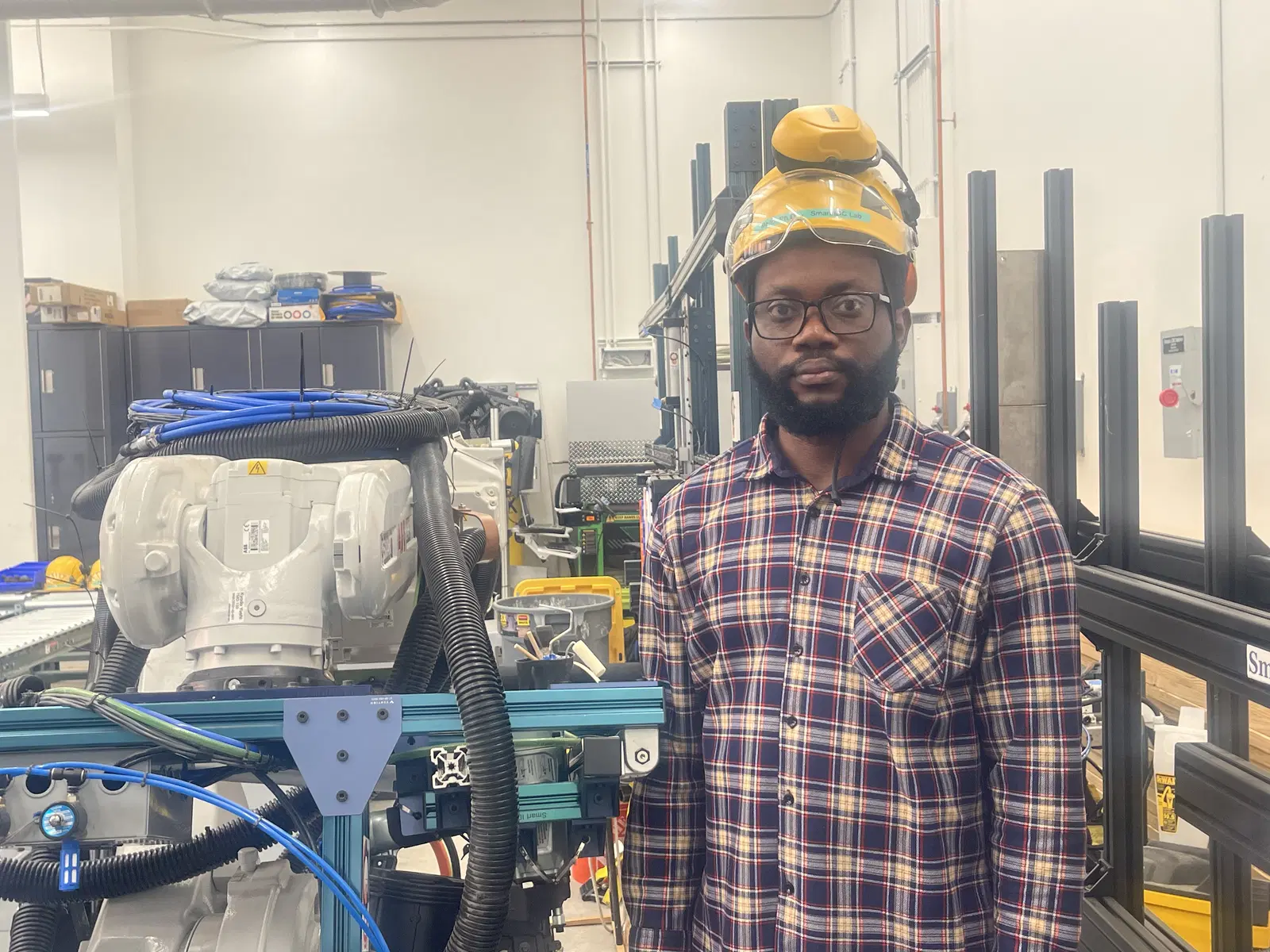
Bello, a doctoral researcher in Construction Management at the University of Florida’s M.E. Rinker, Sr. School of Construction Management and a member of the Smart Industrialized Design and Construction (Smart IDC) Lab, now housed in the Autodesk Design and Make Laboratory, is examining how robotic technologies can be effectively integrated into construction operations while complementing workers’ skills and experience.
According to him, the growing interest in construction robotics should not be viewed simply in terms of machines replacing workers but as an opportunity to examine how people and robotic systems can work together.
“The more important question is how workers and robotic systems can work together to make construction safer, more productive and less physically demanding,” Bello said.
As part of his research with the Smart IDC Lab, Bello has participated in experimental work involving robotics for panelised construction. In one experiment, he operated a robotic system that assisted with carrying and positioning panels and studs and performing fastening operations while he controlled and supervised the process.
He said the experience demonstrated the potential of human-robot collaboration while also highlighting the challenges associated with introducing automation into construction environments.
“Being technically capable of performing a task does not automatically make a technology suitable for construction,” Bello said. “The technology has to fit the task, the work environment and the people who will use it.”
As part of his broader work in industrialised construction robotics, Bello is investigating the competencies craft workers need to work effectively alongside robotic automation. His research also considers how tasks can be allocated between workers and robotic systems to support worker satisfaction and engagement, with the broader goal of developing curricula to prepare future craft workers for seamless human-robot collaboration.
The research builds on Bello’s earlier work on modular construction and emerging technologies in the architecture, engineering and construction industry. One of his studies examining the drivers for implementing modular construction systems was selected by international academic publisher Emerald Publishing for additional highlighting under its Sustainable Structures and Infrastructures initiative.
Bello said the increasing integration of robotics and digital technologies could also reshape the skills required of construction workers, particularly as workers take on greater responsibility for operating, supervising and interacting with automated systems.
“Workforce development has to progress alongside technological development,” he said. “Introducing advanced technologies without preparing the people who will work with them can limit their effectiveness.”
He stressed that robotics should not be regarded as a standalone solution to construction workforce challenges. Successful adoption, he said, will depend on identifying suitable tasks, ensuring safety and reliability, preparing workers and creating the organisational conditions needed to integrate the technologies effectively.
Bello said his continuing research would focus on the intersection of robotics, industrialised construction and workforce development, particularly how human expertise and emerging technologies can work together to improve construction productivity and safety.
Disclaimer
Comments expressed here do not reflect the opinions of Vanguard newspapers or any employee thereof.