By Maryam Abdul-aziz Usman, Damaturu
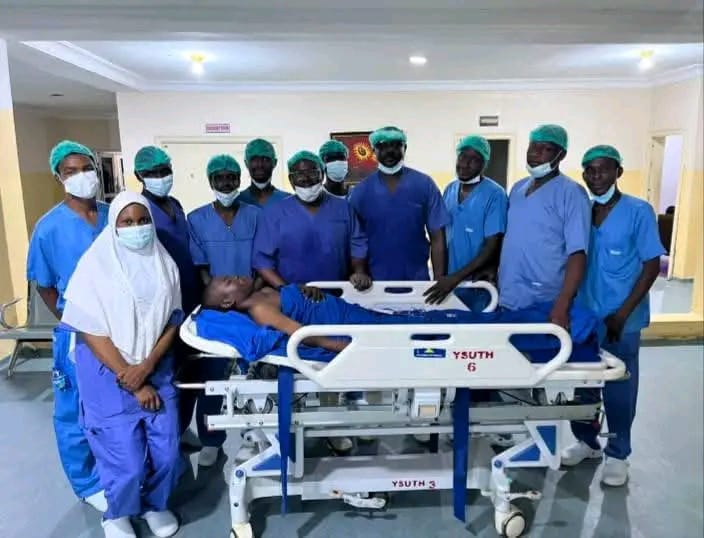
Yobe State has recorded another milestone in specialised healthcare with the successful performance of a total hip replacement surgery at the Yobe State University Teaching Hospital, YSUTH, in Damaturu.
The procedure was performed on Saturday on a young man living with sickle cell disease who developed avascular necrosis of the head of the femur.
The surgery involved replacing the damaged hip joint and was led by Dr Lawan Musa Yari, alongside Dr Musa Abdulmalik, Dr Bashok Palagvi, Mr Manasseh Jonah and Mr Karumi Ibrahim.
The development was disclosed in a statement issued by the Director-General, Press and Media Affairs to the Yobe State Governor, Alhaji Mamman Mohammed.
According to the Commissioner for Health, Dr Muhammad Lawan Gana, total hip replacement had previously not been available in the state.
Avascular necrosis occurs when the blood supply to bone tissue is disrupted, causing the affected bone to deteriorate. In the patient’s case, the condition affected the head of the femur and was associated with sickle cell disease.
The latest procedure adds to a series of specialised medical interventions being carried out in Yobe’s public hospitals, expanding access to treatments that previously required patients to seek care outside the state.
At the Damaturu Specialist Hospital, patients with kidney disease have continued to receive free dialysis, a service critical to people requiring regular renal replacement therapy.
The Chief Medical Director of the hospital, Prof. Usman Abba, said access to the dialysis service was not restricted based on indigene status.
“There is no screening for citizenship or indigene status when you come for dialysis,” he said.
The Specialist Hospital also performed a complex maxillofacial procedure earlier this year on a patient diagnosed with mandibular ameloblastoma.
The operation involved removing the affected portion of the jaw and reconstructing it with plates and an iliac crest bone graft.
The combination of renal care, reconstructive surgery and orthopaedic procedures reflects an expanding range of specialised services in Yobe’s public hospitals.
For patients, the development could provide greater access to complex medical treatment closer to home and reduce the need to travel to other parts of the country or abroad for procedures previously unavailable in the state.
Sustaining the services, however, will require continued investment in specialist manpower, medical equipment, maintenance and other supporting infrastructure.
Disclaimer
Comments expressed here do not reflect the opinions of Vanguard newspapers or any employee thereof.