By James Ogunnaike, Abeokuta
The Ogun State government has reiterated its commitment to strengthening physical planning and development control in order to ensure sustainable development and prevent building collapse across the state.
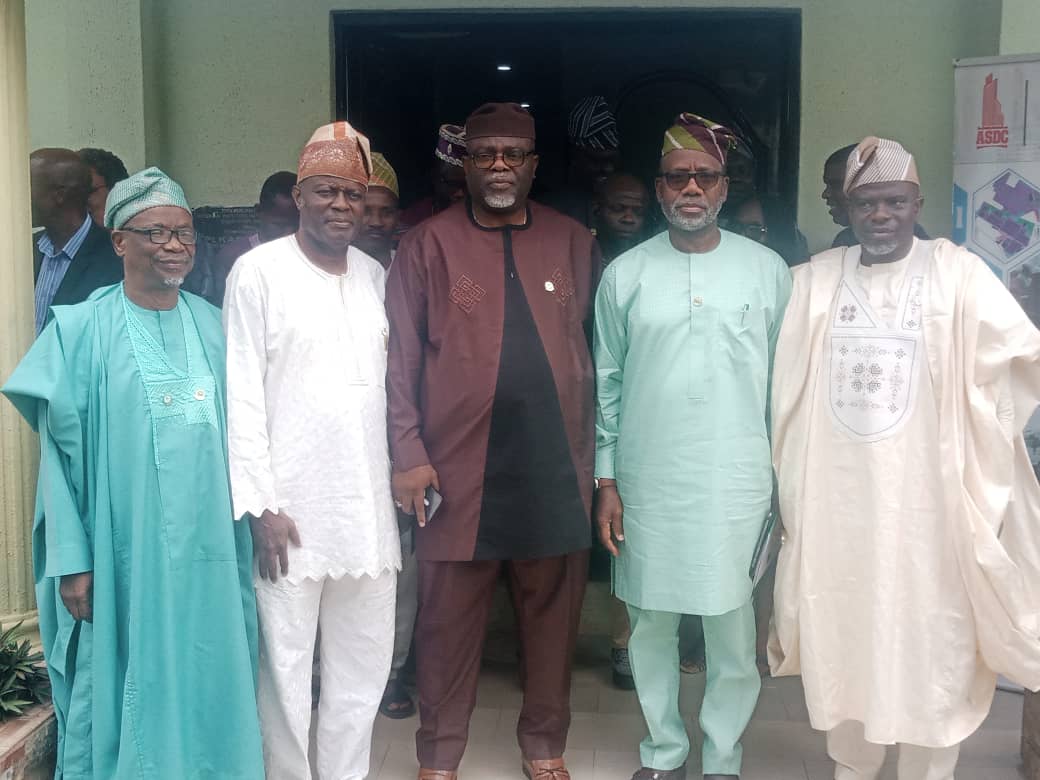
The State Commissioner for Physical Planning and Urban Development, TPL Tunji Odunlami, stated this while speaking as Chairman at the 2026 Annual General Meeting (AGM) of the Association of Town Planning Consultants of Nigeria (ATPCON), Ogun State chapter, held in Abeokuta.
Odunlami disclosed that the government had introduced revised physical planning regulations and the Ogun State Building and Construction Code 2025 as part of measures to strengthen development control, improve professional town planning practice and curb building collapse.
According to him, the 2025 editions of the state’s Urban and Regional Planning and Development Law and its regulations were introduced after four years of implementing the previous legal framework, in response to emerging trends and the rapid pace of physical development in the state.
He described the Ogun State Building and Construction Code 2025 as the first of its kind introduced by a state government in Nigeria.
The Commissioner also said the government had tailored its planning regulations to raise the standard of professional town planning practice, improve the visibility of the profession and encourage practitioners to operate as properly established professional consulting firms rather than as individuals.
He said the move would enhance the recognition of town planning practitioners and improve their financial prospects while strengthening professionalism in the built environment.
“We have also tailored our regulations to encourage town planners to operate as professional consulting entities rather than as individuals. This is the surest way to earn greater respect, recognition and, of course, the financial rewards that come with professional excellence,” Odunlami said.
The Commissioner urged ATPCON to play a more prominent role in public discourse on physical development and environmental challenges confronting the state, particularly flooding and other problems associated with poor planning.
“ATPCON in Ogun State needs to become more visible in the discourse on the state of the physical environment. Take the issue of flooding, for example. ATPCON should be at the forefront of public conversations on this and other planning-related challenges,” he said.
Odunlami further called on town planning consultants to participate more actively in radio and television programmes on planning and environmental issues, noting that many environmental challenges were linked to inadequate planning and dysfunctional development patterns.
He described ATPCON as an important stakeholder in Nigeria’s town planning profession, alongside the Town Planners Registration Council of Nigeria (TOPREC) and the Nigerian Institute of Town Planners (NITP).
Speaking on the theme of the AGM, “Tendering and Bidding for Planning Jobs and Collaboration Among Member Firms,” the guest speaker, TPL (Dr.) Idris Salako, a former Commissioner for Physical Planning and Urban Development in Lagos State, urged town planning consultants to embrace collaboration and cooperation in the discharge of their professional responsibilities.
Salako, who was a former head of the physical planning portfolio in Lagos State, said town planning was a multidisciplinary profession that required effective collaboration among professionals for successful project delivery.
He recalled that the importance of collaboration was taught during professional training, but noted that many consultants had yet to fully embrace the practice, a development he said could affect the growth and effectiveness of the profession.
The former commissioner, however, cautioned consultants to properly scrutinise the professional pedigree and competence of prospective collaborators before entering into partnerships.
He said doing so would help protect practitioners and ensure that collaboration among member firms was built on professionalism, competence and mutual trust.
Earlier, the Chairman of ATPCON, Ogun State chapter, TPL Rauf Adebanjo, said town planning consultants had a strategic responsibility to shape the physical environment and promote orderly, functional and sustainable development, particularly as Ogun State continued to witness rapid urbanisation and industrial expansion.
He identified infrastructure deficits, transportation, housing, environmental management, land-use conflicts and development control as some of the challenges accompanying the state’s growing development pressures, particularly along its regional growth corridors.
“These changes present significant opportunities, but they also bring challenges relating to infrastructure, transportation, housing, environmental management, land-use conflicts and development control,” Adebanjo said.
He urged practitioners to respond to the changing development landscape through continuous professional development and the adoption of modern planning technologies.
“Our response must therefore be professional, innovative and forward-looking. We must continuously improve our knowledge and embrace modern planning tools, including Geographic Information Systems (GIS), data mapping, data-driven planning and climate-resilient approaches,” he said.»
Adebanjo also stressed the importance of professional ethics, integrity and commitment to public interest, urging members to maintain high standards in the discharge of their responsibilities.
He said the Ogun State chapter of ATPCON would continue to strengthen professional capacity, promote collaboration with relevant stakeholders and ensure that town planning consultants remained relevant to the state’s development process.
The ATPCON chairman also called for increased advocacy on the importance of proper physical planning and the long-term consequences of uncoordinated development.
The AGM provided members with an opportunity to deliberate on the future of the profession, review developments affecting town planning practice and consider strategies for strengthening the contribution of consultants to sustainable physical development in Ogun State.
Disclaimer
Comments expressed here do not reflect the opinions of Vanguard newspapers or any employee thereof.