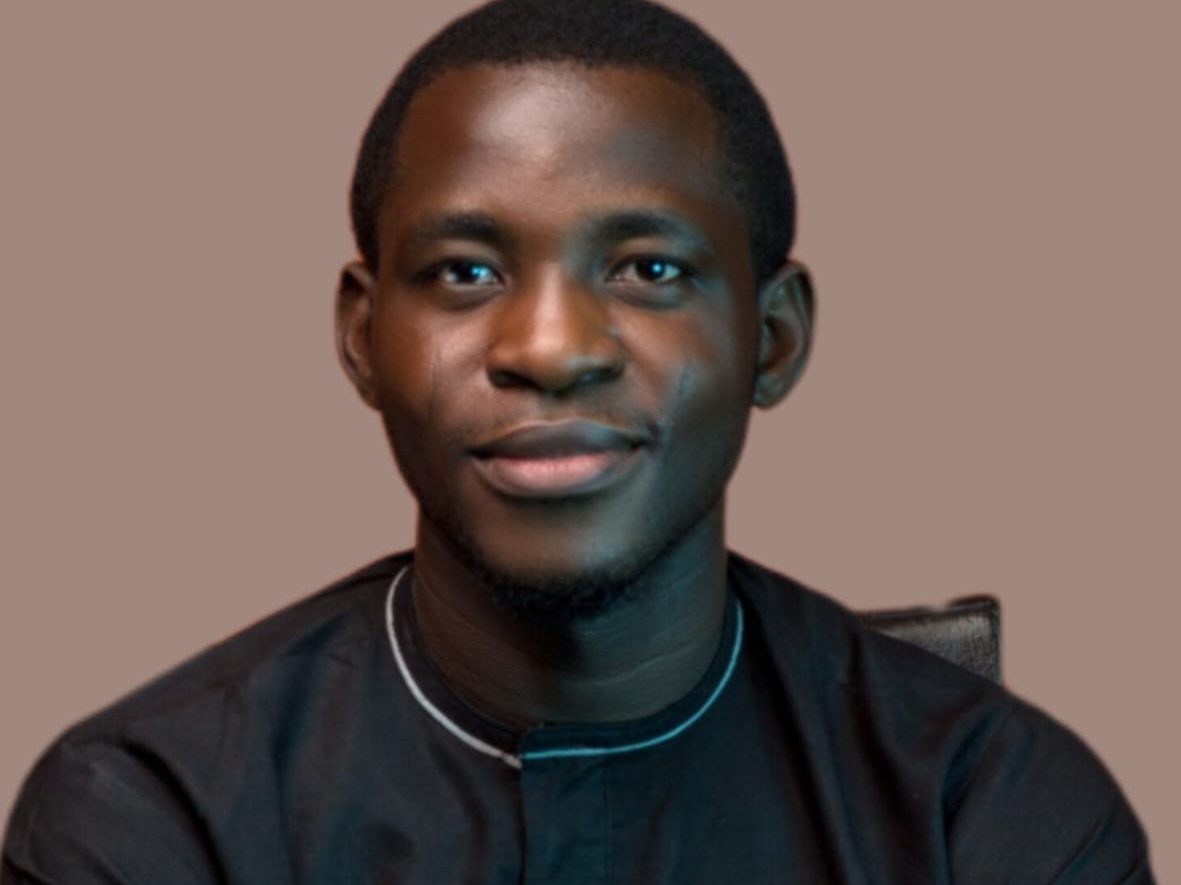
By Etop Ekanem
A Nigerian-born water resources researcher has built a new tool for monitoring groundwater flow in three dimensions, using heat instead of chemicals or dyes to trace how water moves underground.
Ayobami Oni, who recently earned his Master’s in Agricultural and Biological Engineering from Purdue University, designed a compact device that pairs a small heater with a ring of temperature sensors. Once switched on, the heater warms the surrounding groundwater, creating a heat plume. As the water flows past, it carries that heat with it. By measuring how temperatures shift across the sensors, the device can work out both the speed and direction of the flow beneath the surface.
Building the tool required more than one discipline. Oni ran computational fluid dynamics simulations in ANSYS Fluent to model how groundwater and heat would move together, then built the physical hardware — designing the circuit board, calibrating sensors, and testing the device first in the lab and later in real groundwater wells. The results suggested that thermal sensing can reliably capture local flow behavior, though how accurately it identifies direction depends heavily on how the device is positioned.
For Oni, the value of the work is practical. Knowing which way contaminated groundwater is heading, and how fast, shapes urgent decisions.
“If a contaminant enters an aquifer, the next questions are: Where is it travelling? How fast is it moving? Could it reach another well, a river or a community’s water supply?” he said. “Flow direction and velocity become extremely important.”
His research has since broadened beyond groundwater into flood-risk modeling and satellite-based watershed analysis, using tools like HEC-HMS and HEC-RAS to forecast how floods spread and how they affect infrastructure. Earlier this year, he joined the Blue Integrated Partnerships Summer Institute, contributing to projects in Puerto Rico and the Virgin Islands — one examining 25 years of precipitation data, another using satellite imagery to track surface water, turbidity, and sediment shifts in the Río Grande de Loíza watershed.
Oni has picked up a string of honors along the way, including a 2026 Michael Faraday Fellowship, a WaterSoftHack Fellowship, first place in a renewable energy hackathon, the Blue Integrated Partnerships Extra Mile Award, and back-to-back research awards from the National Institutes of Water Resources in 2024 and 2025.
He sees direct relevance for Nigeria, where groundwater dependence, flooding, water quality, and climate variability are all intertwined challenges. But he’s cautious about what “advanced” should mean in that context.
“Technologies such as environmental sensors, remote sensing, hydrologic modelling and AI can improve monitoring and management,” he said. “But for Nigeria, solutions must not only be scientifically advanced. They must also be affordable, maintainable and useful to the people expected to use them.”
Oni’s path started at the Federal University of Technology Akure, where he studied Agricultural Engineering, worked in environmental engineering labs, and — during an internship at Kadosh Mechatronics — built a smart, Arduino-based device for detecting soil water levels.
Disclaimer
Comments expressed here do not reflect the opinions of Vanguard newspapers or any employee thereof.