By Hadiza Yusuf
The Chief of the Naval Staff (CNS), Vice Admiral Idi Abbas, has called for a stronger and more flexible logistics system to support the Nigerian Navy’s expanding responsibilities in maritime and land-based operations.
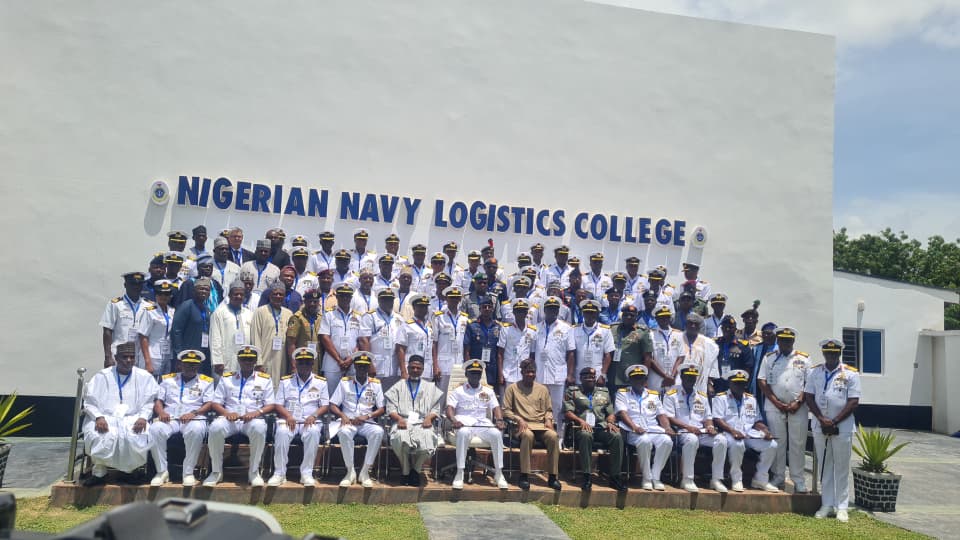
Abbas made the call at the two-day Nigerian Navy Logistics Seminar 2026, themed, “Repositioning the Nigerian Navy Logistics System for Enhanced Operational Effectiveness,” held at the Nigerian Navy Logistics College, Dawakin Tofa, Kano State.
He said the changing security environment had increased demands on the Navy’s logistics system, making it necessary to improve the planning, procurement, storage, maintenance and delivery of resources.
According to him, an effective logistics system must ensure that the right resources are available in the right condition, at the right place and at the right time to support operations.
The CNS said the Navy’s responsibilities now extended beyond its traditional maritime duties, with personnel increasingly involved in joint and land-based operations.
“The changing security environment increasingly draws the Nigerian Navy into joint and land-based operations alongside its traditional maritime responsibilities,” he said.
He noted that the development of the Nigerian Navy Marines and Special Operations Command had further expanded the service’s operational requirements.
Abbas said logistics planning must therefore take into account land mobility, combat supplies, temporary accommodation, medical support and forward maintenance.
He also called for greater use of technology, integrated logistics information systems and improved fleet maintenance to enhance efficiency.
The CNS advocated a long-term logistics roadmap to prepare the Navy for future demands, particularly with the ongoing fleet renewal, indigenous shipbuilding and expanding operational responsibilities.
He said the Navy’s future logistics system must provide the infrastructure, spare parts, fuel, technical manpower, maintenance and other support required to keep new platforms operational throughout their service lives.
“Fleet renewal must be matched by corresponding logistics renewal,” he said.
Abbas added that the objective should not be limited to acquiring modern platforms but should also include ensuring that they remain available and effective throughout their service lives.
The Flag Officer Commanding Naval Training Command, Rear Admiral Ebioboye Abraham Zapele, said the Navy was exploring cost-effective ways of meeting its logistics needs because of limited resources.
Zapele described logistics as critical to military operations, saying it ensured that personnel had the equipment and supplies required to perform their duties.
“Logistics plays a very, very important role in the military because it helps us to achieve our operational mandates,” he said.
He said the Navy was exploring research and development, the use of in-house engineers and local alternatives to reduce costs.
“The truth of the matter is that resources are scarce, and government can’t give you all that you desire,” Zapele said.
He added that logistics resources must not only be available but also delivered and sustained at the right place and time and at the lowest possible cost.
Zapele said the Navy was also considering locally developed solutions for some infrastructure needs, including the use of bricks for accommodation, as part of efforts to reduce costs while meeting operational requirements.
The Chairman of the Central Organising Committee of the seminar, Commodore Ahmad Abubakar Madawaki, who is also the Commandant of the Nigerian Navy Logistics College, Kano, said the Navy needed to improve logistics support for personnel deployed across different operational theatres.
Madawaki said the seminar brought together serving and retired military officers, academics and industry experts to examine challenges affecting logistics and identify possible solutions.
“We have our troops in the field, we have them at sea, and we have them in so many theatres of operation. If we don’t support these troops very well, they won’t be able to carry out their duties or responsibilities as they should,” he said.
He identified project management and procurement as areas requiring attention.
According to him, delays by contractors and difficulties in meeting financial commitments could affect project delivery, while procurement processes must ensure that the Navy acquires appropriate equipment for its intended purposes.
“In procurement, we want to be sure that we’re buying the right equipment for the right purpose,” Madawaki said.
He said addressing the challenges would help reposition the Navy’s logistics system and improve support for personnel deployed across the country.
The Nigerian Navy also unveiled new accommodation facilities comprising 120 bedrooms for boys and 64 bedrooms for girls.
Disclaimer
Comments expressed here do not reflect the opinions of Vanguard newspapers or any employee thereof.