By Ebunoluwa Sessou
The Lagos State House of Assembly has commenced moves to establish a regulatory framework for artisans and craftsmen in the state, with a proposed law seeking to introduce registration, certification, professional standards and consumer protection in the sector.
The proposed Lagos State Artisans and Craftsmen Regulatory Board Bill, sponsored by the Chairman of the House Committee on Industry, Commerce and Cooperatives, Abiodun Tobun, is also designed to provide artisans with access to government support, skills development and other opportunities.
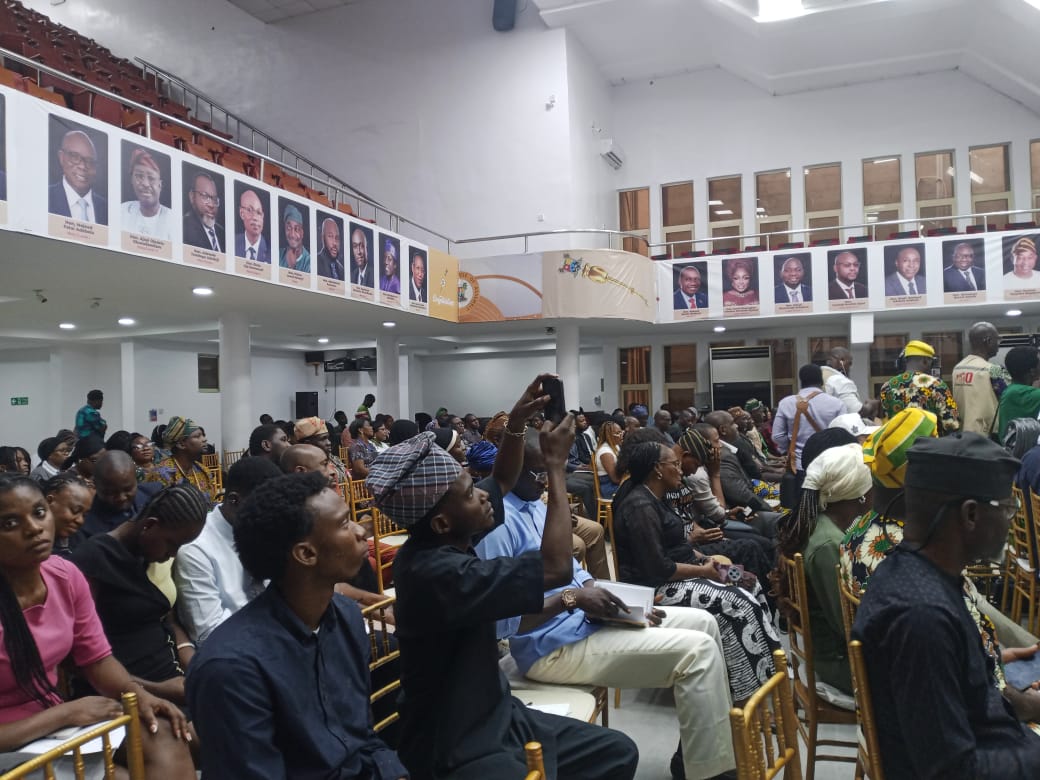
Speaking at the public hearing on the bill, Tobun said the legislation was intended to professionalise the state’s artisan sector and create a comprehensive register of practitioners across various trades.
He said,“Lagos, as a megacity, we want a situation where professionals will be working in Lagos State, especially the artisans. And we want a situation where those who are working for us are professionally trained and certified.
“Equally, we want to have a register for all artisans in Lagos State. We want to monitor their activities and ensure that they are living up to their billings, doing the work, when they collect money, they deliver to satisfaction or to the admiration of the customers.”
According to him, the proposed law would not only protect consumers but also safeguard artisans against non-payment by clients after completing jobs.
He said the bill would provide avenues for artisans who require assistance to access government support, while also protecting local practitioners from unqualified persons coming from outside the state or country to offer services without certification.
Tobun listed carpenters, mechanics, woodworkers, plumbers, electricians, masons, bricklayers and other practitioners among those expected to come under the proposed regulatory framework.
He said the certification system would be similar to the registration of engineers under the Council for the Regulation of Engineering in Nigeria, COREN.
“We want our artisan, too, to be certified,” he said, adding that the bill also contained sanctions for practitioners who performed substandard jobs or failed to meet professional expectations.
Tobun said sanctions could include cancellation of certificates, fines and, in serious cases, imprisonment, subject to the provisions of the law.
On concerns about possible abuse of the regulatory process, he said mechanisms would be put in place to ensure accountability.
He noted that artisans already operate through various clusters, societies and associations, which could assist in monitoring their members and reporting erring practitioners to the board.
He added that registration would require identification through existing systems such as the National Identification Number, NIN, and Lagos State Residents Registration Agency, LASRRA, thereby making it possible to identify registered practitioners.
Also speaking, Commissioner for Wealth Creation and Employment, Akinyemi Ajigbotafe, described the proposed legislation as a positive step towards bringing greater structure to the informal sector.
Ajigbotafe, however, urged the Assembly to adopt a developmental approach rather than making regulation the dominant focus of the proposed board.
According to him, the legislation should place greater emphasis on registration, skills development, certification, continuing education, welfare, hazard support, financial assistance and inclusion.
He said the proposed name, “Lagos State Artisans and Craftsmen Regulatory Board,” could create the impression that the institution was primarily designed for enforcement and revenue generation.
“The present expression, ‘regulatory board,’ may suggest a predominantly enforcement-oriented institution. A development title will more accurately convey the primary objectives: skill development, certification, support and inclusion,” he said.
The commissioner also recommended that registration and renewal fees should be reasonable and modest, particularly for young apprentices, newly qualified artisans and low-income operators.
He warned that excessive fees could discourage participation and undermine the objectives of formalising the sector.
Ajigbotafe further called for clear provisions on apprenticeship, competency assessment, certification and recognition of prior learning for experienced artisans who acquired their skills through informal training.
He said the ministry supported the passage of the bill, subject to amendments that would make its developmental purpose more explicit.
Also contributing, Vice Chairman of the Lagos State Council of Tradesmen and Artisans, LASCOTA, Ajayi Rasheed, welcomed the proposed legislation, particularly provisions concerning the renewal of certificates.
He said artisans had previously advocated government intervention to improve the process of certificate renewal.
“We believe this is a very good initiative, which I believe the government needs a round of applause for,” Rasheed said.
Meanwhile, the Lagos State Consumer Protection Agency, LASCOPA, called for stronger provisions to protect consumers who engage artisans and craftsmen.
Representing the agency, Oyeyemi Ayoola proposed that consumers should be entitled to clear written information before work commences, including the scope of work, cost, timeline, materials to be used and warranty.
She also proposed that consumers should receive written contracts or detailed estimates and receipts for payments, as well as a minimum 90-day warranty for completed work.
Under the proposed amendments, consumers would be able to complain and seek redress where work is substandard, unsatisfactory, and incomplete or abandoned, while also being protected against overcharging, hidden costs and unfair pricing.
Where an artisan fails to deliver work to the agreed standard, proposed remedies include rectification at no additional cost, partial or full refund, compensation for losses directly caused by substandard work, or completion of the job by another artisan at the cost of the defaulting practitioner.
LASCOPA also proposed the establishment of a consumer complaint resolution committee within the board, with at least one representative of the agency.
The committee, it said, should receive and investigate complaints, give the artisan an opportunity to respond and attempt an amicable settlement within 21 working days.
It further proposed that consumers should retain the right to approach LASCOPA directly, with the agency having concurrent jurisdiction to investigate, mediate and determine disputes between consumers and registered artisans.
Any party dissatisfied with a decision of the board or LASCOPA, according to the proposal, should have the right to appeal to the High Court within 30 working days.
Similarly, Managing Director of Ibile Metropolitan Project, Aare Deji Okunubi, supported the bill but urged the Assembly to ensure that it covered the broad spectrum of artisans operating across Lagos.
He specifically mentioned electricians, mechanics, welders and other trades which, he said, should be sufficiently recognised in the legislation.
Okunubi also proposed that one of the functions of the board should be to ensure that registered artisans uphold consumer rights and fair-practice standards investigate complaints and provide effective redress for unsatisfactory or substandard work in collaboration with LASCOPA.
He further recommended suspension or revocation of certificates where an artisan consistently delivered substandard work, repeatedly failed to comply with decisions of the board or LASCOPA, or engaged in unfair or deceptive practices.
Giving an overview of the proposed legislation, another member representing Oshodi/Isolo 1, Mr. Stephen Ogundipe said the bill would establish a comprehensive legal framework for registering, regulating, certifying and developing artisans and craftsmen in Lagos.
He explained that the proposed board would be responsible for registration, compliance, policy formulation and professional standards, while eligible applicants would be required to be at least 18 years old and provide evidence of skills, training or apprenticeship.
The bill also proposes that unregistered artisans should not participate in public works projects, while recognised trade associations would be registered and certified practitioners issued identification cards and certificates.
It provides for cancellation, suspension or revocation of registration, subject to due process and fair hearing, as well as periodic renewal of registration and a formal appeal process.
The bill also proposes the establishment of a board fund, annual financial audits, proper account keeping and annual reporting to the governor and the House of Assembly.
Penal provisions would cover false representation, fraudulent certificates, impersonation and practising without valid approval or licensing.
Representing the Speaker of the House, Mudashiru Obasa, the Deputy Speaker, Mojisola Meranda, said public hearings were an important component of the legislative process because they enabled lawmakers to obtain direct input from stakeholders.
“This has been a tradition in our legislative processes. We don’t just legislate on bills; we directly engage with stakeholders through public hearings,” Meranda said.
She said the bill was particularly significant because many Lagos residents earned their livelihoods through artisanal and craft activities.
“The importance of the bill is relevant as most of our people are artisans and craftsmen. It is to regulate and standardise the activities of our craftsmen, protect the interests of our people and regulate the activities of artisans and craftsmen operating within our state,” she said.
Meranda added that the proposed board would organise workshops and training programmes for practitioners and collaborate with relevant agencies to improve their skills.
She also emphasised the importance of consumer protection, saying, “The consumers would have the right to complain about the activities of the practitioners.
The public hearing provided stakeholders with an opportunity to propose amendments aimed at balancing regulation with skills development, welfare, consumer protection and economic inclusion within Lagos State’s large informal artisan sector.
Disclaimer
Comments expressed here do not reflect the opinions of Vanguard newspapers or any employee thereof.