By Providence Ayanfeoluwa
The 4th Ehingbeti Blue Economy Hub will hold to address weak regulatory frameworks and maritime insecurity as major barriers to investment, coastal development and job creation in Nigeria’s blue economy.
The event scheduled to hold on September 17, 2026 is themed: “Securing Nigeria’s Blue Economy: Need to Strengthen Regulatory and Maritime Framework for Sustainable Coastal Development”.
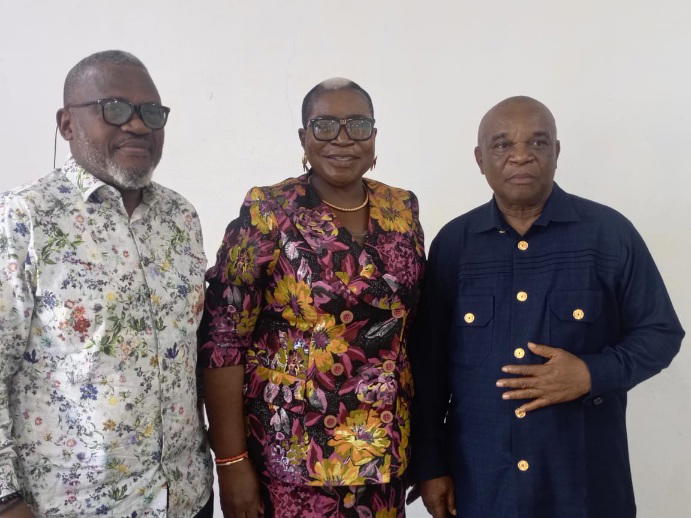
Speaking ahead of the event, Convener, Olaitan Williams, said Nigeria could not fully harness the blue economy without deliberately integrating coastal communities into its development framework.
Williams, who traced Ehingbeti to the indigenous coastal settlement that predates modern Lagos, said the area had historically demonstrated the maritime potential of its people.
She recalled the former Floating Bukka, a floating restaurant on the waterways, and noted that the evolution of the area contributed to the development of major maritime locations including Apapa, Tin Can Island and the Marina.
Williams who is also the Founder of Ocean Ambassadors Foundation (OAF), said the benefits of the blue economy would remain limited unless coastal communities, which constitute the foundation of many maritime activities, are included in policy and investment decisions.
She argued that insufficient security would discourage investors and make banks reluctant to finance inland waterways and coastal projects.
She also criticised what she described as inadequate legal provisions for coastal community development, noting that current blue economy policies appear to place greater emphasis on formal economic activities than rural fisheries and indigenous maritime livelihoods.
She linked insecurity in the maritime sector to be partly socio-economic conditions in coastal communities, stressing that the same communities whose members may become involved in maritime crimes are often the first responders during boat accidents and other emergencies on the waterways.
“The low-hanging fruits of the blue economy are 100 percent from the coast,” Williams said, stressing the need to convert the skills and indigenous knowledge of coastal residents into productive economic opportunities.
She said the forum would examine two critical chapters; legal framework and security architecture, as part of efforts to develop a blueprint for Nigeria’s inland waterways and coastal communities.
However, the forum will be chaired by the Chairman of the Governing Board of the National Inland Waterways Authority (NIWA), Hon. Mukhtar Shehu Shagari, while the Minister of Marine and Blue Economy, Dr. Adegboyega Oyetola, will serve as Special Guest of Honour.
The two principal speakers will approach the theme from legal and security perspectives. They are the President of the Maritime Arbitrators Association of Nigeria (MAAN), Chief (Mrs.) Jean Chiazor Anishere, SAN, and Executive Director, Technical and Operations, Tantita Security Services Nigeria Limited, Capt. Warredi Enisuoh.
Williams also identified illegal, unreported and unregulated (IUU) fishing as an area requiring stronger enforcement and legal backing, arguing that Nigeria must protect its fisheries and natural assets from exploitation by foreign operators.
She further called for stronger partnerships among government, investors, financial institutions and insurers, saying effective regulation and security would improve investor confidence and unlock financing.
With Nigeria’s extensive inland waterways offering opportunities in maritime transport, tourism, fisheries, boat building and logistics, Williams urged authorities to harness the skills of traditional boat builders, divers and other indigenous operators.
She cited previous initiatives that trained young people in coastal communities, arguing that such programmes could transform indigenous skills into employment and professional opportunities.
The 4th Ehingbeti Blue Economy Hub is therefore expected to bring stakeholders together to develop practical recommendations for strengthening Nigeria’s maritime legal and security architecture while ensuring greater inclusion of coastal communities in the blue economy.
Disclaimer
Comments expressed here do not reflect the opinions of Vanguard newspapers or any employee thereof.