By Ebunoluwa Sessou
Stakeholders in the built environment have called for stronger collaboration among government agencies, professionals, developers, contractors, artisans and community leaders to tackle the persistent incidence of building collapse in Lagos State.
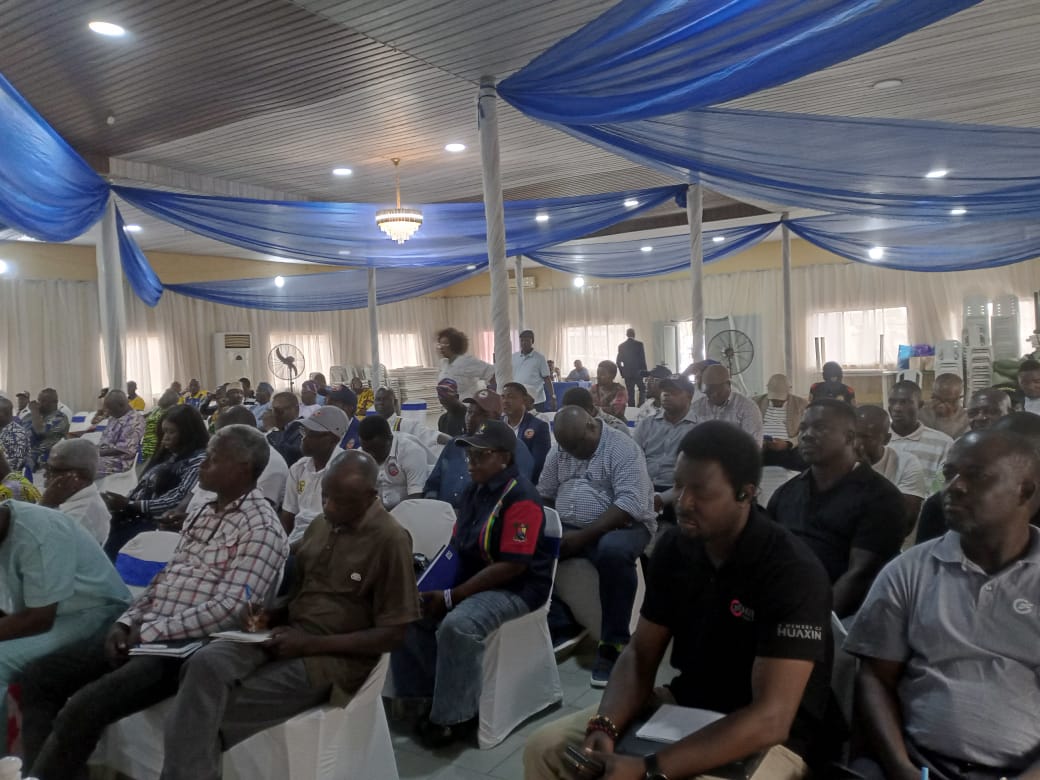
The stakeholders spoke at a conference organised by the Building Collapse Prevention Guild, Amuwo-Odofin Cell, in Satellite, Ojo Local Government Area of Lagos State, with the theme, “Building a Resilient Lagos through Synergy.”
The conference brought together builders, engineers, architects, quantity surveyors, contractors, government agencies, ministries, artisans, community leaders and other stakeholders in the built environment.
Chairman of the conference and Group Managing Director of STINO Group, Arc. Austin Otuoke, FNIA, said building a sustainable and resilient Lagos could not be achieved by an individual, profession or organisation.
Otuoke said government, regulatory agencies, professionals, developers, contractors and communities all had distinct roles to play in ensuring safe and sustainable construction.
According to him, government has responsibilities in legislation, policy formulation and the creation of regulatory frameworks, while professionals and other practitioners must ensure that established standards are followed throughout the construction process.
He said, “Building and maintaining Lagos is not a task for one individual or one organisation or one profession. It cuts across. Everybody has to be involved.
“What we are saying is that by synergy, all of these elements coming together—the professionals, stakeholders in the built environment, policymakers in government, regulatory agencies, the government itself and community leaders—can deliver a sustainable Lagos.”
Otuoke identified poor implementation of existing laws and regulations as one of the major challenges responsible for building failures in the state.
He noted that Nigeria already had building codes, bye-laws and other regulatory legislation designed to guide activities in the built environment, but stressed that the major challenge was moving from policy and legislation to effective implementation.
He said, “If it’s in terms of law, we have more than enough laws already to control. We have building codes, we have bye-laws, and we have different regulatory legislations already.
“But the issue is the application of these laws. That is where the problem comes. The issue is control, development and control and actualising the process of moving from law to actualisation.”
Otuoke also stressed the need for professionals involved in construction to examine their roles and identify gaps that could compromise structural safety.
He said the construction process must be properly monitored from documentation and approval to actual construction and delivery.
Otuoke further attributed Lagos’ high incidence of building collapse partly to the state’s population and the scale of its construction activities.
According to him, Lagos has an unusually large urban population and a high concentration of construction activities, professionals and operators in the built environment.
He, however, said the state had made progress in regulating the sector, urging stakeholders to support efforts aimed at improving compliance.
On concerns about the conduct of some regulatory agencies, Otuoke said while there could be individuals who acted inappropriately, proper compliance with established processes remained critical.
He also highlighted the importance of education and enlightenment, noting that the Lagos State Government had introduced measures to enable owners of existing buildings without permits to regularise them through what he described as an “as-built permit.”
Otuoke said such measures could help bring existing structures into the regulatory system instead of allowing them to remain outside the approval process.
Also speaking, the General Manager of the Lagos State Physical Planning Permit Authority, LASPPPA, TPL Kehinde Osinaike, said physical planning in a megacity could not be achieved by government alone.
Osinaike described physical planning as a shared responsibility requiring collaboration among regulatory agencies, professional bodies, developers, property owners and artisans.
He said preventing building collapse and ensuring structural integrity required seamless cooperation among stakeholders to eliminate substandard construction and promote strict compliance with physical planning permits and building regulations.
The LASPPPA boss said the authority was continuously evolving its processes to bridge the gap between policy and practice, citing the Electronic Physical Planning Process System, ePPPS, as part of the state’s efforts to make the procurement of planning permits more seamless and transparent.
According to him, the automated platform enables property owners and professionals to submit plans, track milestones and obtain planning permits online.
Osinaike said the digital system was designed to reduce manual bottlenecks, strengthen compliance and improve post-planning monitoring.
He disclosed that LASPPPA had commenced sector-based stakeholder engagements to ensure that practitioners and developers across the state were equipped to use the new automated planning system.
He said engagements had been scheduled across four physical sectors of Lagos, noting that an engagement had already been held in the Ikorodu sector, while subsequent sessions would take place in the Lekki and Mainland sectors.
Osinaike urged professionals and other stakeholders to participate actively in the engagements, stressing that collaboration remained critical to achieving a safer and more resilient Lagos.
He also described professional bodies as important partners in the state’s regulatory efforts, noting that their expertise, vigilance and advocacy could contribute to strengthening the built environment.
He said, “By utilising the ePPPS platform, maintaining rigid professional standards and actively participating in our upcoming sector engagements, we can collectively eliminate building collapses.
“Let this engagement serve as a renewed commitment to open dialogue, shared responsibility and uncompromising standards. Together, we can build a Lagos that is not only prosperous, but safe and resilient for generations to come.”
In his presentation, the Publicity Secretary, Association of Private Practising Surveyors of Nigeria, Lagos State Branch, Surv. Ogonna Agwu, MNIS, said proper construction must begin with adherence to approved finished floor levels, particularly in flood-prone parts of the state.
Agwu said landowners and developers should not determine building levels based on their financial capacity to sand-fill their properties, but should comply with specifications established by the relevant planning authorities.
According to him, “You must build to specification, and I think the Physical Planning Authority will help us in ensuring that this happens.”
He also urged residents to contribute to flood prevention by maintaining their drainage systems instead of leaving the responsibility entirely to government.
Agwu said residents could regularly desilt their drains, remove refuse and ensure that water channels remained unobstructed.
He further called for proper integration of drainage infrastructure in estates, stressing that developers should not merely parcel out land for sale without providing roads and drainage systems.
According to him, Lagos has primary, secondary and tertiary drainage networks, which are designed to connect with larger waterways, and domestic drainage systems must be properly linked to these channels to facilitate the free flow of water.
The surveyor also warned against excessive concreting of properties, saying the practice reduces the amount of water that can seep into the ground and consequently increases surface runoff.
He urged residents to preserve available green areas and adopt more vertical development where appropriate to reduce pressure on the state’s limited land resources.
Agwu also identified indiscriminate waste disposal as a major contributor to blocked drainage channels and flooding.
He urged residents to adopt responsible waste disposal practices and encourage recycling, noting that plastics discarded on roads could be washed into drains during rainfall and obstruct the flow of water.
He said environmental education should begin from homes and schools, stressing that children should be taught that seemingly minor acts such as throwing plastic bottles and nylon bags on the streets could contribute to flooding and erosion.
“Building smart cities start from the ground. Every data set that a surveyor captures, every level, every depth, every early warning, is a decision that keeps a city dry,” he said.
Also speaking, Vice President, Africa, International Society for Soil Mechanics and Geotechnical Engineering, Engr. Sebastian Ozoamalu, FNIGE, stressed the importance of understanding the soil conditions of every construction site before building.
Ozoamalu said Lagos did not have a uniform soil type, noting that different parts of the state could have filled or made-up grounds, soft clay, organic deposits, peat, sand, stiffer clay and denser sand.
He therefore cautioned developers against copying the foundation systems used by neighbouring property owners without determining whether the soil conditions were comparable.
According to him, prospective developers should ask critical questions about what lies beneath the site, the strength of the soil, its likely settlement under load, the location and effect of groundwater and the foundation type suitable for the proposed structure.
He said these questions could be answered through proper site investigation and soil testing before construction begins.
Ozoamalu explained that site investigation involves field studies and soil sampling, including the use of boreholes to obtain samples and determine groundwater levels, after which engineers could interpret the results and recommend an appropriate foundation design.
He warned that relying on assumptions or taking shortcuts in site investigation could increase the risk of structural failure.
The geotechnical expert also linked uncontrolled water to ground instability, explaining that rainfall could cause saturation, softening, erosion and settlement, potentially affecting the stability of structures.
He stressed the need for developers and professionals to properly engineer and manage water around construction sites.
Meanwhile, the General Manager, Lagos State Building Control Agency, LASBCA, Bldr. Florence Gbaye, FNIOB, urged that all professionals in the built environment must work within their areas of expertise while coordinating with other practitioners.
She said Lagos is the responsibility of stakeholder in the built environment, adding that architects, engineers, builders, surveyors, planners and other professionals have specific role to play.
Gbaye said the collective objective should be to ensure that the design, construction and maintenance of buildings protect the lives and property of Lagos residents.
She stressed that effective coordination among professionals was essential to achieving a safer and more sustainable built environment in the state.
Disclaimer
Comments expressed here do not reflect the opinions of Vanguard newspapers or any employee thereof.