By Benjamin Njoku
Not every cultural event is built just to entertain. Some are designed to do something bolder: get different art forms talking to each other.
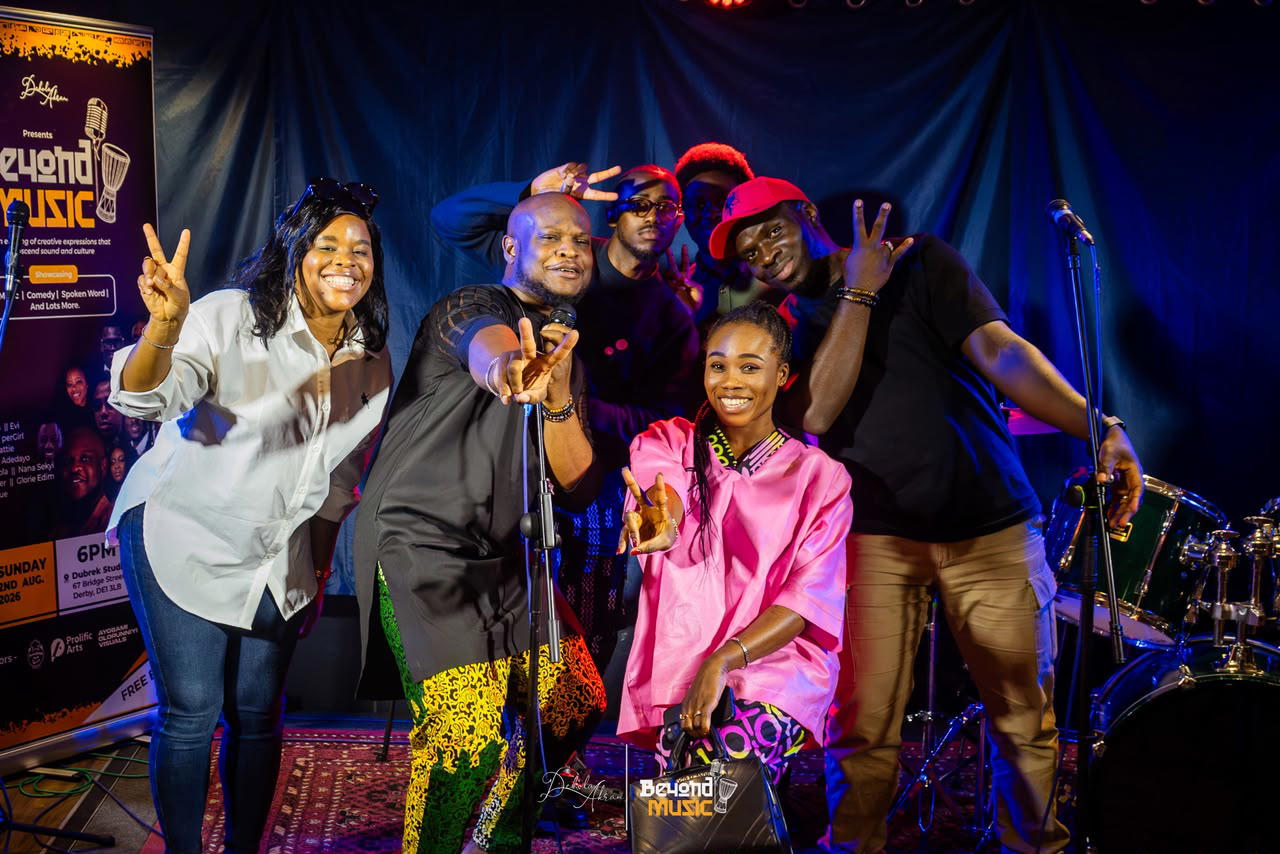
‘Beyond Music’, curated by musician Debola Akran at Dubrek Studios in Derby on August 2, 2026, was firmly in that second category.
The night brought together music, poetry, comedy and performance to break out of the usual single-genre showcase. Its strength wasn’t only in the talent on stage, but in the idea itself that different creative disciplines can sit side by side, complement one another, and give audiences new ways to experience story, identity and culture. Dubrek Studios proved an appropriate setting for this experiment.
Known for music production, rehearsals, visual art and live shows, the Derby venue gave independent artists space to experiment outside traditional structures. The result felt less like a one-off concert and more like part of a growing creative ecosystem.
At the center of it all was Debola Akran. As both convener and performer, his curatorial vision shaped the entire evening. Instead of treating poetry and comedy as filler between musical acts, the programme gave each discipline equal weight and purpose.
That choice paid off. The audience moved through different emotional registers all night. Music sets the mood. Poetry demanded reflection. Comedy offered release and sharp social commentary.
Hosting was key to holding it together, and Adeyinka “SuperGirl” did exactly that. In a multidisciplinary lineup, the host becomes the bridge- guiding the room from the quiet intimacy of spoken word to the spontaneity of comedy and the raw energy of live music.
Poetry stood out strongly. Antonio Ghattie’s “The Beauty of Silence’ showed how rhythm, pause and tone can turn language into a live, intimate performance. Nana Sekyi added another distinct poetic voice, proving that spoken word isn’t one thing — each poet brings their own relationship to language, identity and rhythm.
On the comedy side, MC Crown did more than get laughs. His set worked as cultural commentary, touching on identity, migration, relationships and social expectations. His presence kept the night from becoming emotionally one-note.
Music remained the anchor. Performances from Adedayo and Glorie Edim reminded everyone why the event carried the name ‘Beyond Music’. But because they shared the stage with poets and comedians, their songs felt part of a bigger conversation about emotion and storytelling.
Daniel Okezue perhaps best captured that versatility. Switching between hosting and poetry, he showed how today’s artists can be both performers and connectors within a wider cultural network.
In the end, ‘Beyond Music’ worked because of its simple but powerful idea: what happens when you erase the lines between music, poetry, comedy and performance? More importantly, what happens when African and diasporic artists bring all those languages into one room?
The answer, in Derby, was significant. The gathering reflected the growing influence of African and diasporic creatives in Britain’s contemporary arts scene, where issues of identity, migration, belonging and community are increasingly explored through performance.
‘’Beyond Music’ has now set a strong foundation. Its biggest takeaway is this: music can be the doorway. Behind it are stories, history, humour, migration and belonging. In Derby, those elements came together on one stage and created something more valuable than entertainment: a conversation between cultures.
Disclaimer
Comments expressed here do not reflect the opinions of Vanguard newspapers or any employee thereof.