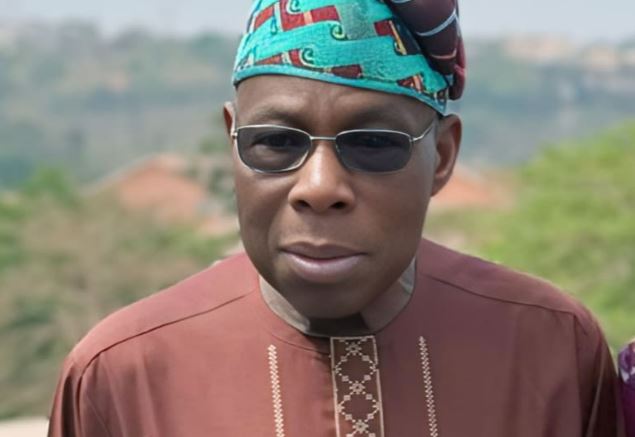
Obasanjo
We made it clear that a working relationship between the two groups was beyond us. A decision of that magnitude would have to be reported to Afenifere leaders who had the authority to take a final position on it. We immediately reported the proceedings to Chief Abraham Adesanya who convened a meeting where it was debated with serious reservations amongst the leadership about fraternising with Obasanjo.
The Afenifere and AD leadership were not going to give their heart and soul to support Obasanjo’s second term ambition without extracting some major political commitment from him. A meeting was held in Lagos where the conditions for negotiating with Obasanjo were agreed upon. After the meeting at his home, Adesanya led a team with Afenifere charter of demand to Ota to discuss with Obasanjo.
The delegation to Ota included Chief Ayo Adebanjo, Senator Femi Okunrounmu and Cornelius Adebayo. Okunrounmu and Adebayo were mandated to speak on behalf of AD and Afenifere. Chief Adesanya called me and asked me to join them at Obasanjo’s Ota Farm, from my station in Abeokuta. The conditions presented to Obasanjo amongst others were: the restructuring of the Nigerian federation, devolution of power, including moving some items from the exclusive to the concurrent list and ensuring fiscal federalism. Obasanjo was to organize a credible and transparent national census. Merit must be followed alongside federal character and quota system in the recruitment to federal positions across the country.
Obasanjo assured us that he identified with them. He explained that he had even started implementing the issue of merit in federal appointments indirectly through the privatization of many public enterprises which were run for many years without respect for merit. With the privatization and the enthronement of a culture of merit, he expected that many of Nigerian professionals abroad would return home to run the privatized enterprises. He affirmed that privatization was part of enthroning meritocracy.
Obasanjo said arrangements had been completed to ensure a genuine, transparent and acceptable headcount. He told us the satellite mapping of all Nigerian cities, towns and villages was in the making. Even without a headcount, he explained that with satellite mapping, it was possible to count the number of houses everywhere in the land and with that get a rough idea of how many people live in the houses and in the country. He said he would lay the issue of census to rest in the second term. Through GOOGLE, the days of census inflation were over.
On fiscal federalism, he said he would make the federal government respect and obey the decision of the court in the case instituted by Lagos and other states against the federal government. On the whole, Obasanjo sounded so eloquent and convincing. At the end of the meeting, we drove to the Gateway Hotel, Ota where I had arranged dinner for the leaders. It was also the place to debrief ourselves of what we gained from meeting with Obasanjo. Chief Adebanjo was the major speaker.
“I sincerely cannot believe that Obasanjo has become such a changed man,” he said. “I am surprised but happy that he is ready to take fundamental actions to restructure Nigeria in his second term in office.” That was the impression most of us took away from the meeting. Consequently, we agreed to support him for the 2003 presidential election. On our part, we decided not to present a presidential candidate for our party in spite of resistance from some Afenifere leaders. It was later that we realized that we had been fooled. Obasanjo merely played along with us and ended up deceiving us by telling our leaders what he knew they wanted to hear but which didn’t come from his heart.
Apart from reaching out directly to the A. D. governors, Obasanjo also reached out to other sources close to the governors to reinforce his professed desire for cooperation. From Ogun State, he enlisted all manner of groups–religious, traditional, professional, communal and familial, to pile pressure on me, his fellow Ogun indigene.
Obasanjo pressures me through Royal Fathers, Friends and Groups
The then Ooni of Ife, Oba Sijuwade, Olubuse II, was the first to discuss Obasanjo’s re-election plans with me. Ooni was superlative in his presentation to me. “The Yoruba nation has an assignment for you,” he said. “Yorubas don’t want disintegration; they want continuity and a smooth change of baton from one civilian government to another.”
Then the real message: “We want your cooperation and assistance.” I responded that his message and idea were laudable but I was only a member of a large team with whom I need to discuss the subject. Alake of Egbaland, late Oba Oyebade Lipede was next. At a meeting in his bedroom one night, he told me, waxing sentimentally: “Akinrogun, this is where I will breathe my last to join my ancestors. Before I answer the call to transition I want you to join the Egbas in helping our Jagunmolu of Egbas (General Obasanjo) to execute a successful movement from one civilian to another.” Oba of Lagos, Late Oba Adeyinka Oyekan, a distant cousin and the grand-patron of our family, Osoba-George, also waded in. So did the Ataoja of Osogbo, Oba Iyiola Matanmi with whom I grew up in Osogbo. He threw his weight in to plead Obasanjo’s cause.
The most compelling of all was from the paramount ruler of Ijebuland, Oba (Dr.) Sikiru Adetona, a respected royal father in Yorubaland. Having been on the throne since 1960, Awujale is deep and experienced. He can be firm and uncompromising in any noble cause he supports. Awujale had been an immense source of inspiration to me both in and out of office as Governor. He also provided succour when I was underground during Abacha’s reign. His daily telephone calls with prayers made my travails in hiding bearable and fortified my resolve to bear it through. A fair-minded leader who hates injustice in any form, he could become radical in search of justice. The Awujale too did not wholly trust Obasanjo, having had his own share of tension-soaked relationship with Obasanjo. I remember one incident in Ijebu-igbo after the church service for the 80th birthday ceremony of Chief Abraham Adesanya in July 2002. The Awujale and I were riding in the same vehicle with Obasanjo and Chief Bode George when the Awujale told Obasanjo frontally: “In the past, I could swear by you but in recent times, I no longer trust you nor can I put a bet on any promise you make.”
•Culled from BATTLELINES: Adventures in Journalism and Politics, Diamond Publications (2018) chapter 17, pp 277 to 300
Disclaimer
Comments expressed here do not reflect the opinions of Vanguard newspapers or any employee thereof.