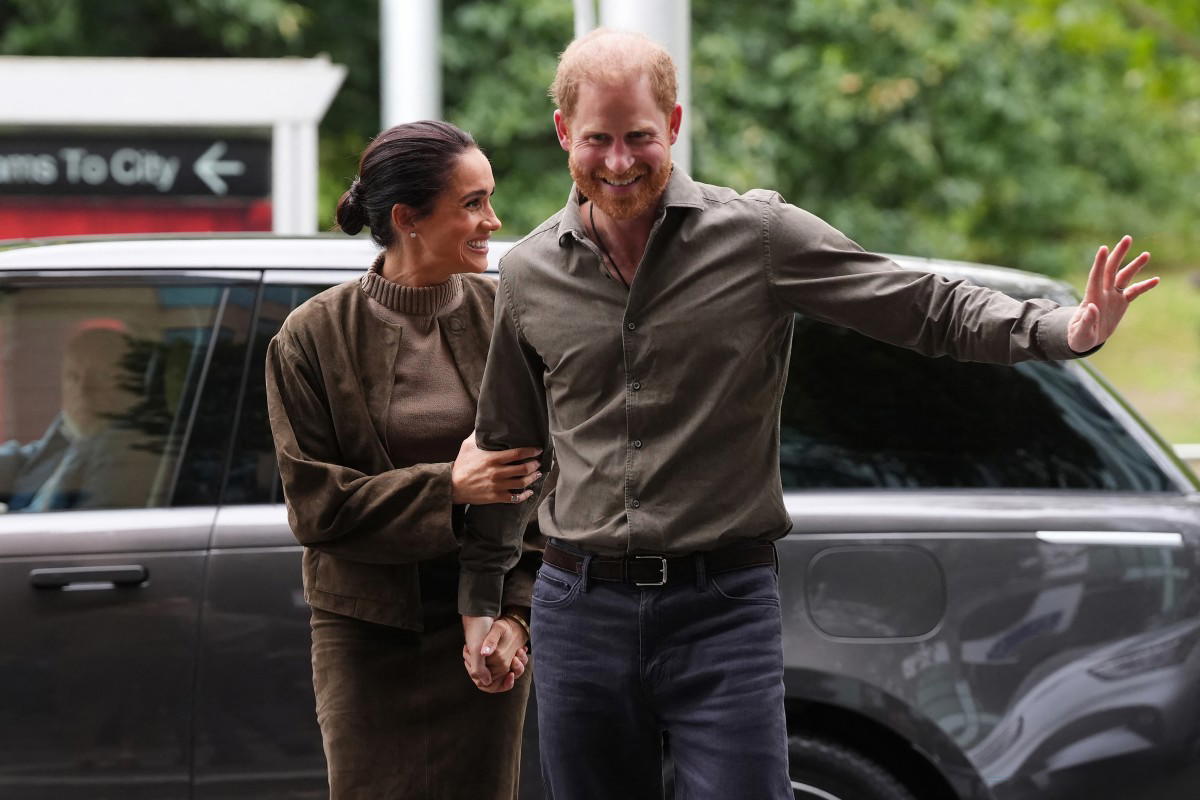
Britain’s Prince Harry (R), Duke of Sussex, and his wife Meghan (L), the Duchess of Sussex, arrive at the Australian National Veterans Arts Museum (ANVAM) in Melbourne on April 14, 2026. (Photo by Jonathan Brady / POOL / AFP)
By Esther Onyegbula
Prince Harry and Meghan Markle are preparing to relocate their children, Archie, seven, and Lilibet, five, from California to the United Kingdom, with an expert warning that the move could bring emotional challenges for the youngsters.
After spending the past six years in California, the Sussexes’ children are expected to begin attending a British school in September, while the family is understood to have secured a private, non-royal residence outside London.
The move marks a significant change for Archie and Lilibet, who have lived most of their young lives in the United States and have only visited the UK on a handful of occasions.
However, Caroline Popoola, founder and CEO of Alpha Child Care, said parents relocating children across countries must pay close attention to the emotional impact of such a major transition.
According to her, while children may be excited about a new environment, they could also experience a sense of loss as they leave behind familiar surroundings, friends and routines.
“It’s important that parents communicate and acknowledge the changes,” Popoola told The Mirror.
“They need to communicate that clearly to the children. It’s important that parents give the children permission to discuss those things that they’re missing. They have a right to miss their old life.”
She advised parents to preserve familiar routines, including bedtime stories, regular meals and evening activities, saying such routines could provide children with a sense of stability when everything else around them is changing.
Popoola also stressed the importance of giving children simple and concrete explanations about their new environment.
“It’s important that they get to see the advantages of moving countries, [but] for the children to navigate these changes it’s important that they feel safe,” she said.
“Simple things help like explaining in very simple and concrete language such as, ‘Mummy and Daddy will pick you up at 3pm from school’, or who is doing the picking up. Mummy and Daddy will be at home waiting for you. This is our new school. This is our new home. This is why we’re here.”
The childcare expert warned that children may not always openly express their anxiety, adding that emotional distress could instead manifest through changes in behaviour.
“This can affect the children’s behaviour where they’re having sleepless nights, irritability, emotional outbursts. They can become very clingy to Mummy and Daddy simply because of uncertainty,” she said.
“All the parents need to do is just reassurance and the fact that they would be there, that safety net for the children.”
The relocation comes more than six years after Harry and Meghan moved to California following their decision to step back from royal duties, an episode widely known as “Megxit”.
The development has also renewed attention on Harry’s strained relationship with members of the Royal Family.
It is understood that King Charles III was informed of the Sussexes’ decision only three days before the news became public.
The Prince and Princess of Wales have not publicly reacted to the move. Prince William and Harry remain estranged following a series of public revelations and allegations made by Harry concerning members of the Royal Family.
Despite the planned relocation, the Sussexes are expected to retain their homes in Montecito, California, and Portugal.
A royal commentator reportedly described the arrangement as potentially “testing the waters” as the family prepares to establish a greater presence in the UK.
Archie and Lilibet are expected to begin at their new schools in early September. It is also understood that, unlike children of working royals, photographs of them will not be officially published when they start school or on their birthdays.
Disclaimer
Comments expressed here do not reflect the opinions of Vanguard newspapers or any employee thereof.