By Gabriel Ewepu
ABUJA — The Federal Government has initiated nationwide consultations to build a unified framework, the National Water Compact, aimed at addressing Nigeria’s growing water, sanitation, and irrigation challenges from 2026 to 2030.
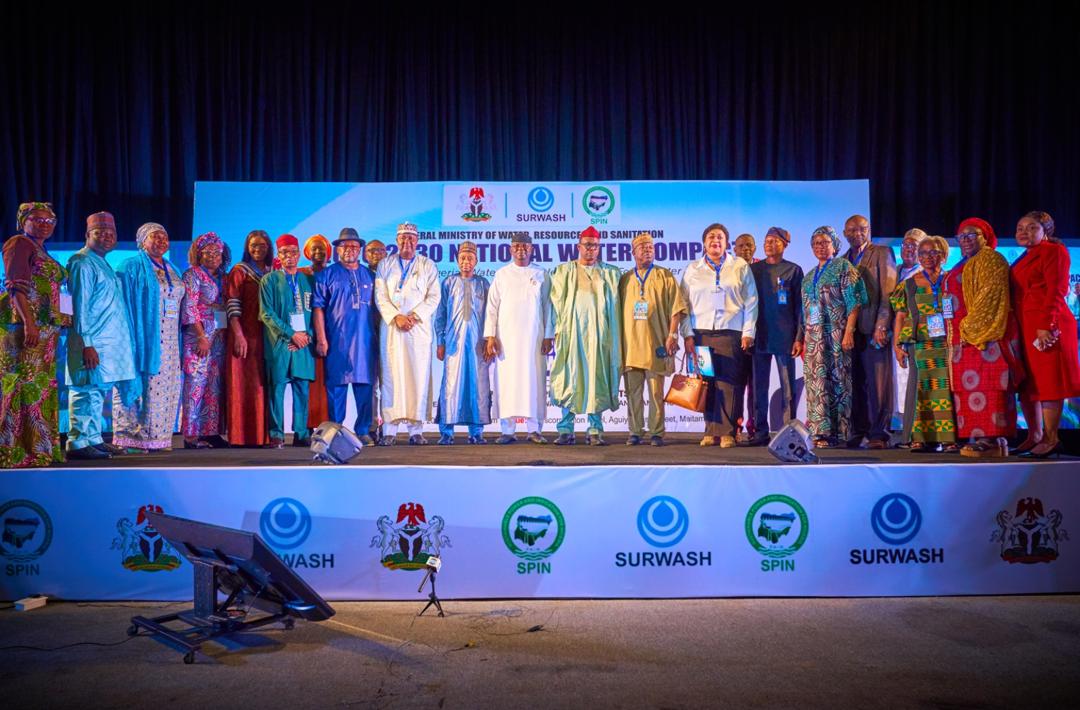
At a stakeholders’ workshop in Abuja on Thursday, Minister of Water Resources and Sanitation, Engr Joseph Utsev, stated that rapid urbanization, population growth, climate change, and chronic underfunding continue to threaten the country’s water security.
Utsev warned that mounting climate pressures, deteriorating infrastructure, and rapid population growth require an immediate, unified response. He emphasized that the success of the initiative hinges on active participation from state governments, which bear the constitutional duty of managing local water supply and sanitation.
He said: “However, the National Water Compact cannot succeed unless it reflects the aspirations, priorities and realities of the Nigerian people.
“The National Water Compact is not merely another policy document. It is a national commitment to transform Nigeria’s water future. The Compact seeks to strengthen governance and institutional coordination, improve financing for the water sector, accelerate access to safe and climate resilient water supply and sanitation services, irrigation development, as well as water security across the Federal Republic of Nigeria. These constitute the three pillars of the water compact, Water for People, Water for Food security and Water for Planet.”
On State ownership of Compact, The Minister engaged the Nigeria Governors’ Forum to secure buy-in across all 36 states and the FCT, as state governments hold primary operational control over local water supply and hygiene services.
Meanwhile, on private capital needed to drive Compact, the Acting World Bank Country Director, Taimur Samad, emphasized that public funds alone are insufficient, calling for water to be treated as an economic asset with sustainable revenue streams to attract investments.
In his remarks on public health link with Compact, the Minister of State for Health and Social Welfare, Dr. Iziaq Salako, noted that reliable water in health facilities, schools, and homes is critical for infection control and disease prevention.
Also the WASH development partner group representative, Emily Kilongi, urged stakeholders to focus on measurable outcomes, data-driven decision-making, and cross-sector coordination across climate, agriculture, and health.
Meanwhile, stakeholders agreed on prioritizing measurable metrics, open data tracking, and climate-resilient infrastructure over symbolic policy declarations.
The Compact aims to serve as a binding blueprint to improve governance, boost agricultural irrigation, and deliver safe, climate-resilient water services across Nigeria.
Disclaimer
Comments expressed here do not reflect the opinions of Vanguard newspapers or any employee thereof.