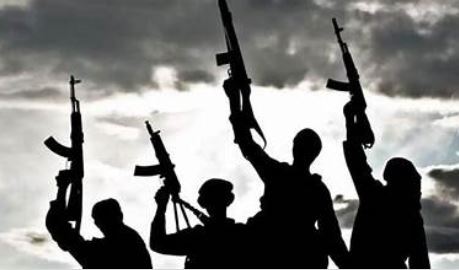
Stock image
By Luminous Jannamike
ABUJA — An intelligence and data firm, CellHub, has said terrorist and bandit attacks have spiked ahead of every presidential election in Nigeria since 2015, calling on the National Assembly, the Office of the National Security Adviser and the Independent National Electoral Commission, INEC, to investigate the recurring pattern before the January 2027 poll.
Different governments have come and gone, and the country’s security threats have shifted from Boko Haram to ISWAP, banditry and mass kidnappings.
Yet, according to the organisation, one thing has remained unchanged: violence has escalated in the build-up to every presidential election since 2015. It warned that the recurring trend now poses the most predictable security threat to the 2027 poll.
In a statement signed by its Executive Director, Ikemesit Effiong, CellHub released a consolidated election security dataset in Abuja, saying no public institution had ever investigated why attacks repeatedly intensified before presidential elections.
It urged the National Assembly, the Office of the National Security Adviser and INEC to establish whether the pattern was coincidental or pointed to deeper security failings.
“Four out of four. Random variation does not produce that result,” the document read.
The report said Boko Haram reached its territorial peak before the March 2015 presidential election, controlling about 20,000 square kilometres. It recorded 22,544 conflict-related deaths in 2014, with more than 3,000 people killed in January 2015 alone, forcing the election to be postponed by six weeks on security grounds.
Ahead of the February 2019 poll, ISWAP overran military positions in Borno State, while killings linked to banditry surged in Zamfara and across the North-West, leading to another postponement of the election by one week, the report added.
Before the 2023 presidential election, kidnapping had grown into a commercial enterprise, with 3,620 people abducted in the year ending June 2023. CellHub also documented repeated attacks on INEC facilities and recalled that terror alerts were issued for Abuja months before Nigerians went to the polls.
Looking ahead to 2027, the organisation said terrorism incidents rose by 43 per cent in 2025, while fatalities increased by 46 per cent, the largest absolute increase recorded by any country that year. It added that mass school abductions had returned on a scale not seen since 2014.
“Four consecutive cycles of correlation is sufficient grounds to compel that investigation, and the failure to conduct one is now itself a national security decision,” the report said.
While citing previous findings by Human Rights Watch and other researchers on the financing of armed groups around elections, CellHub stressed that it was not alleging the same factors were driving today’s terrorism and banditry. Rather, it said the recurring pattern warranted an independent public inquiry.
The report also pointed to existing intelligence on terrorism financing, including government disclosures identifying suspected financiers and sanctions imposed on individuals and entities linked to Boko Haram, ISWAP, Ansaru and the Indigenous People of Biafra.
“Nigeria does not have an intelligence problem,” the report said. Adding, “Every list is published. Almost none of it reaches a courtroom.”
Disclaimer
Comments expressed here do not reflect the opinions of Vanguard newspapers or any employee thereof.