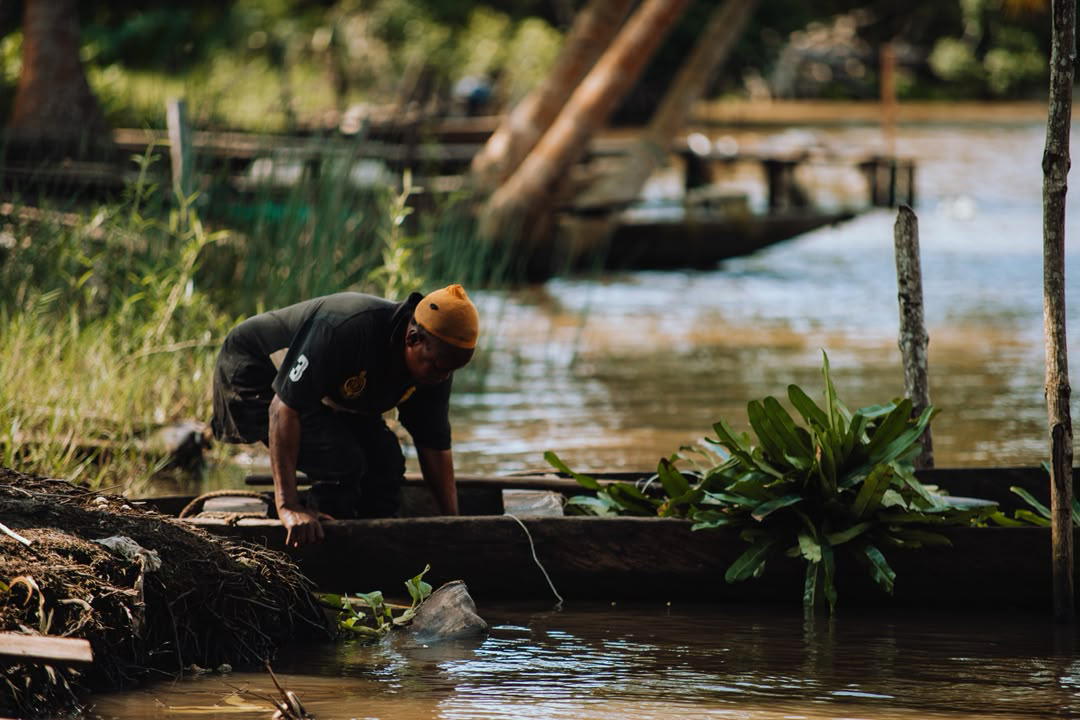
Riverine Connect Initiative is a dedicated sub-initiative of the National Universal Communication Access Project (NUCAP) aimed at expanding digital connectivity to Nigeria’s underserved riverine communities. Leveraging the broader rollout of 3,700 towers under NUCAP, this initiative focuses on strategic deployment of resilient, accessible telecommunications infrastructure across remote waterways and coastal settlements. By bridging connectivity gaps in these hard-to-reach areas, the Riverine Connect Initiative will empower local economies, support emergency services, enhance access to education and healthcare services, and drive inclusive participation in the digital economy for communities long left offline. – Dr ‘Bosun Tijani, Minister of Communications and Digital Economy of Nigeria
The Issue: The Riverine & Remote Communities are disconnected from the rest of Nigeria
Infrastructure
Most Nigerian riverine communities are lacking basic infrastructure. Very few are fortunate to have proximity to roads thus access is via the waterways. Transportation on the waterways is more expensive for the average sojourner – economies of scale for water transportation, riverine public transportation and cost regulation are non-existent. Riverine communities also often lack energy and communication infrastructure. Cost of transportation and compounded infrastructure deficits make events, initiatives, project developments or interventions in these areas discouraging
Education
I was first awakened to the educational crisis in the riverine communities in 2024 through the invitation to consider Teach for Nigeria support in Delta State. Delta State historically ranked top ten for most educated states in Nigeria with a literacy rate of close to 90% and an average drop out rate (upper secondary) of 26%. The state also has more than 30 tertiary institutions and has 19 universities- the state with the third highest number of universities in Nigeria.
While local governments in the riverine areas have UBEC primary and secondary schools, the disparity for primary and secondary school enrollments in the predominantly riverine Burutu, Patani, Warri North & South West was disheartening. For instance, see the 2022 UBEC primary & secondary school enrollment data for these areas below: During my research, I interviewed students, parents, teachers and community stakeholders and the feedback had one consistency, riverine logistics and considerations for teachers and Youth Corpers were discouraging.
The cost of transportation, the lack of network connectivity or societal integration disincentivized the teachers. In confidence, most riverine teachers admitted that they frequently didn’t make it to teach, the students admitted it wasn’t worth going to school when teachers were hardly there. We discovered that most of the primary education was handled by teachers living in or around the communities and parents could pressure their children at a young age to stay in school. However, as they reached JSS 3, students lacked the motivation and incentives to continue with the absence of consistent and qualified teachers coming to the riverine communities.
The 2025 WAEC logistical delays led to students writing their exams with torchlights at night in Asaba. I could only imagine the logistics delay for the students in the riverine areas. The strong condemnation from the Delta State Government led to WAEC working with Delta State to prepare for Computer Based Tests (CBTS) for national exams in 2026. The upper tier educational performance of Delta State students in the nation is because Delta State 1 Government and people have consistently valued and invested in education. One can only imagine the educational condition in the riverine areas of other states that have not historically prized education. It is critical to close the gaps in digital connectivity and educational support in the riverine areas so that their opportunity for education does not fade.
The recent announcement of ‘Free data for learning’ being championed by the Nigerian Communication Commission (NCC) and driven by its chairman Chief Idris Olorunnimbe has been a breath of fresh air towards providing digital equity for education. This policy also directly aligns with President Bola Ahmed Tinubu’s vision for equitable education which started with Lagos State’s free WAEC and NECO examinations during the president’s tenure as governor of Lagos.
The legacy of Chief Awolowo’s 1955 scheme for Free Universal Primary Education (UPE) hinged on equity in opportunity. This opportunity became the beacon of hope for all strata in Nigeria that bore great fruit in several generations across public and private interventions for education since UPE. I was fortunate to be a beneficiary of equity in opportunity. I attended NNPC Staff Primary School, Warri. The school fees were affordable for all NNPC staff levels.
It was so affordable it was almost free yet it held a high standard and competitive edge in Warri. Although NNPC staff children were their priority, the school also opened its doors to all in the Warri axis. The school had the children of drivers, kings, executives from across Nigeria, foreigners and then Bendel State elite all together. Some students walked a long distance to get to the school gates, some came in shared corporate vehicles, some lived in the NNPC housing estate next to the school premises and others came in private chauffeured luxury cars. However, once we entered the morning assembly where the bells rang, school equalized us.
By the time I went to a private boarding secondary school with the children of Nigeria’s elite, the quality and resilience of my primary school education in Warri kept me grounded and on par with my peers from the experiences in the classroom of my Warri primary school that was full of life’s diversity.
The 2025 implementation of Chief Awolowo’s 1955 legacy scheme for Free Universal Primary Education (UPE) would require all Nigerian schools to have access to free digital connectivity. Equity in opportunity now requires equity in connectivity. Equity in access and an early exposure to diversity of human capital are my some of my most cherished early childhood memories.
These opportunities for on-hand diversity in exposure and interactions are now provided by the world of the internet. The digital economy has become the equalizer. In a twist of fate, a significant proportion of the adolescent dropping out of school still end up in the digital economy.
The world of digital trade, retail, communications, content creation and fraud are familiar comforts for the youth in the riverine and remote regions. Yet, digital connectivity in schools could have been the incentives for students staying enrolled and engaged in schools
Healthcare
All things considered, it is not surprising that riverine communities do not have hospitals, they mostly have just a community health centre if any at all. These health centers are usually supported by religious organizations or community leaders with a practicing or retired nurse living in the community. The limited healthcare facilities and logistics constraints hinder the prospects and attractiveness of these communities for investment and migration. This is critical considering that the riverine communities host a significant percentage of senior citizens, the implications for maternal health and the hazards of the environment.
Economy
While riverine economies have some diversity like palm, coconut, and pottery cottage industries, most economies in the area are powered by the fishing industry. These industries struggle with scale due to a lack of investment in infrastructure for industrial growth and the cost of logistics 2 for industry practitioners and market access. Despite the energy sector mostly situated in the coastal and riverine Niger Delta, the opportunities for support industries are limited for the community stakeholders with the infrastructure constraints.
Services
With a lack of basic infrastructure and logistics constraints, the banking, financing and other service industries are non-existent in the riverine areas. While Opay and Moniepoint accounts are common in rural Northern Nigeria amongst artisanal miners, what is commonplace among riverine fishing and ogogoro producing merchants is that they have absolutely no bank accounts. These further limit the growth and development prospects of these riverine communities and deepens their isolation from urban Nigeria
Security
The Remote, Coastal and Riverine areas of Nigeria are the gateways to Nigeria’s security. It is critical that the Niger Delta producing Nigeria’s black gold and energy resources should not have security or infrastructure gaps. Remote forest reserves and communities must not be security blackholes that provide haven for social unrest and citizen disenfranchisement that allow state saboteurs thrive. Oil bunkering, pipeline vandalism, damages and explosions have significant impact on national revenue., Un-identified foreign vessels in the coastal and waterways and other critical incidents in the environment go un-monitored and un-reported. The communication and digital connectivity gaps in these regions have become a matter of national security
The Solution: Integration & Connectivity for Riverine Remote Communities
Remote Riverine Communities need to be integrated into the shared benefits and connectivity of urban Nigeria. Water and Land are both natural resources for Nigeria. Nigeria has invested in the hinterland and urban areas and seen positive outcomes. Increasing insecurity, violence and volatility from the remote and riverine regions are symptoms of their long disenfranchisement, impeded development and deepening isolation. The Nigerian economy and social indices will rise with the integration of riverine and remote communities into the greater Nigerian Identity.
Improved indices for education, health, security, infrastructure, services and economic well being in the riverine communities will be enabled by creating and supporting linkages within these regions and balancing the access, opportunities and connectivity on the water as it is on land. Create opportunities, reduce inequality, building human capital, fostering inclusive growth through govt policy and intervention, investment and community participation
Transforming Riverine Communities into Digital Communities: Enabling Digital Connectivity for the Riverine Communities
Digital Connectivity is the critical first pillar to unlock the potential of riverine and remote communities. In a global world where our lives and identities are enabled by technology and smart devices, any region in Nigeria without access to communication infrastructure risks losing their future identity and culture.
Digital Connectivity also provides the opportunities to catalyze and create new economies, cities and realities by transforming these remote riverine communities into relevant digital communities with intentional innovation that supports their integration and identity. The digital world now enables ubiquitous wealth creation.
The ancient and traditional world developed and gathered around scarce resources (historically water sources), but the new world will build around connectivity. Digital Connectivity now allows economies and life anywhere there is breath. Connectivity has been the problem and remains the solution. The riverine and 3 coastal areas were historically the centres of trade, activity and connectivity. Once bustling communities of riverine and coastal trade like historic Koko, Sapele, Calabar & Bonny, have become remote and serene echoes of the past without access to digital communications.
Riverine & Coastal residents innately long for the well-being of living in blue spaces. Natives of Coastal and riverine areas across the world from Europe to the Americas or Asia are all people who stay or return back to their coastal roots. Science has disclosed that being by water is good for body and mind. Blue space residents long to return to the land by the water, pure air and being close to nature. Riverine and coastal areas can provide the benefit of both the traditional and digital worlds and deliver a more integrated, resilient and robust Nigeria with rural and riverine digital connectivity.
The Riverine Connect Initiative will catalyze intentional digital innovation that provides and integrates solutions and services for identity, payment and connectivity digital platforms to support the social economic development of the riverine and coastal communities. The outcomes will be multiplied and evident in human capital, infrastructure, social inclusion, security, investment, economic growth with emerging economies.
The Drivers of the Transformation in the region have been:
- Influential and Motivated leadership e.g King, Chief & Community leaders
- Influential Organization that serves community e.g Churches, Corporations, NGOs
- Telecommunication Infrastructure
The development of the remote riverine coastal areas have happened mostly by strong community pillars that straddle several sectors like, High Chief Government Oweizide Ekpemupolo and Hon (Dr) Godwin Ebosa. Corporate investments from Energy and security companies like NNPC, Chevron Nigeria, Nigeria Liquified Natural Gas (NLNG), Tantita Security Services Nigeria, Church organizations and telecommunication companies especially Glo & MTN. Very recently, the NCC has also made significant interventions in the riverine area and have committed to continue driving digital inclusion and transformation for the riverine area.
It is critical for the government to not only intervene in providing digital connectivity, but also provide foresight in town planning and development that will suddenly be at their doorsteps once the gates of digital communications are open to the riverine and remote areas. Visionary leaders, Corporate Social Initiatives, Impact Investors and Social Entrepreneurs will build on the backbone of digital infrastructure for riverine and remote areas for affordable and sustainable development.
We are grateful for the great intervention of the Hon Minister of Communications and Digital Economy Dr Bosun Tijani with the Riverine Connect Initiative which will be piloted and launched in the riverine communities on the Benin River during BINI RIVA Life August 2026.
The Riverine Connect initiative will be a game changer for riverine and rural communities and unlock future economic wealth for Nigeria. We look forward to seeing digital classrooms, JAMB centres, tech integrated logistic enterprises and booming eco-tourism in the riverine communities through the Riverine Connect Initiative.
Nere Emiko is the lead promoter of Legacy of Traditions and BINI RIVA Life. BINI Riva Life is a renaissance celebration of the communities, activities and festivals around riverine connectivity, culture and commerce. The River knows we are One. https://biniriva.life Aug 14-16 2026
Disclaimer
Comments expressed here do not reflect the opinions of Vanguard newspapers or any employee thereof.