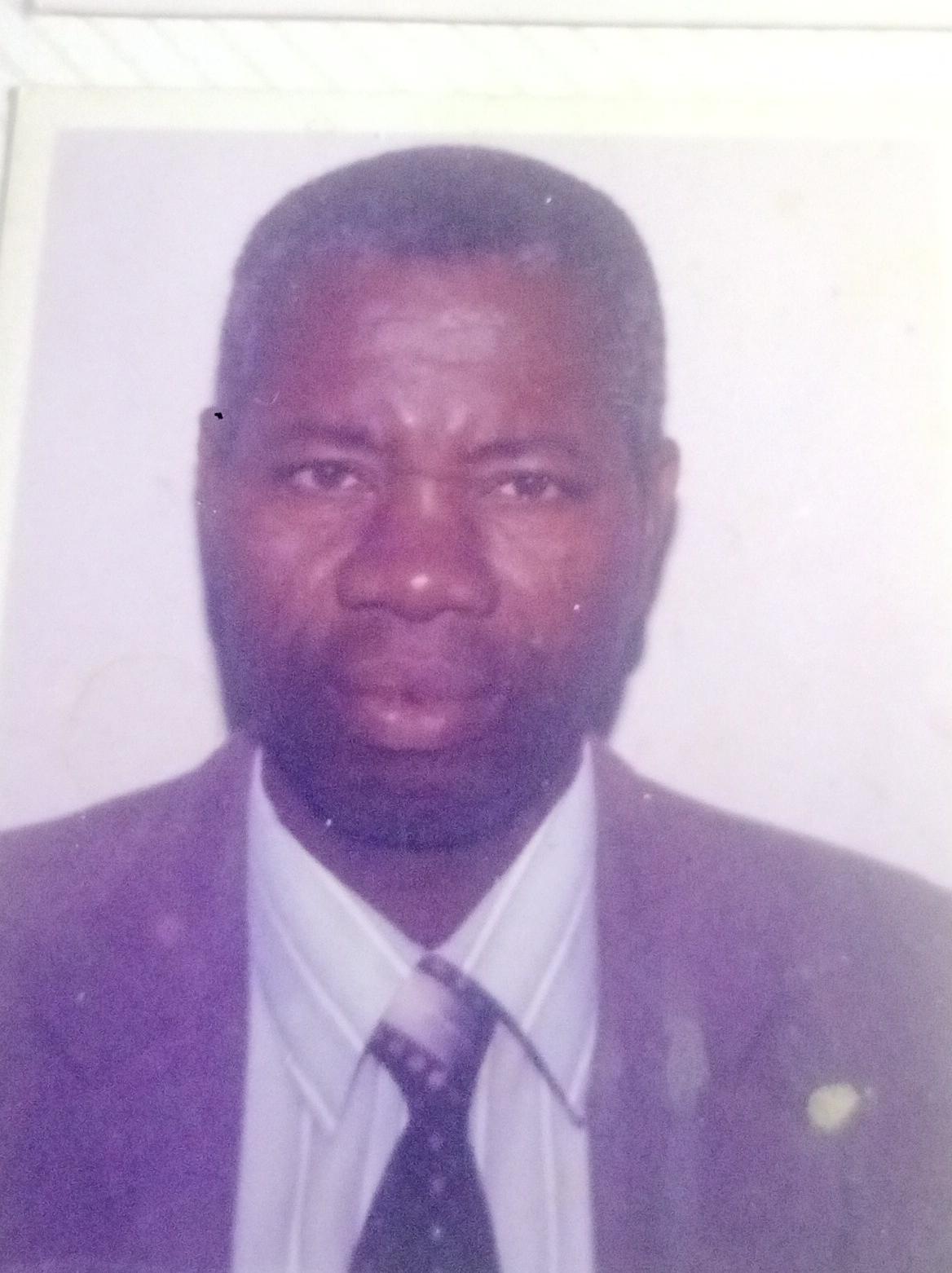
Tunde Akanni
The news of the passing of Engineer Gani Adekunle on Saturday, June 27, 2026, came with a heaviness that words can hardly adequately convey. For many of us from Ile Asawo in Ede, Osun State, it was not merely the demise of an individual; it was the departure of a phenomenon, a mentor, a benefactor and, indeed, a defining personality whose life left indelible footprints on generations.
Baba Adeola, as many of us could address him, was as phenomenal as his late dad, with a ubiquitous presence even in death; the indomitable doyen of commercial automobile driving, Alhaji Jimoh Adekunle, was forever hailed as Adelebare but was also known to neighbourhood kids as Baba l’oke. He was the only Ede-based owner of the only storey building in the entire vast stretch of Asawo-Agbopa-Akaje-Ode Oke-Agate-Ekuntan-Ile Egba and Alajue quarters of Ede. May Allah be pleased with Baba, who, proven to us, had my own darling Dad, Alhaji Tijani Akanni, as his confidant. May Allah bless the souls of the duo eternally.
Talk of a renowned moulder of character and aspirations of others, and Engineer GaniAdekunle’s name would readily pop up. He was such a rare gift bestowed upon Ile Asawo.
Elegant in appearance, imposing in stature and impeccable in carriage, he embodied the very essence of the Yoruba idea of Omoluabi. Endowed with a well-built physique, he was always exquisitely dressed. His appearance in native attire was as smashing as he was in shirt and trousers, with shirt consistently tucked in. He was the main variable in the lives of many of us, responsible for our peace with our teachers in primary and secondary schools, even as the same teachers would have to howl themselves hoarse trying to ensure decent dress for our colleagues. Yet, beneath the sartorial splendour lay a heart of uncommon generosity and warmth.
His naturally charming tooth gap, which invariably accompanied his radiant smile, endeared him to everyone. He wore that smile generously, making both young and old feel welcome in his presence. To encounter Baba Adeola was to experience kindness wrapped in dignity.
A Civil Engineering graduate from Yaba College of Technology, Engineer Adekunle belonged to that pioneering generation of professionals who became symbols of possibility for younger professionals.
Back in the 1970s, ownership of private cars was rare in most semi-urban communities like Ede, our birthplace. Indeed, Ayinla Adegborowa, a popular grassroots musician, once did a special number to celebrate the presence of private car owners in his public performance. “A dupe t’erewa dun/ A dupe t’erewa dun ni won se gbe moto wawawa”.
Baba Adeola’s Volkswagen Beetle, purchased in 1971, was more than enough for us to study very hard. The vehicle, bearing the unforgettable registration number WC 5439, ignited excitement and hope whenever it appeared in town. The snow white car was the pride of the community. It was not uncommon for us children to ask our friends from other compounds if anyone in their compound had bought a car before. Such was our obsession with both the man and his automobile that many of us can still recall that number plate decades later.
Our excitement was renewed in the 1980s when he acquired his Peugeot 504 with registration number OY 1735 B. Indeed, our admiration for Engineer Adekunle was so profound that we knew virtually all his contemporaries in Ede who owned Peugeot 504 cars at the time, including the late Dr Akanji and Mr Akano, the respected, ever serious-looking school principal. Akano’s car wore a blood red paint
But Baba Adeola’s greatest legacy was never in the cars he drove or the attires he sported. The lives he transformed will eternally bear witness to the good deeds of our darling Daddy.
Long before mega philanthropy of the likes of MKO Abiola began to play out with ultra visibility, Baba Adeola practised it quietly, naturally and ceaselessly. Boda Gani, as some of our elder brothers revered him, gave, not for applause but because generosity was woven into the fabric of his being. Many of us owe aspects of our personal development to his thoughtful interventions.
As children growing up in the 1970s, we had a simple, rustic world. We knew only the traditional bar soap, popularly called soda. It was Baba Adeola who introduced many households in Ile Asawo to the use of detergent. He regularly brought packets of Omo detergent—the dominant brand of the era—and gently encouraged our mothers to use it to wash our school uniforms. It may appear to be a simple gesture today, but at that time it represented a significant leap in our social and hygienic consciousness. In many respects, he quietly elevated our civilisational experience.
His generosity seemed boundless to us. In 1981, despite having no political ambition or partisan motive, he undertook one of the most remarkable acts of communal support many of us can remember. He volunteered to pay for the Joint Admissions and Matriculation Board (JAMB) forms for every qualified candidate in the entire Ile Asawo community. He did so quietly, without fanfare, publicity or expectation of reward. He simply identified a need and met it.
To date, I relish the enveloped, crisp Naira notes he lavished on me when he got to know about my admission into the University of Ilorin in 1982. So much money was there that it enabled me to buy a packet of food tickets that covered a whole month for me. Besides the value, the mint-fresh condition was the most memorable. It turned out to be the largest cash gift I received from anyone in commendation of the admission feat. He repeated that for me when I got married. So who wouldn’t want to be like Baba Adeola?
Expectedly, many beneficiaries of that uncommon gesture went on to pursue university education and distinguished themselves in various professions. It is therefore not surprising that our beloved uncle’s inspiring example has produced several engineers within the family, including a professor of engineering.
His influence extended even to matters of taste and refinement. Boda Alhaji, as my late mother of blessed memory would often hail him, had a keen sense of fashion and graciously shared it. Many younger relatives benefited from his fanciful cotton shirts as well as his impeccable style of dress.
He was equally deliberate in family matters. True to his Omoluabi disposition, he chose as his life partner a worthy companion, Anti Bili, from another respected Muslim family—the Adesolas of Ile Parakoyi, Ede. Baba Adesola was a foremost textile merchant whose only contemporary in the neighbourhood was Baba Adekomi, legendary cocoa merchant and owner of heavily tinted Peugeot 504 SR. Both Pa Adesola and Adekomi, now late, had a son each named Kabiru, and both were my classmates at Ede Muslim Grammar School, Ede.
Anti Bili complemented him perfectly. Fair-skinned, graceful, and accommodating, she embraced all of us, the rustic Baba Okos, with warmth and affection despite the stark social differences between our modest backgrounds back home in Ede and the cosmopolitan environment of Ibadan, where she subsequently resided for many decades. Baba Adeola was a senior engineer with the Ministry of Works, first with the Western State and later Oyo State, following the creation of Oyo State.
Soft-spoken, humble and deeply humane, Engineer Gani Adekunle demonstrated that true greatness lies not in noise but in quiet impact. He touched lives gently yet profoundly, leaving behind memories that time cannot erase.
As we bid farewell to a most treasured uncle, we do so with gratitude to Almighty Allah for a life richly lived in service to humanity. Though he has departed this earthly realm, his generosity, mentorship, elegance and enduring example will continue to inspire generations yet unborn.
May Allah, in His infinite mercy, forgive his shortcomings, expand and illuminate his grave, and admit him into Al-JannatulFirdaus.
Ameen.
Tunde Akanni is a Professor at the Lagos State University
Disclaimer
Comments expressed here do not reflect the opinions of Vanguard newspapers or any employee thereof.