By Theodore Opara
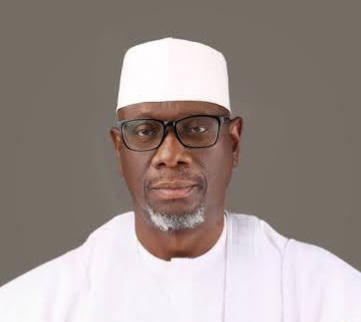
Former Corps Marshal of the Federal Road Safety Corps (FRSC) and President of the Chartered Institute of Logistics and Transport (CILT) Nigeria, Dr. Boboye Oyeyemi, has called on governments at all levels to significantly increase funding for road safety infrastructure and institutions, warning that greater investment is critical to safeguarding lives on Nigerian roads.
Oyeyemi made the call while delivering the Chairman’s Address at the 30th Anniversary Celebration of Motoring World International and its Automotive Legacy & Excellence Awards in Lagos.
The former FRSC boss noted that Nigeria’s growing population and increasing mobility demands have placed unprecedented pressure on the country’s road transport system, making it imperative for government to prioritise safety through sustained financial commitment.
According to him, “Road safety is not an abstract concept; it is a matter of life and death. Without deliberate and adequate funding, institutions responsible for enforcement, education and emergency response cannot perform optimally.”
He observed that although Nigeria remains one of Africa’s largest automotive markets, with a population exceeding 200 million, investment in road infrastructure, traffic management systems and safety enforcement has not kept pace with the rapid growth in vehicular movement.
Oyeyemi warned that the consequences of inadequate funding are reflected in the rising incidence of road crashes, fatalities and the huge economic losses associated with accidents across the country.
He stressed that government support should extend beyond routine budgetary allocations to include strategic investments in modern traffic management technology, improved road design, driver education programmes and capacity building for enforcement agencies.
The CILT Nigeria president also underscored the need for stronger collaboration between public institutions and private-sector stakeholders, noting that sustainable road safety can only be achieved through a multi-sectoral approach.
“Safety on our roads must be treated as a national development priority. It requires policy consistency, institutional support and the political will to invest in systems that protect lives,” he said.
Earlier in his address, Oyeyemi paid tribute to the Publisher and Chief Executive Officer of Motoring World International, Femi Owoeye, describing him as a pioneer whose vision has helped shape Nigeria’s automotive journalism landscape.
He recalled that when Motoring World was established in 1996, specialised automotive reporting was largely uncharted territory in Nigeria, with little certainty about its long-term sustainability.
“Femi Owoeye made a bold and unconventional decision to dedicate his career to documenting Nigeria’s automotive and transport sector. Thirty years later, that decision has produced an institution of national importance,” he said.
Oyeyemi noted that the publication has consistently provided in-depth coverage of policy developments, industry trends and road safety advocacy, while holding stakeholders accountable and promoting best practices across the transport ecosystem.
Reflecting on Motoring World’s three-decade journey, he described the publication as a repository of Nigeria’s automotive history, having chronicled major developments from the military era through the return to democratic rule and into the present day.
According to him, the publication has documented key transformations in the industry, including the evolution of automotive policies, the emergence of ride-hailing services, the influx of foreign vehicle brands and the growing adoption of alternative-energy vehicles such as electric and compressed natural gas-powered automobiles.
He said the body of work constitutes an invaluable institutional memory that should help shape future policy decisions in the transport sector.
Looking ahead, Oyeyemi urged government to align automotive sector growth with infrastructure development and road safety standards, warning that expansion without adequate regulation could worsen safety outcomes.
He also stressed the need for deliberate efforts to build a structured and globally competitive automotive industry, supported by clear policies, incentives for local manufacturing and improved regulatory frameworks.
As global mobility trends continue to shift towards cleaner and smarter technologies, he said Nigeria must not lag behind in embracing innovations that enhance efficiency, sustainability and safety.
Oyeyemi concluded by reiterating that investment in road safety is ultimately an investment in national productivity, public health and economic stability.
“Every life lost on our roads is one too many. Government must act decisively by adequately funding road safety institutions and ensuring that policies translate into real protection for Nigerians,” he said.
The Motoring World 30th Anniversary celebration attracted key stakeholders from the transport, logistics and automotive sectors, serving both as a moment of reflection and a platform for renewed advocacy on the future of mobility in Nigeria.
Disclaimer
Comments expressed here do not reflect the opinions of Vanguard newspapers or any employee thereof.