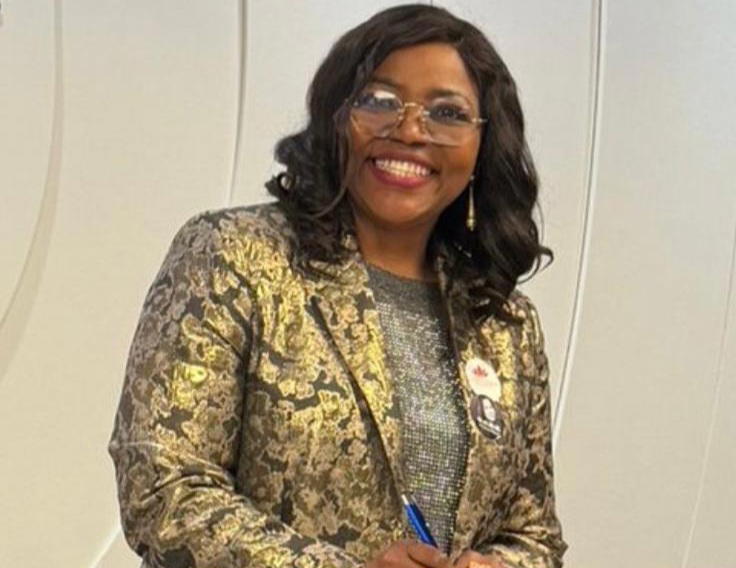
By Esther Onyegbula
Dean of the office for Institutional Equity at the University of East London, Dr Jummy Okoya, has called for stronger investment, partnerships and policy reforms to improve mental healthcare delivery in Nigeria, describing mental health as a “social justice issue” that requires collective action from government, families, religious institutions and communities.
Okoya, who spoke to Journalist in Lagos recently on her continued advocacy for mental health awareness and support for psychiatric institutions, said her commitment was inspired by her family’s personal experience with mental illness through a close family member.
According to her, the experience transformed her understanding of the realities faced by individuals and families living with mental health conditions.
“My commitment to mental health advocacy is deeply personal. My family has experienced the challenges of mental illness through a close family member, and witnessing that journey transformed my understanding of the realities faced by individuals and families navigating mental health conditions,” she said.
She noted that mental health should not be viewed merely as a clinical issue but as a human issue affecting families, education, employment and dignity.
“It taught me that mental health is not simply a clinical issue; it is a human issue. It affects families, relationships, education, employment and a person’s sense of dignity and belonging,” she added.
Okoya linked her advocacy to her professional role at the University of East London, where she said the institution places strong emphasis on wellbeing and human potential.
“One of our guiding principles at UEL is that ‘health gain is a learning gain.’ We recognise that people cannot flourish academically, professionally or socially if their physical, emotional and psychological wellbeing is compromised,” she stated.
She explained that the same philosophy informs her support for the oshodi psychiatric facilities in Nigeria through efforts aimed at improving occupational therapy units, upgrading facilities and creating dignified environments for patients.
Speaking on the role of society in mental health recovery, Okoya stressed that community support remains essential for reintegration and recovery.
“Recovery does not happen in isolation. It happens when individuals are surrounded by people who believe in them, support them and create opportunities for them to reconnect with society,” she said.
She also highlighted the importance of family gratitude and public support in sustaining mental health institutions, noting that psychiatric facilities cannot function independently of the communities they serve.
According to her, public support helps to reduce stigma, encourage investment and reinforce the importance of mental health services.
“When families and communities actively engage with mental health services, they help create an environment where recovery becomes possible and sustainable,” she said.
On mental health treatment approaches in African societies, Okoya advocated for a holistic and integrative system that combines medical treatment, counselling, family support, spirituality and social inclusion.
“Medication may help stabilise symptoms. Counselling helps individuals process experiences and develop coping strategies. Families provide encouragement and continuity. Spirituality often provides hope and meaning. Social inclusion helps people regain confidence, purpose and identity,” she explained.
She added that recovery should not be limited to treating illness alone but must focus on restoring dignity, hope and social connection.
Addressing the challenges confronting psychiatric hospitals and mental health professionals in Nigeria, Okoya identified underinvestment in mental health infrastructure, shortage of specialists and persistent stigma as major concerns.
“One of the biggest challenges remains under investment in mental health infrastructure and services. Many facilities operate under difficult conditions despite serving individuals with highly complex needs,” she said.
She further noted that many Nigerians delay seeking help due to fear of discrimination and social exclusion.
“We must move away from blame and misunderstanding towards empathy, compassion, education and early intervention,” she said.
Okoya urged governments, schools, religious institutions and the media to take practical steps towards changing public perception about mental illness.
According to her, governments must prioritise mental health as a public health issue, while schools should integrate mental health literacy into education systems from an early stage.
She added that religious institutions could help reduce shame and encourage individuals to seek professional care, while the media should promote stories centred on recovery and resilience instead of stereotypes and sensationalism.
“The media must help shift narratives away from stereotypes and sensationalism towards stories of recovery, resilience and hope,” she said.
Speaking directly to caregivers, Okoya described families as the “invisible backbone of recovery,” acknowledging the emotional burden many caregivers silently carry.
“My first message is that caregivers should never underestimate the value of their role. Families are often the invisible backbone of recovery,” she stated.
She advised caregivers to balance compassion and patience with professional mental health support, while also prioritising their own wellbeing.
“Supporting someone else should never come at the expense of losing yourself,” she added.
Looking ahead, Okoya called for stronger collaboration between government, healthcare providers, universities, faith groups, community organisations and the private sector to improve access to quality psychiatric care.
“We need stronger partnerships between government, healthcare providers, universities, community organisations, faith groups and the private sector,” she said.
She also advocated greater investment in workforce development, digital innovation, community-based mental health services, research and infrastructure.
“Most importantly, we need policies that place mental health on an equal footing with physical health,” she stated.
Okoya maintained that investing in mental health ultimately translates into investment in human potential and national development.
“When we invest in mental health, we invest in human potential. And when we invest in human potential, we build stronger communities, stronger institutions and stronger nations,” she said.
In her closing remarks, she emphasised that dignity, hope and equal opportunities should be available to everyone regardless of their mental health status.
“Whether in Nigeria or the United Kingdom, the principle remains the same: every person deserves dignity, hope and the opportunity to thrive. Mental health is not simply a healthcare issue; it is a social justice issue. When we tackle mental health inequalities, we unlock human potential, strengthen communities and create a more compassionate society for all” Okoya said.
Disclaimer
Comments expressed here do not reflect the opinions of Vanguard newspapers or any employee thereof.