…as Deputy Governor tasks LG chairmen on accountability, service delivery
By Joseph Erunke, Abuja
Kaduna State has launched a fresh push to strengthen primary healthcare delivery across its 23 local government areas, with the Deputy Governor, Dr. Hadiza Sabuwa Balarabe ,challenging council chairmen to embrace transparency, accountability and citizen participation as critical tools for saving lives and improving health outcomes.
Speaking at the opening of a three-day orientation workshop on the Domestication of the Open Government Partnership (OGP) for Improved Primary Health Care Delivery, Dr. Balarabe said the quality of healthcare available to citizens is ultimately a reflection of leadership and governance at the grassroots.
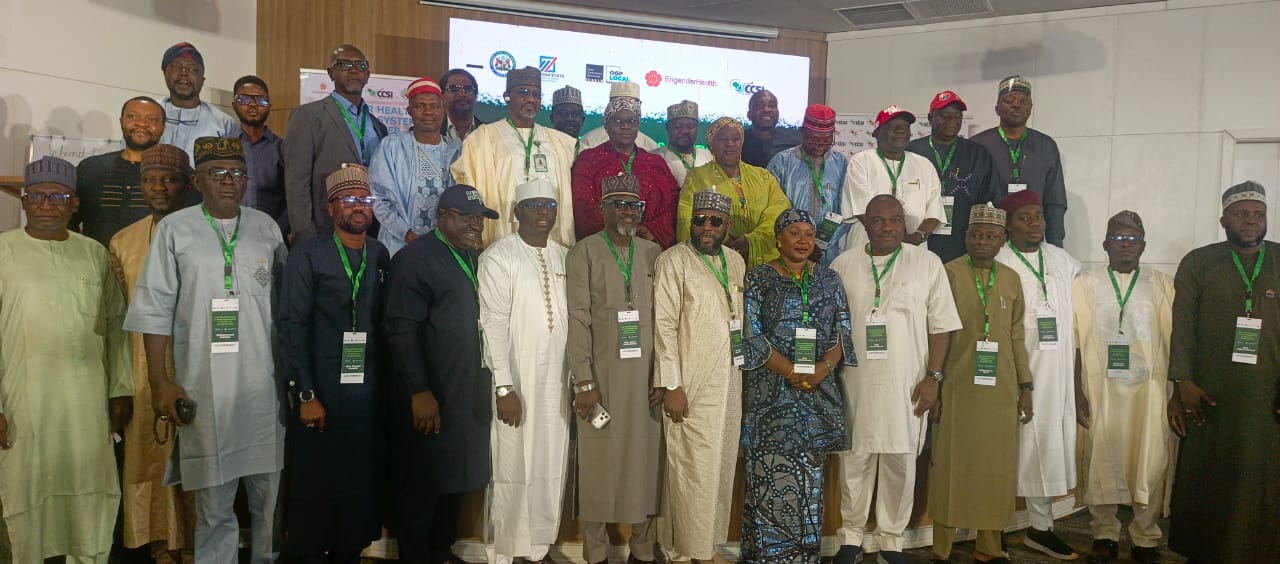
The workshop, attended by local government chairmen, development partners, government officials and civil society stakeholders, is aimed at extending Kaduna State’s OGP framework to all local councils in a bid to improve service delivery in the health sector.
In a stirring address, the Deputy Governor posed a series of thought-provoking questions, asking who should be held responsible when pregnant women die from preventable complications, when children miss life-saving immunisations, or when primary healthcare centres exist without medicines, equipment, trained personnel or public trust.
“These are not merely health sector questions. They are governance questions. They are leadership questions. They are questions that should challenge all of us,” she declared.
Dr. Balarabe stressed that strong primary healthcare systems remain the foundation of effective healthcare delivery and sustainable development, describing health as a vital component of human capital and economic prosperity.
“The health of our people is not merely a sectoral concern; it is a development imperative. A healthy population is more productive, more innovative and better positioned to contribute meaningfully to economic growth and social stability,” she said.
The Deputy Governor said Governor Uba Sani’s administration remains committed to building an inclusive Kaduna where no citizen is left behind, noting that revitalising primary healthcare is a central pillar of the government’s Rural Transformation Agenda.
She reminded the council chairmen of commitments made during an earlier retreat in Kano shortly after they assumed office, where they pledged to prioritise maternal and child health, nutrition and stronger primary healthcare systems.
“The promises made in Kano must become action. The resolutions adopted in Kano must become results. The responsibilities accepted in Kano must become accountability,” she charged.
Dr. Balarabe described the Open Government Partnership as more than a governance framework, calling it a practical instrument for delivering measurable development outcomes through transparency, responsiveness and citizen engagement.
According to her, trust in government grows when citizens understand how public resources are allocated and when communities are actively involved in monitoring services and influencing decisions.
“Development without accountability is unsustainable. Investment without transparency is inefficient. Governance without citizen engagement is incomplete,” she said.
She urged the local government chairmen to see OGP not as a compliance obligation but as a governance strategy capable of transforming healthcare delivery and restoring public confidence in government institutions.
“As local government chairmen, you are custodians of trust. You are drivers of development. Your leadership will determine whether our investments in primary healthcare produce the outcomes we seek,” she said.
The Deputy Governor further challenged the council bosses to work closely with civil society organisations, promote transparency in health financing and ensure that local government action plans place primary healthcare at the centre of development efforts.
“The future will judge us by the mothers we protected. It will judge us by the children we saved. It will judge us by the communities we transformed,” she added.
Speaking with journalists on the sidelines of the event, Kaduna State Commissioner for Planning and Budget, Mukhtar Ahmed, said the workshop was designed to equip the 23 local government chairmen with the knowledge required to domesticate OGP principles and improve service delivery in the health sector.
Ahmed recalled that Kaduna State joined the Open Government Partnership in 2018 and is now seeking to expand its implementation to the local government level.
“We want to expand this endeavour to the 23 local governments, all with a view to improving service delivery under the health sector in Kaduna State,” he said.
He noted that improving healthcare aligns with Governor Uba Sani’s seven-point development agenda, particularly the goal of strengthening human capital development.
“Human capital can only flourish if you have a healthy society. That is why improving healthcare delivery has become one of the key action plans for local government chairmen,” he stated.
Also speaking, Ekenem Isichei, Deputy Director for Policy Advocacy and Communications at the Bill & Melinda Gates Foundation, said the initiative would deepen accountability and strengthen the connection between government institutions and citizens.
According to him, the success of the programme will be measured by the quality of feedback received from communities and the effective use of data to make informed decisions that improve the lives of women and children.
“What we’re trying to see is greater accountability around how government connects effectively with citizens on a consistent basis,” he said.
Isichei expressed optimism that increased financial allocations to states and local governments would translate into improved healthcare services, stronger primary healthcare systems and better outcomes for vulnerable populations.
He emphasised the need for local government leaders to take ownership of healthcare reforms, describing councils as the first point of contact for mothers and children seeking healthcare services.
“The ultimate determinant of success is whether a mother and child can walk into a primary healthcare facility and come out well and whole. Preventable illnesses should be addressed at that level,” he said
The workshop is expected to produce actionable strategies for integrating OGP principles into local government operations, with a strong focus on transparency in health financing, citizen participation, data-driven decision-making and improved primary healthcare outcomes across Kaduna State.
Observers say the initiative marks a significant step in Kaduna’s effort to strengthen grassroots governance and ensure that healthcare investments translate into measurable benefits for citizens, particularly women and children in underserved communities.
Disclaimer
Comments expressed here do not reflect the opinions of Vanguard newspapers or any employee thereof.