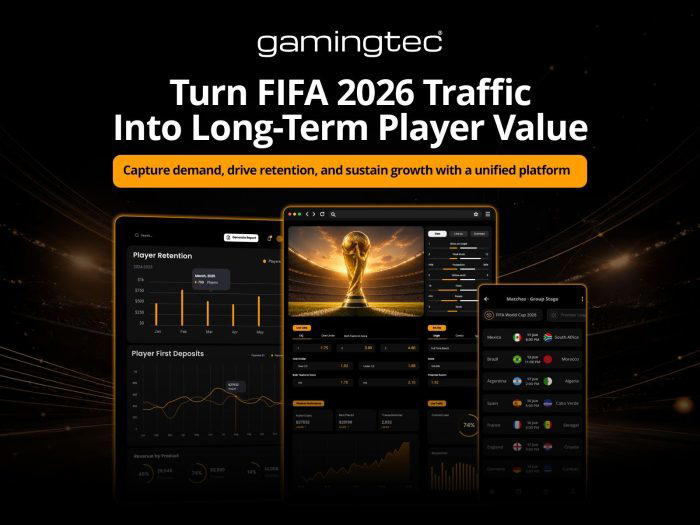
The FIFA World Cup remains one of the strongest demand drivers in the global betting industry. According to Barclays analysts, the 2022 FIFA World Cup generated an estimated $35 billion in global sports betting turnover, and 2026 is widely expected to exceed that level.
Nigeria plays a significant role in this dynamic, with 71% of the population involved in sports betting in the last 12 months, according to GeoPoll’s April 2025 Betting in Africa survey. It is a football-dominant betting market where user activity is heavily concentrated around live matches and international tournaments. The FIFA World Cup, the UEFA Champions League, as well as the Nigerian Professional Football League and the English Premier League generate strong user interest and attract new players, although this engagement is often short-lived and tends to fade shortly after key events.
Rikesh Lowtoo, Director of Product – Sportsbook at Gamingtec, an international B2B iGaming provider, frames this challenge from a product perspective: “Operators still underestimate several critical areas that directly impact long-term success. Many focus heavily on acquisition but underestimate post-acquisition experience, particularly retention mechanics, personalised re-engagement and cross-sell opportunities.”
During major tournaments, acquisition often takes care of itself. Retention, however, depends on the experience operators deliver once the event is over.
Challenges of Sportsbook Operators
Betting activity clusters around match days, particularly during the group stages and knockout rounds. Once the tournament concludes, user activity typically returns to baseline within a matter of weeks.
As a result, strategies built exclusively around sportsbooks tend to follow the same pattern: strong spikes during major tournaments and gradual decline in quieter periods. This wave-like pattern results in two main operational challenges for operators.
The first challenge is platform resilience within peak load periods. During tournaments such as the FIFA World Cup, traffic does not scale gradually. It concentrates around specific fixtures, particularly knockout-stage matches, where simultaneous betting activity can increase sharply within short time windows. In these conditions, system stability, latency, and bet settlement speed become critical performance factors rather than background technical requirements. As Rikesh Lowtoo highlights, performance is increasingly defined by what happens beyond peak acquisition moments:
“During peak events, when thousands of players are betting simultaneously, even brief downtime or slow loading can result in lost bets and frustrated players. A truly competitive platform must deliver consistent high availability and fast response times under heavy load.”
The second challenge relates to periods between matches and post-tournament phases. Once the external sporting stimulus weakens, user activity tends to decline unless there are alternative engagement mechanisms in place. This is when engagement tools inside the sportsbook begin to play a structural role. Features such as bet builders, boosted odds, and pre-built multiples increase interaction depth during matches, while promotional mechanics help maintain activity during lower-intensity periods.
Customised promotions are an essential part of a truly competitive sportsbook. According to Rikesh, features like pre-built accumulators, flexible bet builders and deep player and team stats markets are essential, as they increase betting frequency and average stake:
“Key elements include retention and acquisition-focused promotions such as early payout and boosted odds, which help convert interest into action especially during major events like the FIFA World Cup.”
Finally, the third challenge is retention across the full cycle of interest. Tournament-driven acquisition typically brings in a large share of new users, but maintaining their activity beyond the event requires structured engagement pathways.
Sportsbooks vs Multi-product Platforms
To address the third structural limitation, many operators are expanding beyond sportsbook into casino, esports, and virtual sports. When engagement is concentrated in a single vertical, user activity tends to rise sharply during major sporting events and then drop once the calendar slows down.
Casino and virtual products are less dependent on real-world calendars. They generate continuous engagement cycles, which helps stabilise activity between major sporting events.
A less visible but critical part of this discussion is how operators actually build their platforms.
Developing a full iGaming infrastructure in-house typically takes 12-18 months, and often longer once regulatory requirements, integrations, and scaling challenges are taken into account.
Beyond development time, operators must also manage ongoing complexity across multiple areas:
- Compliance with different regulatory frameworks
- Integration of sportsbook and casino content
- Payment and transaction infrastructure
- System stability under peak load during events like FIFA
These requirements increase operational costs and technical overhead long before the product reaches scale.
This is why operators increasingly move toward turnkey iGaming platforms such as Gamingtec’s Turnkey iGaming solution, where sportsbook, casino, player account management, and engagement tools are already integrated within a single infrastructure. The platform also includes built-in retention mechanics, compliance frameworks aligned with regulated markets, and flexible integration of multiple payment methods. The focus shifts from connecting separate systems to operating a unified platform that supports multiple verticals simultaneously.
Integrated turnkey solutions help operators handle the sharp traffic surges that come with events like the FIFA World Cup, while maintaining stable performance under peak load conditions. Built-in engagement tools support user activity beyond the tournament itself, and a unified infrastructure reduces operational fragmentation across verticals. As competition intensifies and customer acquisition costs continue to rise, the ability to convert short-term event traffic into long-term player value is becoming a critical success factor for operators.
Disclaimer
Comments expressed here do not reflect the opinions of Vanguard newspapers or any employee thereof.