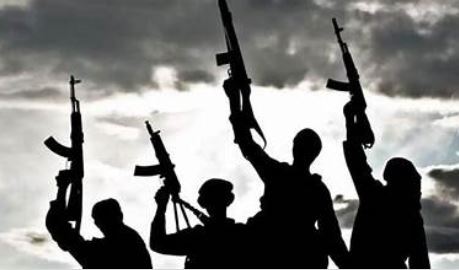
Stock image.
By Yushau A. Shuaib
On Friday, 15 May 2026, Nigeria witnessed something unprecedented: coordinated school abductions carried out simultaneously in the Southwest and the Northeast. It was a dark day that reopened old wounds and stirred new fears, as non‑state actors executed highly organised operations with alarming precision.
In Oriire Local Government Area of Oyo State, armed terrorists stormed multiple schools, abducting 46 students and teachers and killing one teacher in the process. Even more horrifying were reports that one of the victims was brutally executed to send a chilling message to authorities and the community. Predictably, the incident triggered protests and revived a social media movement reminiscent of the #BringBackOurGirls campaign.
But the Oyo attack was not an isolated tragedy. On the same day, terrorists abducted 42 schoolchildren from Mussa Primary and Junior Secondary School in Askira Uba, Borno State. In a single day, more than 80 Nigerian children and their teachers were taken from their classrooms. Weeks later, many remain in captivity.
As the nation entered June, while rescue efforts were still underway in the Southwest and Northeast, bandits in Northwest launched fresh attacks in Zamfara, abducting students from a polytechnic along with several residents of nearby communities. And in Ibadan, the Oyo State capital, unknown gunmen kidnapped the sister of former Power Minister Adebayo Adelabu and her twin sons while they were on their way to school.
The pattern suggests a dangerous escalation in the targeting of educational institutions. Teachers’ unions and student bodies are now contemplating nationwide protests. Their frustration is understandable. Schools — the very spaces meant to nurture hope and learning — are increasingly becoming theatres of fear.
For years, mass school abductions were largely associated with Northern Nigeria. But the Oyo incident — the first of its scale in the Southwest — has triggered nationwide outrage, renewed scrutiny of Nigeria’s security architecture, and fresh calls for urgent action.
Recognising the gravity of the situation, a high-powered federal delegation led by the National Security Adviser, Mallam Nuhu Ribadu, visited the affected communities. President Bola Ahmed Tinubu also approved the recruitment of 1,000 forest guards and the establishment of additional military bases along vulnerable corridors linking Kwara and parts of the southern region. The deployment strategy mirrors earlier approaches adopted in Northern states battling banditry and terrorism.
These developments prompted me to ask a question on my social media platforms — a question many Nigerians are quietly asking but few are willing to articulate publicly: Are these recurring school attacks merely acts of banditry and terrorism, or is there a deeper political pattern? It is an uncomfortable question, but one that refuses to go away.
In 2014, during President Goodluck Jonathan’s re-election campaign, the world was shaken by the abduction of 276 Chibok schoolgirls in Borno State — an incident that became a defining symbol of insecurity under his administration.
Four years later, in 2018, 110 Dapchi schoolgirls were abducted in Yobe State just as President Muhammadu Buhari prepared for the 2019 elections. Although most of the girls were eventually released, the incident still cast a shadow over the political climate.
Now, as political activities ahead of the 2027 elections gather momentum under President Tinubu, Nigeria is witnessing another disturbing wave of school attacks — including the unprecedented spread of such incidents into the Southwest. Three election cycles. Three major school abduction crises. Three administrations placed on the defensive at precisely the moment they are most vulnerable to political erosion.
One can only hope that this is not the beginning of what some may cynically describe as Season Three. I am not asserting conspiracy. I am observing a pattern — one so persistent that it demands honest interrogation rather than dismissal. Is this merely coincidence? Perhaps. But the timing is difficult to ignore.
The Chibok abduction cast a long shadow over Jonathan’s presidency and contributed to his electoral defeat. Buhari weathered the Dapchi crisis because most of the abducted students were released or rescued before his re-election in 2019. The question now is whether the Tinubu administration can contain the current wave of insecurity before it grows into a crisis of similar magnitude. This is why urgent and decisive action is imperative.
The Government must urgently strengthen the Safe Schools Initiative launched in 2014. It is also necessary to reassess the foreign military technical partnerships that supported Nigeria during the peak of insurgency before the 2015 elections. Most importantly, the time has come for community and state policing. Every community should be empowered—within the law—to protect itself through locally recruited security structures that understand their terrain, their people, and their threats.
Beyond the immediate tragedy, the long term consequences are even more alarming. Persistent attacks on schools threaten the education of more than 50 million Nigerian children. Parents may withdraw their children out of fear, worsening already troubling out of school statistics and undermining national development. Insecurity must never become a political instrument — whether by design or exploitation. Every attack on a school is an attack on Nigeria’s future.
As a student of crisis communication and national security, I remain troubled by the recurring timing of these incidents around politically sensitive periods. Are criminal groups exploiting election cycles to maximise attention and pressure? Are there actors benefiting from the atmosphere of fear such attacks create?
I do not claim to have definitive answers. But the pattern is too striking to ignore. Chibok drew global outrage. Dapchi saw partial returns. Oriire has produced a beheaded teacher, a kidnapped toddler, and a nationwide teachers’ strike.
From Chibok to Dapchi and now Oriire, Nigeria is confronting what looks alarmingly like a third season of failure to protect schoolchildren during politically sensitive periods. If this is indeed “Season Three,” the real question is whether the country can finally build the institutions and safeguards needed to prevent a tragic “Season Four.”
Yushau A. Shuaib, PRNigeria Publisher & author of ‘An Encounter with the Spymaster’; [email protected]
Disclaimer
Comments expressed here do not reflect the opinions of Vanguard newspapers or any employee thereof.