By Ebunoluwa Sessou & Matthew Johnson
Convener of Africa Memorial Day and founder of Correct Connect Africa Foundation, Mr. Aleakwe Odior, has called on Africans to reclaim their history and cultural consciousness as a pathway to addressing the continent’s persistent leadership and governance challenges.
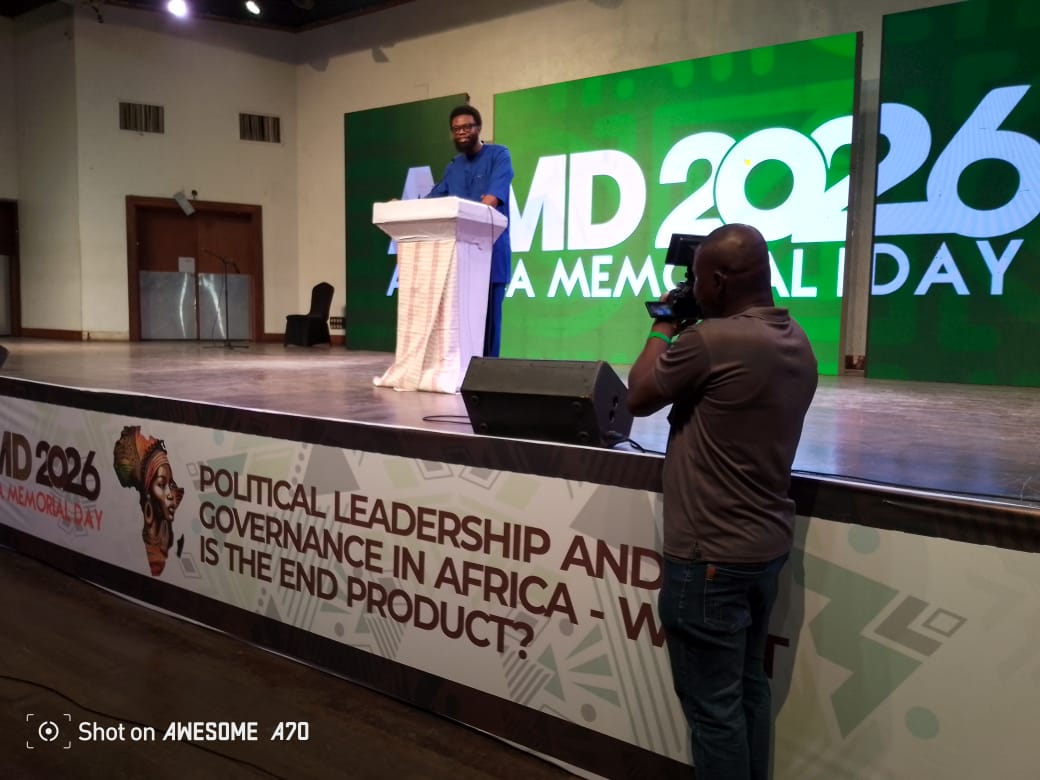
Converge at the 2026 Africa Memorial Day celebration in Lagos with the theme: “Political Leadership and Governance in Africa: What Is the End Product?”, Odior said Africa’s inability to adequately preserve and teach its history has contributed to the continent’s struggles with identity, self-determination and accountable governance.
According to him, the annual event was established to ensure Africans remember their past, reflect on present realities and chart a sustainable future for coming generations.
He said the observance would provide an opportunity for African children to learn about their heritage and for leaders to be assessed according to values established by African civilisations.
Addressing young Africans, Odior challenged them to embrace leadership, competence and community service while rejecting corruption and intellectual complacency.
He explained how a Catholic priest traced the origin of Africa Memorial Day to Africans in the diaspora who sought to reconnect the continent with its historical heritage, noting that the initiative was later brought back home by Africans committed to preserving the continent’s collective memory.
Odior attributed many of Africa’s governance challenges to centuries of conquest, colonial exploitation and the destruction of indigenous institutions, adding that some post-independence leaders have merely continued systems of exploitation.
He urged Africans to draw lessons from notable leaders such as Kwame Nkrumah, Julius Nyerere, Amílcar Cabral and Thomas Sankara, whom he described as leaders who placed the interests of their people above personal gain.
Odior also renewed calls for Africa Memorial Day to be recognised across the continent and throughout the African diaspora as an official day of remembrance, reflection, celebration and renewal.
He further appealed to governments, traditional institutions, universities, civil society organisations, media houses and Africans in the diaspora to support efforts aimed at cultural renewal and historical consciousness.
He said : “Africa’s rebirth is possible and necessary, and it depends on you. Study the history you were not taught in school. Build real competence. Learn to lead in the spaces you already occupy. Leadership is not an office; it is a practice.
“I had a conversation with a seven-year-old Italian girl who could confidently narrate her country’s history and this triggered my own limited knowledge of African history. That encounter made me realise how little many of us know about our own story. Africa Memorial Day was born out of the need to recover that knowledge and pass it on to future generations.
“I urged Africans to draw lessons from notable leaders such as Kwame Nkrumah, Julius Nyerere, Amílcar Cabral and Thomas Sankara, whom he described as leaders who placed the interests of their people above personal gain.These were not perfect men, but they asked the right question: governance for whom? That remains the only question that truly matters.
“The work of Africa Memorial Day cannot survive on goodwill alone. Supporting this mission is not charity; it is an investment in the consciousness of a people.
“The evidence around us does not yet speak of triumph. Across our continent, lands of extraordinary wealth still produce extraordinary poverty. Young men and women with immense talent continue to risk their lives seeking opportunities elsewhere because their countries have failed to create conditions worthy of their ambitions.
“We are here for more than a ceremony. We are gathered because memory is a political act. People who cannot account for their past cannot govern their future. The silence around our history has cost us dearly in identity, self-determination and in the quality of those we place in power.
“I lament that despite Africa’s abundant natural and human resources, poor governance continues to hinder development across the continent.”Odior said.
A Senior Advocate of Nigeria and Human rights lawyer, Mr. Femi Falana, explained that many of Africa’s developmental challenges on the lingering effects of colonialism and neo-colonialism, urging African nations to strengthen democratic institutions, protect civil liberties and pursue people-centred governance.
Falana commended Odior for sustaining the Africa Memorial Day initiative, noting that the global campaign for recognition of the historical injustices of slavery was yielding results.
He disclosed that the United Nations had adopted a motion recognising slavery against Africans as a crime against humanity.
“Father Anthony Odior deserves commendation for bringing us together every year to discuss African problems and solutions. Please keep up the good work.
“It is time for Africans to wake up from direct and indirect form of colonialism ” Falana said.
The event featured traditional rulers, government officials, academics, students, civil society groups, artists and members of the African diaspora.
Disclaimer
Comments expressed here do not reflect the opinions of Vanguard newspapers or any employee thereof.