By Prisca Sam-Duru
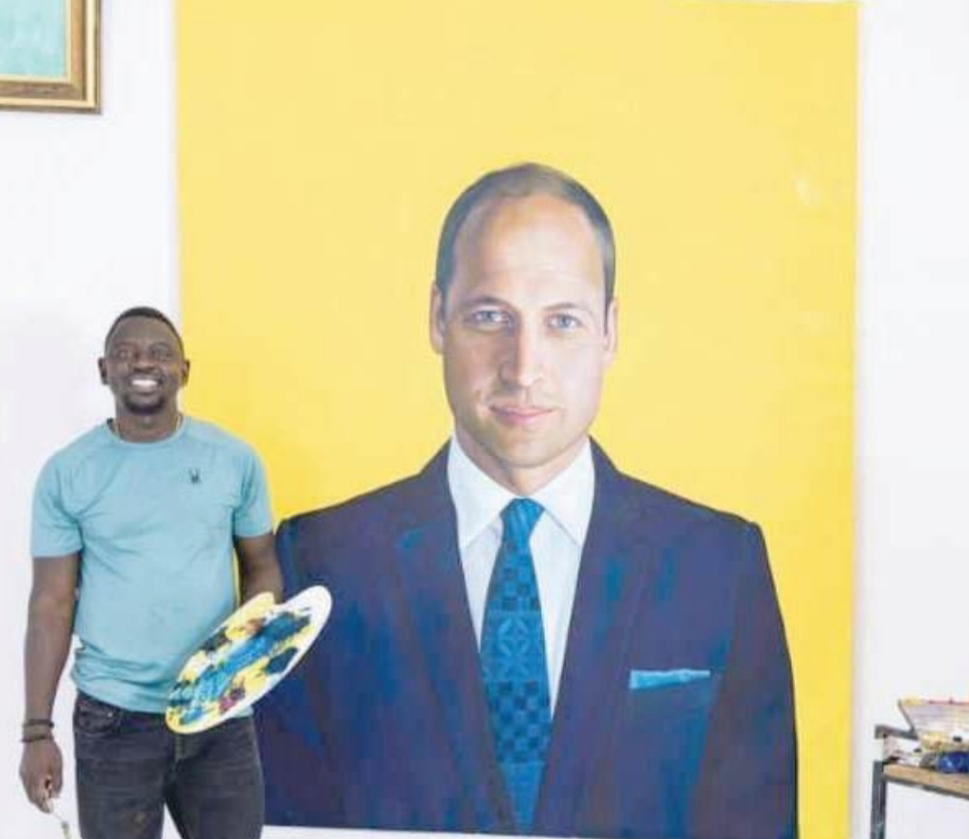
Following his widely acclaimed portrait of Queen Elizabeth II, Nigerian artist Oluwole Omofemi has turned his canvas toward the future of the British Monarchy with a striking new portrait of Wlliam, Prince of Wales.
Commissioned by Tatler magazine for its cover, the piece serves as a visual bridge between eras. It further captures a monarch-in-waiting who is actually suspended between the weight of history and the dawn of a new age.
For Omofemi, the portrait is a natural continuation of a dialogue that begins with the late queen. Yet, where her portrait was anchored in permanence and institutional history, this new work captures a distinct moment of transition. That is of someone who carries that history but is also stepping into what comes next.
Rather than aiming for overdesigned splendour, Omofemi sought to capture an image that feels present, calm, and deeply relatable. The resulting portrait possesses a quiet, thoughtful energy that favours emotional depth over something that is loud or dramatic. It is, according to the artist, about showing responsibility rendered through a human lens, inviting viewers to connect with the subject without needing too much explanation.
To achieve this, the artist spent considerable time searching the internet for inspirational images that could reveal the Prince’s essence, looking for clues to both his current identity and the King he might become.
“There was one image in particular that I found on Google that made him look very grand, and I used that as my base inspiration,” Omofemi disclosed. “The way I work is, I start doing some blockings on the canvas based on how I interpret the image, and then I pick the colours and designs I may want to add.”
Layering Legacy and Heritage
The deliberate use of a yellow palette serves as a natural link between this piece to the Queen’s portrait. While it underscores royalty and continuity in both works, Omofemi notes that in William’s portrait, the hue feels softer and more open. That he explains, suggests an identity that is still actively evolving.
Furthering this narrative of inheritance is the faint image of St Edward’s Crown hovering above the Prince. Painted as something approaching rather than fully possessed, its faded quality represents a heavy mantle of expectation rather than immediate authority, neatly tying the artwork to its thematic title: Heir.
Simultaneously, Omofemi has seamlessly woven his own story into the fabric of British royalty. Subtle references to African textile traditions are embedded within the work, most notably in the intricate designs on the Prince’s tie. These elements pay homage to his roots and the environment. For Omofemi, introducing an African perspective into such a global space is vibrant, provided it is presented quietly and honestly within the work without overriding the subject.
The Power of Oil and Observation
Driven by a desire to look past mere public visibility, Omofemi chose oil on canvas to bring this vision to life.
The medium’s richness and flexibility allowed him to build the painting layer by layer, creating the subtle transitions in tone and texture necessary to capture the tension between a public icon and his inner humanity.
“I worked with oil on canvas. Oil gives me the depth, richness, and flexibility I need in portraiture. It allows me to build the painting gradually through layers, creating subtle transitions in tone, texture, and atmosphere,” he stated.
The artistic risk paid off as the reception to the portrait has been overwhelmingly strong, sparking diverse interpretations from the public, a reality the artist finds deeply rewarding because according to him, “it means the painting is alive beyond my own expectations.”
Looking ahead, Omofemi remains open to capturing other global leaders whose lives carry profound cultural, historical, or symbolic significance, provided there is a deeper truth to be unearthed beneath the surface of the paint.
For now, his focus remains on pushing the boundaries of his craft and expanding his artistic footprint both at home in Nigeria and on the international stage.
“After this, I want to keep pushing my work further – developing new ideas, new bodies of work, and continuing to grow as an artist both in Nigeria and internationally,” the artist said.
Ultimately, this latest portrait stands as a testament to a shared story: a visual space where the past remains present, while the future slowly takes shape.
Disclaimer
Comments expressed here do not reflect the opinions of Vanguard newspapers or any employee thereof.