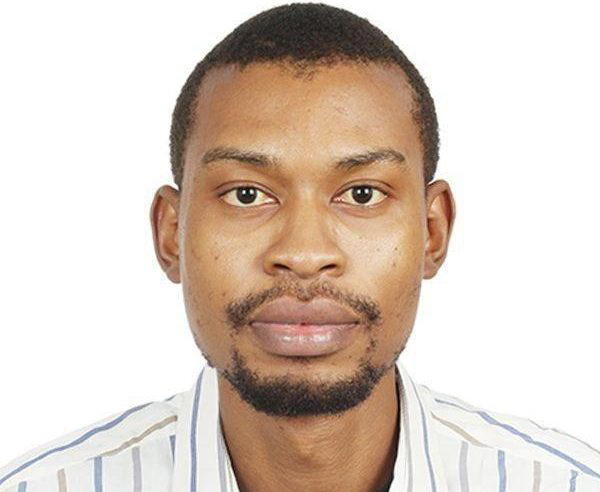
By Emmanuel Okogba
There is a particular kind of scientist who refuses to stay in one lane. Augustine Odibo is that kind of scientist.
A licensed pharmacist holding both a Bachelor of Pharmacy and a Doctor of Pharmacy, Odibo could have built a comfortable career within the walls of a pharmacy. Instead, he chose a harder and more ambitious path — one that has taken him from Nigeria to the laboratories of Chulalongkorn University in Thailand, and eventually to Villanova University in the United States, where he is today contributing to some of the most consequential frontiers in modern biomedical research.
The result is a scientific profile that is genuinely rare: a researcher who understands drugs the way a clinician does, and engineers biological systems the way a scientist does — and who has spent the better part of a decade finding ways to make those two worlds speak to each other.
His work spans biomaterials science, regenerative medicine, hydrogel engineering, organ-on-chip systems, and targeted drug delivery. Across these fields, he has authored and co-authored 14 peer-reviewed scientific publications, including work featured in Bioresource Technology, one of the most respected high-impact journals in biotechnology and applied biological sciences. He has presented his findings at four international scientific conferences, building a research footprint that stretches well beyond any single institution or country.
What drives him, he says, is a conviction that medicine is on the verge of a profound shift. “We are moving into an era where treatment systems will not only depend on drugs alone, but on how effectively we can engineer biological environments that improve healing, disease modeling, and targeted delivery,” Odibo explained. Coming from someone with a PharmD, that statement carries particular weight. He is not speculating about a future he has read about — he is actively building it.
At Villanova University, that work takes the form of developing glycosylated nanoparticles for cancer vaccination, engineering hydrogels for therapeutic and biological applications, and designing heart-on-a-chip platforms that allow researchers to study cardiovascular disease at the cellular level without a single patient in the room. These are not incremental projects. They represent a new generation of tools that could fundamentally change how cancer, heart disease, and other critical conditions are understood and treated. His laboratory skills — spanning cell culture studies, protein purification, bioinformatics analysis, 3D bioprinting, and live-cell imaging — reflect a researcher who is as comfortable at the bench as he is in the literature.
His path to this point has been anything but conventional. Before arriving in the United States, Odibo conducted postgraduate research at Chulalongkorn University in Thailand, where he developed microalgal-bacterial co-culture systems for recovering nutrients from wastewater and repurposing them as biofertilizers. It was painstaking, unglamorous work — and exactly the kind of foundational science that quietly powers larger breakthroughs. That experience sharpened his instincts for sustainable biotechnology and environmental bioengineering, and gave him something many researchers lack: a genuine understanding of science across multiple domains, continents, and contexts.
That same instinct for building things that last shows up in one of his most impactful contributions — one that has nothing to do with a laboratory at all. Drawing on his PharmD training and a clear-eyed understanding of what young pharmacists in Nigeria need to succeed, Odibo built PharmaHub, a virtual pharmaceutical education platform developed in collaboration with the Pharmacy Council of Nigeria. Today, PharmaHub has reached over 10,000 users — graduate pharmacists preparing for professional licensing examinations across the country. It is the kind of initiative that does not make headlines in scientific journals but quietly changes the trajectory of thousands of careers and, by extension, the quality of pharmaceutical care available to millions of patients. Odibo built it anyway.
He is also a research intern at Nucleate Biotechnology, one of the United States’ most respected biotechnology entrepreneurship organizations, where his focus has shifted toward the often-overlooked space between discovery and deployment — how promising laboratory science actually becomes a product that reaches patients. His PharmD gives him an advantage here that pure engineers rarely have: an intuitive sense of clinical relevance, regulatory reality, and what it actually means for a therapy to work in the real world.
As a graduate teaching assistant in biotechnology, biostatistics, fluid dynamics, and bioprocess engineering, he has also invested significant energy in training the next generation of scientists — a role he takes seriously, and one rooted in a broader conviction about what Africa needs most right now.
“There is a need for stronger investment in research and innovation across Africa,” he said. “A lot of talented young scientists are doing remarkable work, but sustainable progress will depend on how much attention governments, institutions, and private stakeholders give to science, technology, and translational research. We cannot continue to rely heavily on imported innovation when we have young people capable of driving solutions locally and globally.”
It is a message delivered with the authority of someone who has lived it — who built a research career across three countries, published 14 papers, trained thousands of pharmacists, and is now working at the cutting edge of cancer therapy and cardiovascular medicine at one of America’s respected research universities.
Augustine Odibo is not waiting for the future of medicine to arrive. He is one of the people building it.
Disclaimer
Comments expressed here do not reflect the opinions of Vanguard newspapers or any employee thereof.