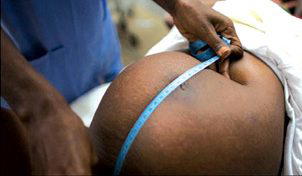
… deploys lifesaving equipment to 251 hospitals
By Joseph Erunke, Abuja
The Federal Government has unveiled an ambitious nationwide health sector reform aimed at drastically reducing maternal and neonatal deaths, with 251 secondary health facilities across Nigeria set to receive critical Comprehensive Emergency Maternal and Newborn Care (CEmONC) equipment under a new accountability-driven partnership with states.
Speaking at a media briefing in Abuja on the ongoing health sector reform and Universal Health Coverage ,UHC Compact, the National Coordinator of the Sector-Wide Approach Coordination Office, Dr. Muntaqa Umar-Sadiq, said the initiative marks a major shift from the old system of “routine fund transfers” to a performance-based framework that compels federal, state and local governments to deliver measurable results.
He disclosed that the reforms are anchored on a binding compact signed by the Federal Government and all 36 states, with clearly defined “asks and offers” tied to financing, infrastructure, human resources, equipment deployment and healthcare outcomes.
According to him, every quarter, the Federal Government now convenes performance review sessions with states to assess progress, identify gaps and enforce accountability.
“In the past, resources were simply transferred. But now, we have a unified accountability framework where states are monitored quarterly based on results, commitments and measurable indicators,” Umar-Sadiq said.
He explained that the intervention goes beyond the distribution of equipment, describing it as a “holistic and coherent partnership framework” designed to strengthen governance, improve healthcare financing, boost manpower, expand insurance coverage and improve service delivery nationwide.
The health reform office revealed that 774 CEmONC facilities across the country were assessed, with 251 identified for immediate upgrade based on infrastructure gaps and maternal mortality burden.
The equipment to be deployed includes labour room tools, operating theatre facilities, neonatal machines, oxygen systems, laboratory equipment, blood storage facilities, phototherapy machines, refrigerators and cesarean-section support systems.
Umar-Sadiq said maintenance and insurance arrangements had also been built into the project following lessons from previous failed interventions.
“We are working with firms that will support maintenance across the regions. We do not want a repeat of situations where equipment is abandoned after deployment,” he stated.
The reform initiative, he said, is already yielding measurable gains.
He disclosed that over 42,000 maternal and neonatal services, including cesarean sections, have already been reimbursed through the National Health Insurance Authority (NHIA), while more than 2.1 million pregnant women have accessed antenatal care services in priority local government areas.
According to him, facility-based maternal mortality rates are also beginning to decline in targeted areas.
The Federal Government further revealed that over 3,000 primary healthcare centres have been revitalized, while another 3,000 community healthcare workers have been recruited and are being deployed to underserved communities.
Responding to concerns over sustainability and poor state compliance, Umar-Sadiq said states would only receive incentives after independently verified milestones are achieved.
He explained that under the new framework, states are expected to gradually absorb healthcare workers into their payrolls within three years.
“We are learning from the failures of past interventions. This model is state-led, results-based and tied to sustainability,” he said.
On the challenge of brain drain in the health sector, Umar-Sadiq disclosed that the government was expanding training institutions and investing in healthcare workforce development to increase the production of nurses, midwives and other frontline workers.
Senior health officials at the briefing urged the media and civil society organisations to independently monitor the implementation of the reforms and hold states accountable for fulfilling their obligations under the compact.
They also promised to make details of the agreements, facility locations and deployment plans publicly accessible to ensure transparency.
“We want journalists to follow the equipment to the facilities and independently verify what is happening on ground. Seeing is believing,” one of the officials said.
The government insisted that the reforms represent a major departure from previous fragmented healthcare interventions, describing the new system as a coordinated national strategy focused on saving lives, strengthening healthcare delivery and restoring public confidence in Nigeria’s health system.
Disclaimer
Comments expressed here do not reflect the opinions of Vanguard newspapers or any employee thereof.