By Chinedu Adonu
The Enugu State Government, in partnership with the South Sahara Social Development Organisation, has stepped up efforts to strengthen domestic resource mobilisation as part of strategies to advance climate finance and promote responsive budgeting.
The move aligns with the state’s broader climate policy framework aimed at driving sustainable development, supporting a green economic transition, and improving fiscal planning.
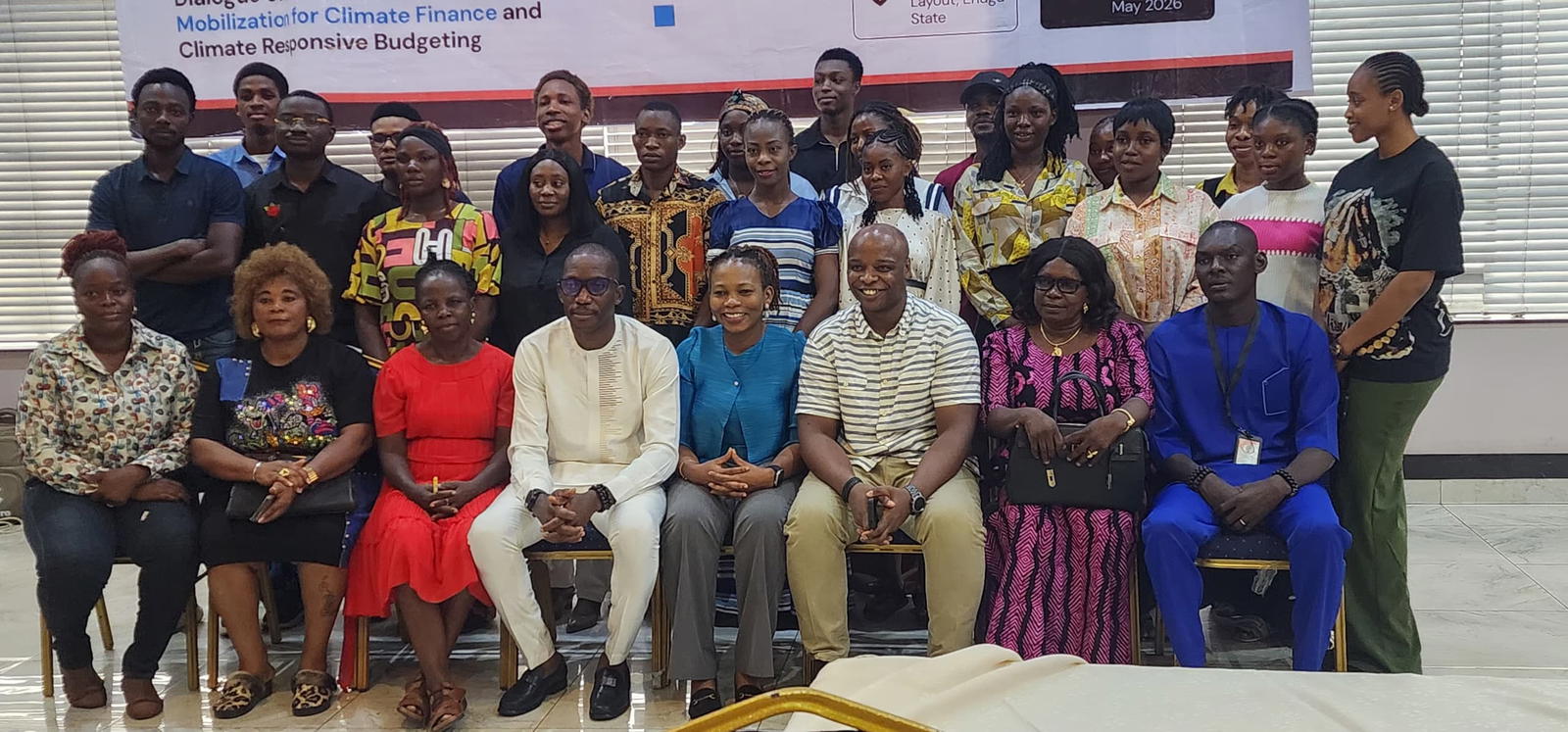
The initiative was highlighted during a two-day stakeholders’ dialogue on domestic resource mobilisation for climate-responsive budgeting held in Enugu.
Speaking at the event, Deputy Director of Climate Change in the Ministry of Environment and Climate Change, Nnamdi Arum, said the state has integrated climate considerations into most of its projects and programmes.
He noted that while Enugu continues to benefit from international funding, the government is deliberately working to boost internally generated resources to support climate initiatives.
“Climate change has been prioritised across ministries in Enugu State. Most projects are now designed with green considerations in mind,” Arum said.
He commended Governor Peter Mbah for appointing Chukwumerije Okereke as Special Adviser on Climate Change, noting that the appointment has strengthened the translation of policy into actionable programmes.
Arum also stressed the importance of inclusivity, noting that youths and persons with disabilities are being actively engaged in shaping climate policies.
Despite progress, he acknowledged existing funding gaps, particularly in agriculture, where external support remains vital to improve food security and affordability.
In his remarks, SSDO Research Policy Officer, Okechukwu Ajah, said the dialogue was aimed at closing the gap between policy formulation and implementation.
He pointed out that although Enugu has domesticated its climate policy and action plan, challenges such as weak inter-ministerial coordination and the absence of clear climate budget tagging remain.
“Many agencies still operate in silos, and there is no distinct climate imprint in budgeting across ministries. This affects ownership and effective implementation of climate policies,” Ajah said.
He expressed optimism that the engagement would produce practical recommendations, urging stakeholders to move beyond theory to concrete action.
Ajah also underscored the role of young people in climate governance, describing them as critical to achieving sustainable outcomes.
One of the participants, Chidera Ekoh, described the dialogue as insightful, noting that it provided practical knowledge on tackling climate challenges and mobilising resources effectively.
Disclaimer
Comments expressed here do not reflect the opinions of Vanguard newspapers or any employee thereof.