default
The Federal Government has said Nigeria’s agricultural sector is undergoing a gradual transformation, with early signs of recovery emerging despite persistent structural challenges affecting food production and security.
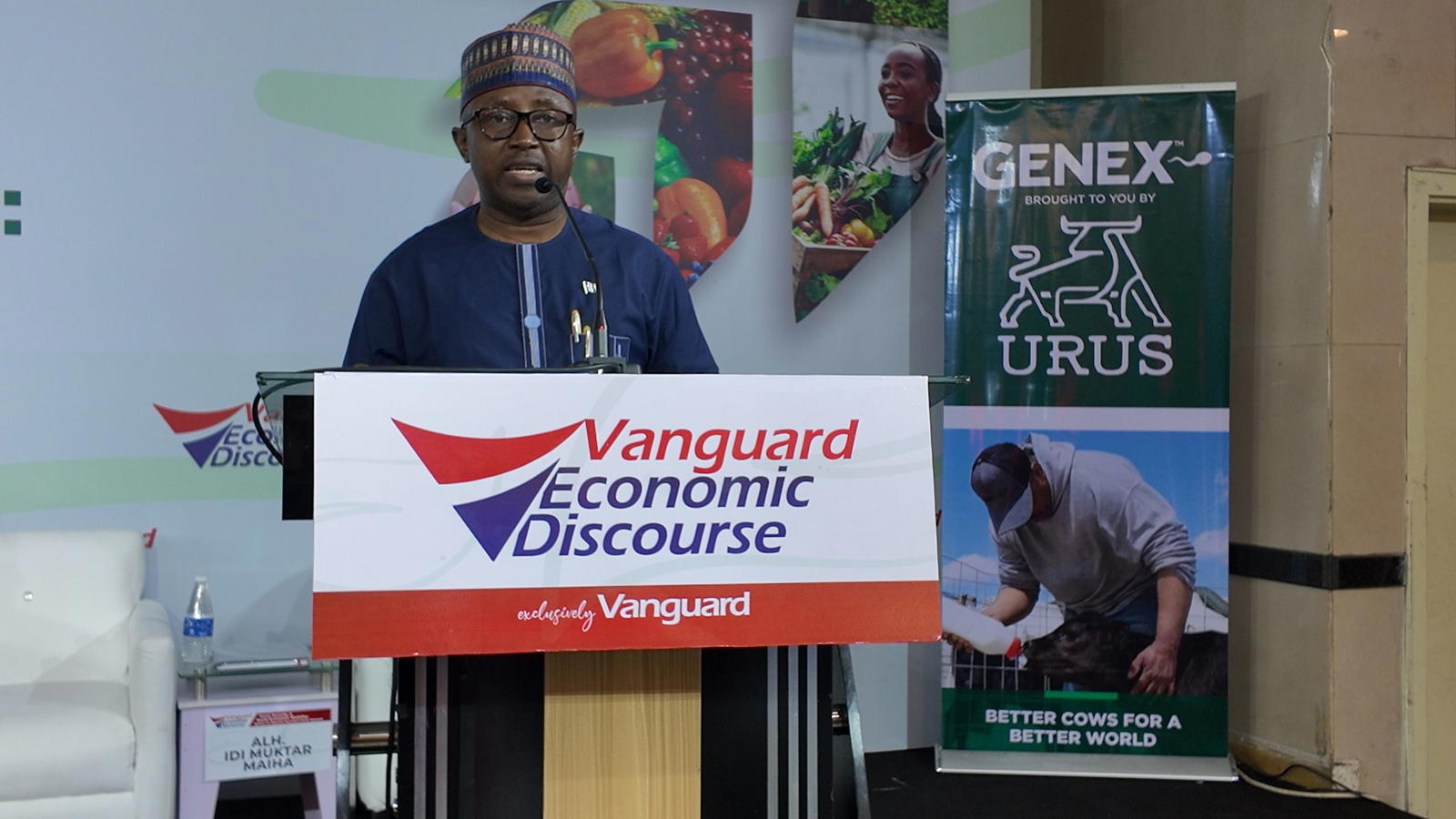
Speaking at the 2026 Vanguard Economic Discourse in Lagos, Engr. Maruf Ajenifuja, who represented the Minister of Agriculture and Food Security, Abubakar Kyari, stressed the critical link between food security and national stability.
“Security determines not just what we eat, but how we eat, how we live and ultimately how stable our nation is,” he said.
Ajenifuja noted that agriculture remains a key driver of Nigeria’s economy, contributing between 23 and 24 percent to the Gross Domestic Product (GDP) and employing about 60 to 70 percent of the labour force.
“Agriculture contributes 23 to 24 percent to the Nigerian GDP and employs over 60 to 70 percent of the labour force, making it a powerful driver of inclusive growth and poverty reduction,” he said.
He, however, pointed out that the sector continues to grapple with multiple structural challenges, including climate shocks, financing gaps, infrastructure deficits, and rising input costs, all of which have impacted food availability, accessibility, affordability, and stability.
According to him, the declaration of a state of emergency on food security by President Bola Ahmed Tinubu was a strategic move aimed at addressing these concerns.
“This declaration is not just symbolic. It is a strategic national imperative,” he stated.
Ajenifuja said there are now visible signs of improvement in the sector, citing a significant drop in food prices and inflation as evidence of progress.
“Today, the food prices of essential commodities have dropped by up to 50 percent for the first time in the last decade. In January this year, food inflation dropped below 10 percent, around 8.98 percent,” he said.
He attributed the progress to interventions by the Federal Ministry of Agriculture and Food Security, including support programmes for farmers.
“The National Agricultural Growth Scheme has supported over 622,000 farmers, increasing yields by up to 30 percent in participating states,” he said.
He added that government efforts in fertilizer distribution have also boosted productivity.
“The Federal Government distributed over two million bags of fertilizer to over one million farmers, boosting soil fertility and increasing yield,” he said.
Despite the progress, Ajenifuja warned that the recovery remains fragile, particularly due to high input costs.
“Fertilizer remains the single largest cost driver in production, and at about N60,000 per bag, it is not affordable for many smallholder farmers,” he noted.
He cautioned that without sustained intervention, yields could decline significantly.
“Without intervention, yields could drop from three to four metric tons to as low as 1.5 metric tons,” he said.
He emphasised that while progress has been made, addressing the underlying challenges remains critical to ensuring long-term food security and stability in Nigeria.
Disclaimer
Comments expressed here do not reflect the opinions of Vanguard newspapers or any employee thereof.